

Attorney General's Office Begins In Absentia Trial for Fugitive Riza Chalid and Jurist Tan
-
News
-
9 minutes ago
This article was translated by AI. Read the original article on Kompas.com. See Original
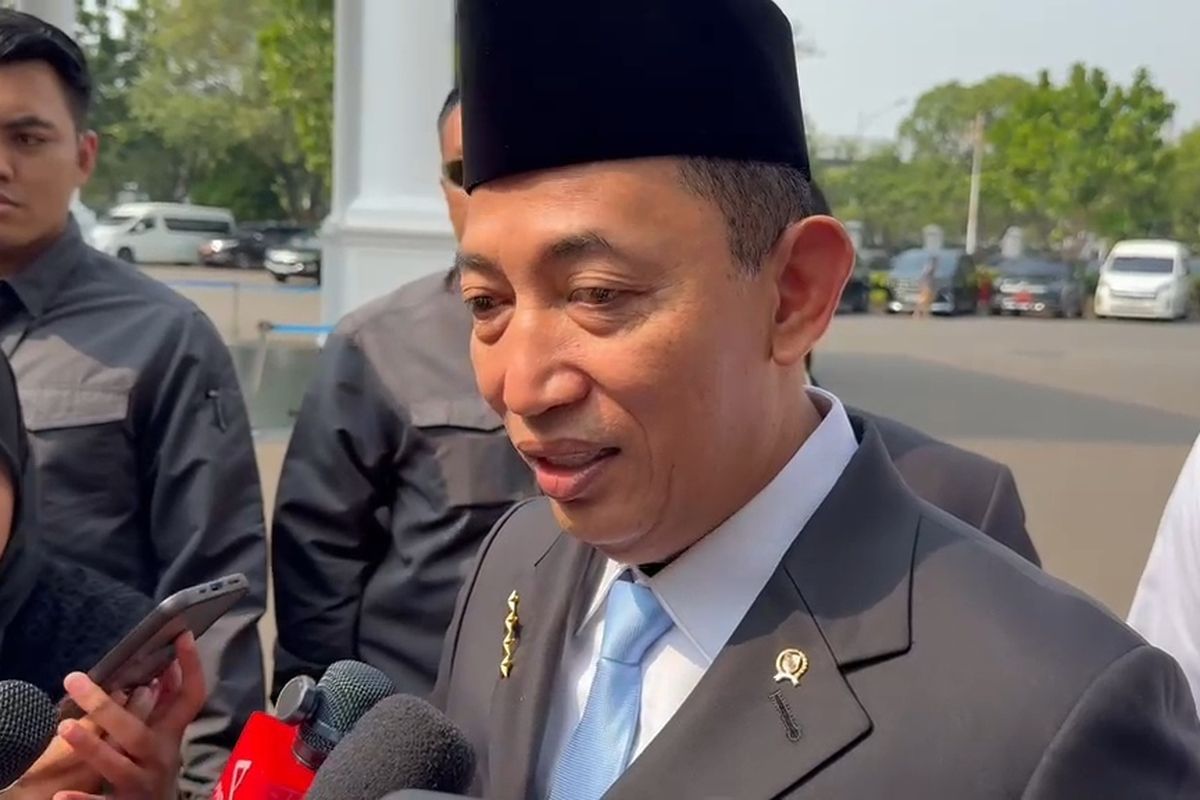
JAKARTA, KOMPAS.com - Allegations of illegal wiretapping of President Prabowo Subianto and several key figures in the country raise questions about the underlying interests.
Moreover, the wiretapping allegedly involving former National Police Chief General Listyo Sigit Prabowo not only targeted the President but also government officials, politicians, media, civil organizations, non-governmental organizations (NGOs), and entrepreneurs.
The broad range of targets for the wiretapping necessitates an examination of the motives behind such actions in the legal process.
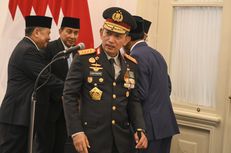
The Indonesian National Police have named Listyo Sigit, who currently serves as Chief of the Presidential Staff (KSP), as a suspect in the case of illegal wiretapping.
In addition to Listyo, two other high-ranking police officers, namely the Police Legal Affairs Division Chief Inspector General Ahrie Sonta Nasution and Inspector General Eko Hadi Santoso, have also been designated as suspects.
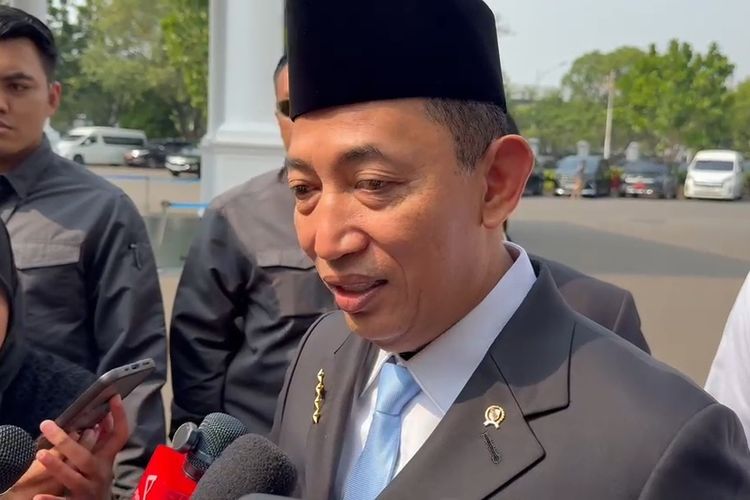
This announcement of the suspects was made by the Indonesian National Police Chief Detective Inspector General Asep Safrudin during a press conference at the National Police Headquarters in South Jakarta on Tuesday (3/11/2026).
Asep stated that the suspects are accused of wiretapping without proper procedures targeting the phone numbers of the President, government officials, political figures, media, leaders of civil organizations, NGOs, and entrepreneurs.
The Coordinating Minister for Law, Human Rights, Immigration, and Prisons Yusril Ihza Mahendra even revealed that investigators are delving into indications of actions that may lead to treason.
Yusril mentioned that one aspect being investigated is the alleged intention to incapacitate the President, preventing him from exercising his governmental powers.
"The elements indeed seem to trend toward that direction, although this is still in the process of further investigation. At least, the public should be aware that there are indications pointing to treason," Yusril said during a press conference at the Aceh Tsunami Museum on Wednesday (4/11/2026).
According to Yusril, investigators have started to uncover indications regarding the motives and objectives behind the wiretapping.
Nevertheless, the legal proceedings are still ongoing to reveal the complete construction of the case.
So, what interests may lie behind the information gathering concerning the President and various strategic elements?
Adrianus Meliala, a commissioner of the National Police Commission (Kompolnas) from 2012 to 2016, suspects that the wiretapping was not conducted for the interests of the state or the Indonesian National Police.
Instead, the criminologist from the University of Indonesia sees the possibility of certain parties having interests behind these actions.
"It is strongly suspected that the wiretapping was not for the interests of the state or the police, but for the interests of other parties," Adrianus told Kompas.com on Wednesday.
Adrianus believes that this suspicion should be viewed in the context of police institution involvement in political dynamics.
According to him, if the wiretapping was conducted to fulfill the interests of others, it is necessary to investigate the reasons behind the police leadership's willingness to utilize the authority and resources of the institution for such purposes.
One possibility highlighted by Adrianus is the presence of political debts.
This allegation relates to potential interests between parties with access to wiretapping authority and those needing that information.
Adrianus thinks that the involvement of law enforcement institutions in political activities carries its own consequences.
Especially, when the authority that should be used for the interests of the state is suspected to benefit certain groups.
"The decision certainly suggests that this cannot be imagined. However, given that this really happened, it seems to be understandable within that political context. Whoever plays politics must be prepared for the essence of politics as well," he said.
Besides motives, Adrianus also emphasizes the importance of identifying who is primarily responsible for the alleged wiretapping.
According to him, a hierarchical approach could be used to trace the party suspected of being the main architect or intellectual dader in this matter.
"I think a rank-based approach also determines who is most responsible. The person with the highest rank can certainly be suspected as the intellectual dader and the one with the most motive and intensity/targets," Adrianus said.
He added that if the investigation develops and establishes new suspects, those individuals likely come from the implementing ranks.
"Therefore, if there are still suspects after this, they will likely be among the implementers," he remarked.
Police observer and former Kompolnas Commissioner Poengky Indarti stated that the allegations of illegal wiretapping against the President and several important figures are matters that must be thoroughly investigated.
According to her, the investigation should not only reveal who conducted the wiretapping but also explain the objectives, motives, the parties who ordered it, and the individuals involved.
"This case is truly shocking because the police are known for their loyalty and adherence to maintaining public order by serving, protecting, and upholding the law," Poengky told Kompas.com on Wednesday.
"Therefore, the allegations of illegal wiretapping against the President and other figures must be seriously examined regarding their purpose, motive, who ordered it, and who is suspected to be involved, and so on, in order to be clear," she said.
Poengky believes that the investigation needs to be supported by a "scientific crime investigation" approach so that the results are valid and accountable.
With this approach, investigators are expected to uncover whether there are specific interests driving the illegal wiretapping, including the possibility of an abuse of power for purposes outside law enforcement.
She stated that the power held by individuals or institutions can be misused when there are opportunities and insufficient supervision.
In the context of the police, wiretapping for law enforcement purposes has strict regulations and requirements for permission.
"If violated, there will certainly be legal sanctions. To prevent it from happening again, supervision and strict law enforcement should be conducted," Poengky stated.
Poengky also reminded that the potential for illegal wiretapping does not only come from within the country but also from abroad.
She cited Indonesia's experience when communications of the sixth President of the Republic of Indonesia Susilo Bambang Yudhoyono (SBY) were targeted by Australian wiretapping.
Therefore, according to Poengky, those responsible for ensuring the security of state officials' communications must also be accountable for preventing illegal wiretapping.
The revelation of alleged illegal wiretapping involving several high-ranking police officers also draws attention to the internal oversight mechanisms of the police institution.
Poengky believes that handling this case could serve as a momentum to reinforce police reform, especially in ensuring that institutional authority is not utilized for interests beyond the duties and functions of the police.
According to her, oversight should not only rely on internal mechanisms.
Public involvement is also needed so that any misuse of authority can be identified and addressed.
"The uncovering of this case, in my opinion, actually serves as a momentum to strengthen Police Reform, because to restore the police to a clean institution, the leadership and all police members must endeavor to perform their duties as best as they can, especially with public scrutiny now focused on the police," Poengky stated.
On the other hand, Poengky reminded that the legal process must uphold the presumption of innocence.
Suspects and those being questioned should still receive human rights protection throughout the investigative process.