Danantara CEO Responds to Reports of Prabowo Calling MSCI, Discusses Capital Market Reforms
-
News
-
48 minutes ago
This article was translated by AI. Read the original article on Kompas.com. See Original
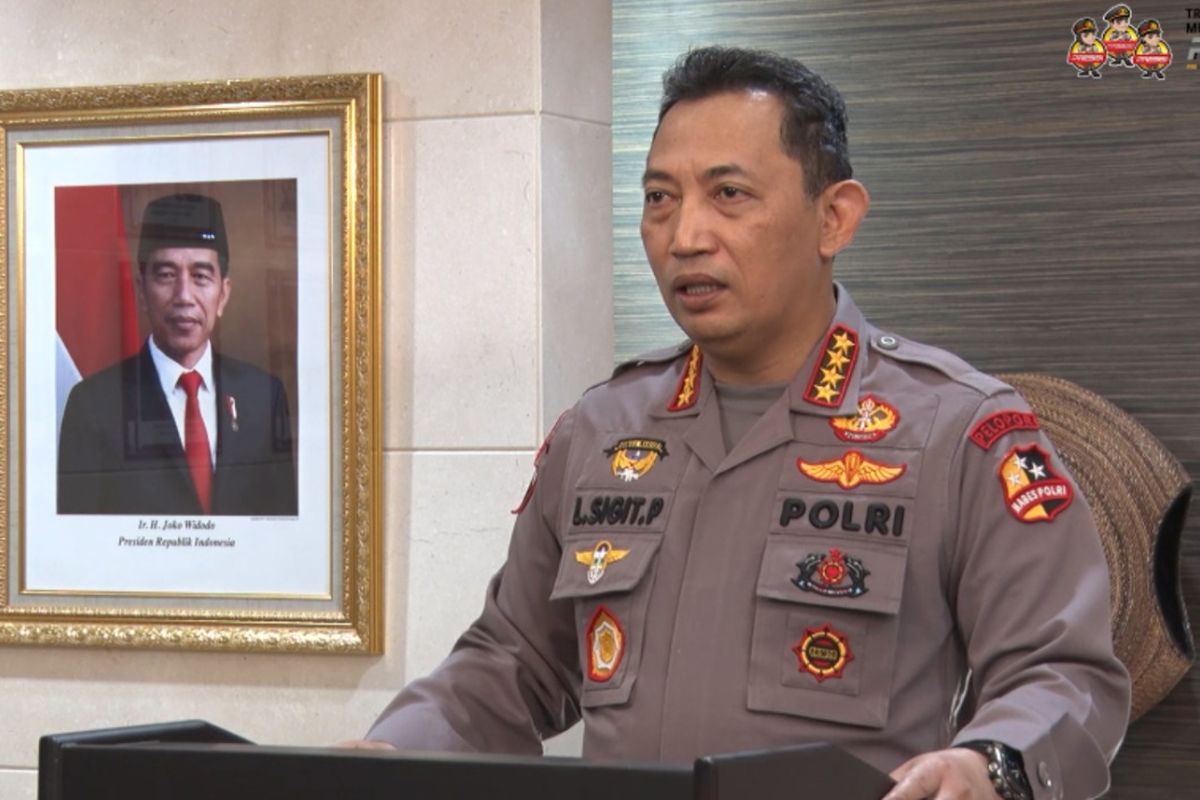
JAKARTA, KOMPAS.com - Criminal law expert from Trisakti University, Abdul Fickar Hadjar, stated that the wiretapping case involving General Listyo Sigit Prabowo against President Subianto requires further evidence before labeling it as treason.
He explained that, in the context of treason, the key question is for whom Listyo conducted the wiretapping.
"In criminal terms, there must be evidence. To conclude it's treason, proof is necessary," Fickar told Kompas.com on Wednesday (4/11/2026).
"Hence, the critical question is, for whom did Listyo Sigit conduct the wiretap? That's the fundamental query," he added.
Fickar clarified that if evidence reveals that the wiretap was delivered to someone intending to threaten the sovereignty of the leaders and the nation, Listyo could be prosecuted for treason.
He defined treason simply in a political context as the unlawful seizure of legitimate power outside constitutional means, such as elections.
"Seizing power through elections is acceptable, but taking power without elections constitutes treason," he explained.
Fickar also mentioned three categories of treason included in the Criminal Code (KUHP): treason against the President and/or Vice President, treason against the Unitary State of the Republic of Indonesia (NKRI), and treason against the government.
Article 191 of the KUHP explains that treason against the President and Vice President is viewed as an attempt to kill or illegally deprive them of their freedom.
Fickar emphasized a specific clause in the law that states treason can mean rendering the President or Vice President unable to perform their governmental duties.
This article imposes penalties ranging from life imprisonment to death for offenders.
Article 192 addresses treason against the NKRI, interpreted as an attempt to separate or hand over Indonesian territory to another country. This kind of treason is akin to insurrection or rebellion, with a maximum penalty of death.
Lastly, Article 193 of the KUHP pertains to treason against the government, with penalties of up to 15 years in prison.
State Secretary Minister Prasetyo Hadi stated that the actions of former National Police Chief General Listyo Sigit Prabowo and other police generals who wiretapped President Prabowo Subianto fall under the category of treason.
"We believe that what was done could indeed be classified as actions leading towards treason," Prasetyo said at a press conference at the Presidential Palace in Jakarta on Wednesday.
Prasetyo noted that this illegal wiretapping poses a threat to national interests and the safety of the nation's leaders.
"Carrying out wiretapping, destroying electronic evidence, illegal access for actions that are regulated by our own laws, particularly involving the Head of State and state officials, constitutes an extraordinary matter," he remarked.
For your information, the Criminal Investigation Department of the National Police has named three police generals as suspects in the alleged wiretapping of President Prabowo Subianto.
They are former National Police Chief, now Head of Presidential Staff (KSP) General Listyo Sigit Prabowo; Inspector General Ahrie Sonta, the Head of the Legal Division (Kadivkum) of the National Police; and Inspector General Eko Hadi Santoso, Senior Police Educator Level 1 at the Police Education and Training Institute (Lemdiklat).
The three suspects are accused of conducting illegal wiretapping and erasing electronic data as well as illegal access.
“The suspects are accused of wiretapping the President of the Republic, state officials, political figures, media, organizations, NGOs, and businesspeople without procedures,” said the Head of the Criminal Investigation Department, Inspector General Asep Safrudin, at a press conference at the National Police Headquarters in South Jakarta on Tuesday (3/11/2026).
The police have charged the suspects under Article 258 of Law No. 1 of 2023 concerning the KUHP with a maximum penalty of 10 years in prison.
They are also charged under Article 332 paragraphs (1) and/or (2) of Law No. 1 of 2023 concerning the KUHP with a maximum penalty of six years’ imprisonment.
Additionally, investigators have applied Article 32 paragraph (1) of the Electronic Information and Transactions Law (ITE) that carries a maximum penalty of eight years in prison.