

Danantara CEO Responds to Reports of Prabowo Calling MSCI, Discusses Capital Market Reforms
-
News
-
9 minutes ago
This article was translated by AI. Read the original article on Kompas.com. See Original
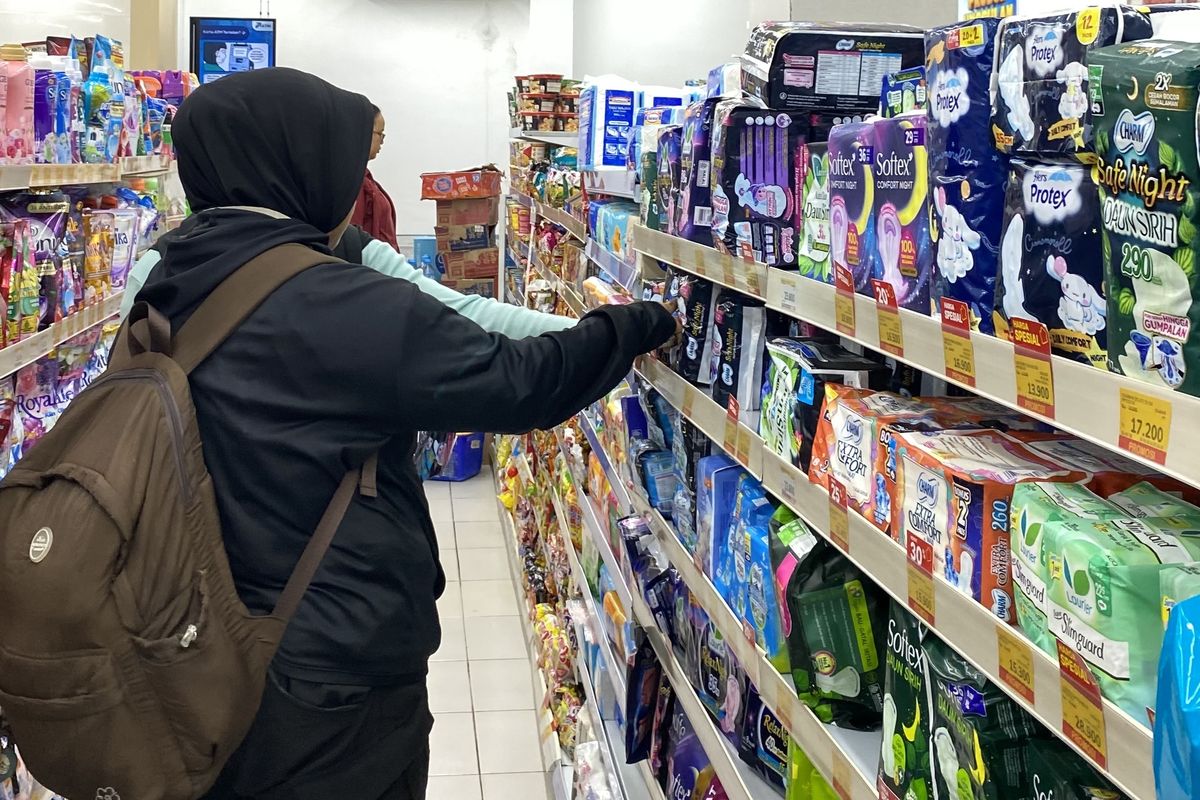
JAKARTA, KOMPAS.com - Member of the House of Representatives from the PDI Perjuangan (PDI-P) faction, Selly Andriany Gantina, asserts that the imposition of Value Added Tax (VAT) on women's sanitary napkins should not be viewed merely as an administrative tax issue or a matter of consumer goods regulation.
She urges that this matter be considered within the framework of gender justice, reproductive health rights, and the government's responsibility to fulfill women's basic needs.
"Menstruation is not a choice, nor a lifestyle, and it is not a consumable need that can be postponed. It is a biological process that women cannot avoid," said Selly Gantina in her statement on Tuesday (3/11/2026).
Selly believes that menstrual products such as sanitary napkins should be classified as essential needs, rather than an additional economic burden on women.
While she understands that the explanation for VAT on sanitary napkins is part of the generally applicable tax system from a fiscal administrative perspective, she argues that public policy cannot be solely assessed by the uniformity of rule application.
The government must also evaluate the impact on different social groups with varying biological needs and socio-economic conditions.
"The issue isn't just whether the tax is applied specifically to women or not. The more fundamental concern is who is truly bearing the impact," stated the legislator representing West Java VIII.
Selly emphasizes that this issue requires cross-sectoral attention.
According to her, the Ministry of Women Empowerment and Child Protection (PPPA) needs to strengthen coordination with the Ministry of Finance and other relevant ministries and institutions, while ensuring that the impact of policies on women is incorporated into national policy formulation processes.
She advocates for the government to take three concrete steps.
First, to review the imposition of VAT on menstrual products. The government should assess the possibility of excluding menstrual products from VAT or providing a VAT subsidy from the government, as recommended by the National Commission on Violence Against Women (Komnas Perempuan). This assessment must consider price affordability, the impact on low-income women, and fiscal sustainability.
Second, she calls on the government to reinforce gender perspectives in all fiscal policies.
Third, to ensure access to adequate menstrual products for vulnerable groups.
Selly stresses that the state has a responsibility to maintain fiscal revenues to finance development and public services. However, state revenue should not be the sole measure of policy success.
Fiscal policies should also embody social justice and support groups facing specific needs.
"We shouldn't talk about empowering women while simultaneously neglecting their biological needs in economic policies. Women are not asking for privileges," she stated.
She insists that the issue of taxing menstrual products should serve as a moment for the government to reassess how far state policies have actually supported women.