
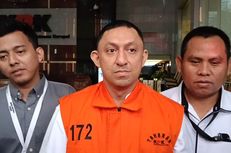
KPK Temporarily Suspends Detention of Fahd Arafiq to RS Polri Due to Illness
-
News
-
Just now
This article was translated by AI. Read the original article on Kompas.com. See Original
POWER always carries a paradox. The state is granted significant authority to supervise for the protection of society.
However, who supervises when the state's apparatus is suspected of abusing its power?
This question is once again relevant. On November 3, 2026, the Indonesian National Police announced the designation of three suspects with the initials LSP, ASN, and EH in an alleged illegal wiretapping of President Prabowo Subianto and several national figures.
According to the Head of Criminal Investigation, Police General Asep Safrudin, the wiretapping is suspected to have occurred between 2025 and 2026 without proper procedures and legal basis.
Several media outlets have identified LSP as a former Chief of Police. However, our laws are clear: the designation of a suspect is not the same as a guilty verdict.
All allegations must be tested through valid evidence and independent judicial proceedings.
Apart from who is involved, this case raises a more fundamental question: is the system of controlling state oversight strong enough to prevent abuse of power, even by the highest law enforcement officials?
This goes beyond just the privacy of the President. It concerns the integrity of power and the future of the rule of law.
Montesquieu posited that every power tends to be abused if not restrained.
From this arises the principle of checks and balances.
Juvenal's question, quis custodiet ipsos custodes (who watches the watchers), is abundantly current.
The police indeed have significant authority to use wiretapping technology for law enforcement.
But that authority is not a privilege that can be exercised at personal whim.
A.V. Dicey in Introduction to the Study of the Law of the Constitution (1885) asserts that the rule of law requires officials, no matter how high-ranking, to comply with the same laws.
The ability to operate a wiretapping system does not equate to the right to wiretap.
Someone may be able to input a number into the Lawful Interception system, but technical ability does not confer legality.
Here is where the boundary between state authority and abuse of power must be firmly upheld.
In the 1945 Constitution, the President holds the authority of government under Article 4, paragraph (1), while also being a citizen whose privacy rights are guaranteed under Article 28G, paragraph (1).
Thus, the suspicion of wiretapping against the President has two dimensions.
First, it is a violation of personal rights. Second, it concerns the protection of strategic governmental communications.
However, these two should not be conflated, so that every wiretapping of the President is automatically deemed a crime against national security.
Criminal law demands specific evidence. It is essential to differentiate between violations of communication confidentiality, illegal access to electronic systems, and data deletion. Each has different elements.
This principle is crucial to ensure that law enforcement does not fall into excessive criminalization solely because the victim is a high-ranking power holder.
Conversely, the President's position should not make proven violations considered as mere administrative offenses.