

DKPP Highlights KPU's Inconsistent Statements Regarding 'Gibran's Education Article'
-
News
-
4 hours ago
This article was translated by AI. Read the original article on Kompas.com. See Original
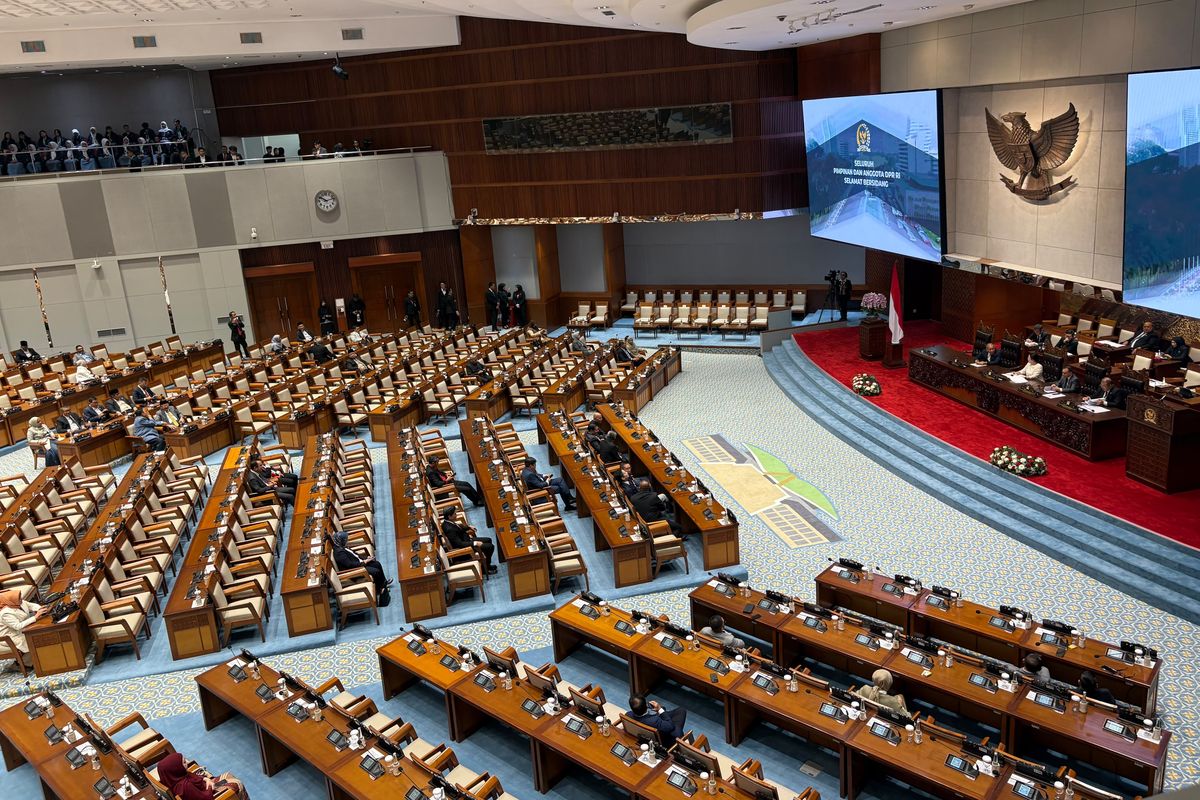
JAKARTA, KOMPAS.com - Member of the House of Representatives' Legislative Body (Baleg) Reni Astuti advocated for regulations regarding the conditions for the fast-track mechanism in the formation of laws.
This was conveyed in response to plans to introduce a fast-track mechanism for lawmaking as outlined in the draft law on Law Formation (RUU PUU).
"Since this law is very important, the speed must also come with conditions. For instance, it applies to matters that are truly urgent, such as economic crises or disasters that need immediate attention," Reni stated during the Baleg meeting on the drafting of the RUU PUU, as quoted from a broadcast on TVR Parliament's YouTube channel on Tuesday (3/11/2026).
She emphasized that the fast-track mechanism in law formation is an innovation in legislation.
However, she warned that this mechanism should not compromise the quality of legislation and public input.
"Speed does not mean that everything becomes closed off, thus abandoning the principles of transparency. We should not forsake openness and the meaningful participation of the public in this process," Reni stressed.
During the meeting, the Head of the DPR RI Expertise Body Bayu Dwi Anggono explained that the fast-track mechanism is part of the law formation procedures, which are divided into two categories.
"Here, the law formation through the fast procedure is part of the law formation protocols. We divide it into two: regular procedures and fast procedures," Bayu mentioned in the meeting.
He elaborated on the six conditions that allow the use of fast-track procedures for lawmaking.
First, to ratify certain international agreements that require immediate enactment. Second, to follow up on Constitutional Court (MK) decisions that specify a deadline for amending or replacing laws.
“Third, to make limited changes to the content of laws. If the amendments are minor, they can certainly be done quickly. Fourth, to correct technical writing errors, meaning editorial issues and so on. Fifth, to amend the attachments of the laws,” explained Bayu.
Meanwhile, he added, the sixth condition involves specific situations that ensure there is urgency in forming a law through fast-track procedures.
The use of fast-track procedures in these situations requires joint approval from the legislative equipment of the DPR and the minister or head of the agency responsible for government affairs in the field of law formation.
"Therefore, point 'f,' which is outside of points 'a' to 'e,' certainly requires the approval of the legislative body regarding this fast-track legislation," Bayu concluded.























