

Danantara CEO Responds to Reports of Prabowo Calling MSCI, Discusses Capital Market Reforms
-
News
-
31 minutes ago
This article was translated by AI. Read the original article on Kompas.com. See Original
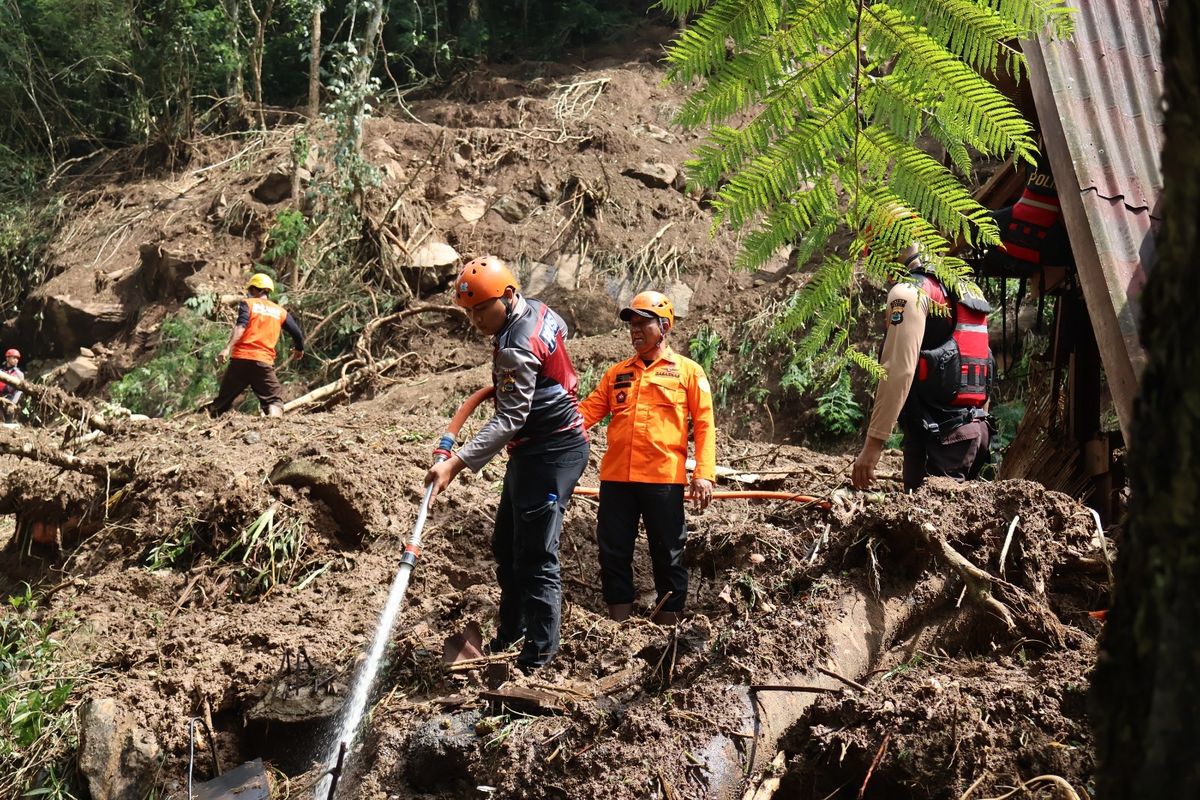
JAKARTA, KOMPAS.com - The National Disaster Mitigation Agency (BNPB) has urged local governments to map hydrometeorological disaster-prone areas down to the village and sub-district levels to anticipate the impacts of the rainy season.
Acting Head of Data, Information, and Communication Center for BNPB Berton Panjaitan stated that local governments need to translate early weather warning information into more operational preparedness measures.
"We hope that for regencies or cities, this can be further detailed so that threats or information about heavy rainfall can be localized in specific places or in regencies or villages that are at risk," said Berton at a press conference at the BNPB Studio on Tuesday (3/11/2026).
According to Berton, mapping of disaster-prone areas should be conducted in every village and sub-district.
This will enable local governments to identify regions that may be impacted when heavy rains occur.
In addition to mapping, BNPB has requested local governments to conduct preparedness drills involving regional government organizations (OPD), village administrations, and disaster volunteers.
This step is essential to ensure that all parties are aware of their duties and roles during a disaster.
BNPB also urged local governments to enhance monitoring of weather information and early warnings from the Meteorology, Climatology, and Geophysics Agency (BMKG).
Berton stated that BMKG routinely provides weather forecasts, ranging from every three hours to three-day and ten-day forecasts.
This information is expected to be detailed down to the regency, sub-district, and even village levels to allow for early anticipation of heavy rain threats.
"We urge local governments to consistently provide education and outreach where we convey information in simpler terms," he explained.
BNPB also emphasized the importance of strengthening coordination with various stakeholders or a pentahelix model, including businesses, village governments, volunteers, and the community.
Berton noted that the involvement of businesses is necessary to assist with emergency response and alleviate the burdens faced by disaster-affected communities.
Additionally, local governments and communities are encouraged to regularly clean and normalize rivers to reduce flood risks.
These steps are part of the preparedness measures for the rainy season, which is set to commence in November 2026.