

Witness in Silmy Karim Case Admits Fear of Rejecting Informal Fees for Foreign National Residence Permits at Immigration Office
-
News
-
5 minutes ago
This article was translated by AI. Read the original article on Kompas.com. See Original

JAKARTA, KOMPAS.com - The Draft Law on the Formation of Laws will regulate the obligation to follow up on legal considerations in Constitutional Court (MK) decisions.
"So we are adding this to the open cumulative national legislation program, ensuring that the follow-up on MK decisions includes both the rulings and the legal considerations of those decisions," said the Head of the DPR's Expert Body, Bayu Dwi Anggono, during a meeting on the Draft Law on the Formation of Laws at the House of Representatives' Legislative Body (Baleg), on Tuesday (3/11/2026).
According to Bayu, this provision stands as a new material prepared within the Draft Law on the Formation of Laws.
The regulation is intended to clarify the scope of follow-up actions after MK decisions in legislative planning.
"We clarify that what needs to be followed up is not just the ruling itself, but also what we refer to as the legal considerations of the decision," Bayu explained.
In his presentation, Bayu noted that the Draft Law is structured into 12 chapters and 92 articles.
Of those articles, there are 71 articles of new material and 21 articles drawn from existing provisions within the Law on Formation of Legislation (UU PPP).
Bayu indicated that the new materials arise from the reformulation of existing provisions as well as new regulatory additions.
In the proposal, monitoring and review must take place no later than three years after a law is enacted.
In practice, Bayu stated, the Baleg DPR will be responsible for carrying out the monitoring and review.
The scope includes the establishment of implementing regulations, the compliance of the contents of these regulations with the law, consistency between laws, and the implementation of the law.
Additionally, the Draft Law regulates the use of artificial intelligence (AI) technology in the law formation process.
However, its use must ensure human oversight, accuracy, transparency, accountability, information security, and personal data protection.
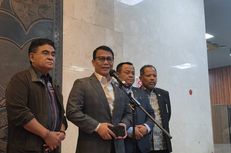
As reported earlier, the Legislative Body (Baleg) of the DPR RI held a meeting on the preparation of the Draft Law on the Formation of Laws, even while in recess, on Tuesday (3/11/2026).
The Chair of the DPR RI's Baleg, Bob Hasan, stated that the meeting was convened to prepare the Draft Law for immediate consideration when the DPR enters its next session.
The drafting of this law follows the Constitutional Court Decision Number 81/PUU-XXIII/2025, which interprets Article 22A of the 1945 Constitution as a mandate for the establishment of a specific law governing the procedure for forming laws.