

Minister Criticizes Overly Masculine Environmental Management, Calls for Ecofeminine Approach
-
News
-
1 minute ago
This article was translated by AI. Read the original article on Kompas.com. See Original

AT THE MINISTRY of Home Affairs, there is a waiting room that never seems to empty. The door has been closed for over a decade, yet people continue to arrive with proposals, aspirations, and even political promises.
They are waiting for territorial expansion that remains uncertain. This waiting room is known as the formation of new autonomous regions (DOB).
Some proponents even obtained presidential mandates as early as December 2013 and February 2014, before the moratorium was implemented.
However, their fates remain in limbo. They are neither processed nor rejected. They find themselves trapped in uncertainty that has seemingly become a permanent government policy. This is termed the regional expansion moratorium.
The numbers continue to grow. As of December 2024, the Ministry of Home Affairs recorded 337 expansion proposals. By April 2025, that number had risen to 341.
In July 2025, Deputy Minister of Home Affairs Bima Arya reported 374 proposals. As of June 1, 2026, the tally reached 375 proposals, including 46 prospective provinces, 276 regencies, 41 cities, seven special regions, and five special autonomous regions.
We are facing an extraordinarily long queue for territorial expansion. Ironically, the government has yet to provide a clear mechanism to determine who is eligible to advance and who must halt.
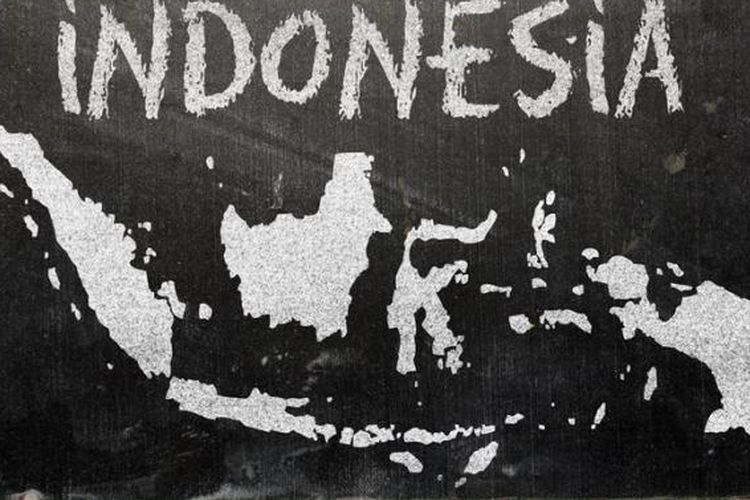
Let's do the math. Indonesia currently has 546 autonomous regions, consisting of 38 provinces, 415 regencies, and 93 cities. If all 375 proposals are approved, the total will swell to 921 autonomous regions, including 84 provinces.
This is no small matter. The current number of expansion proposals is even greater than the 227 DOBs formed over 23 years of reform.
For comparison, in the first 54 years of independence, Indonesia created 319 autonomous regions.
There is an interesting phenomenon behind this surge. Between April and July 2025, as discussions around lifting the moratorium heated up in Senayan, 33 new proposals emerged in just three months.
Conversely, a year later, when the government reaffirmed the moratorium, the number increased by only one.
This indicates that expansion proposals are not solely driven by public service needs but are also heavily influenced by political signals.
Once the news broke that the door to expansion might open, proponents rushed to submit proposals.
Here lies the fundamental issue. The ongoing moratorium on expansion resembles a suspended policy rather than a regional organization policy.
It has no definite timeline, lacks transparent evaluation stages, and fails to provide certainty to proposing regions regarding the requirements they must fulfill.
In fact, Law No. 23 of 2014 on Regional Government has already outlined the direction for regional organization.
The formation of DOBs must refer to the Grand Design of Regional Organization (Desartada), with a mechanism for preparation regions lasting three years before being designated as autonomous regions.
The problem is, twelve years after the law was enacted, the government regulations that serve as its operational foundation have yet to be completed.
We close the door to expansion but never finish the regulations on how to open it later.