

Former Customs Intelligence Head Orlando Hamonangan Sentenced to 6 Years in Prison
-
News
-
2 hours ago
This article was translated by AI. Read the original article on Kompas.com. See Original
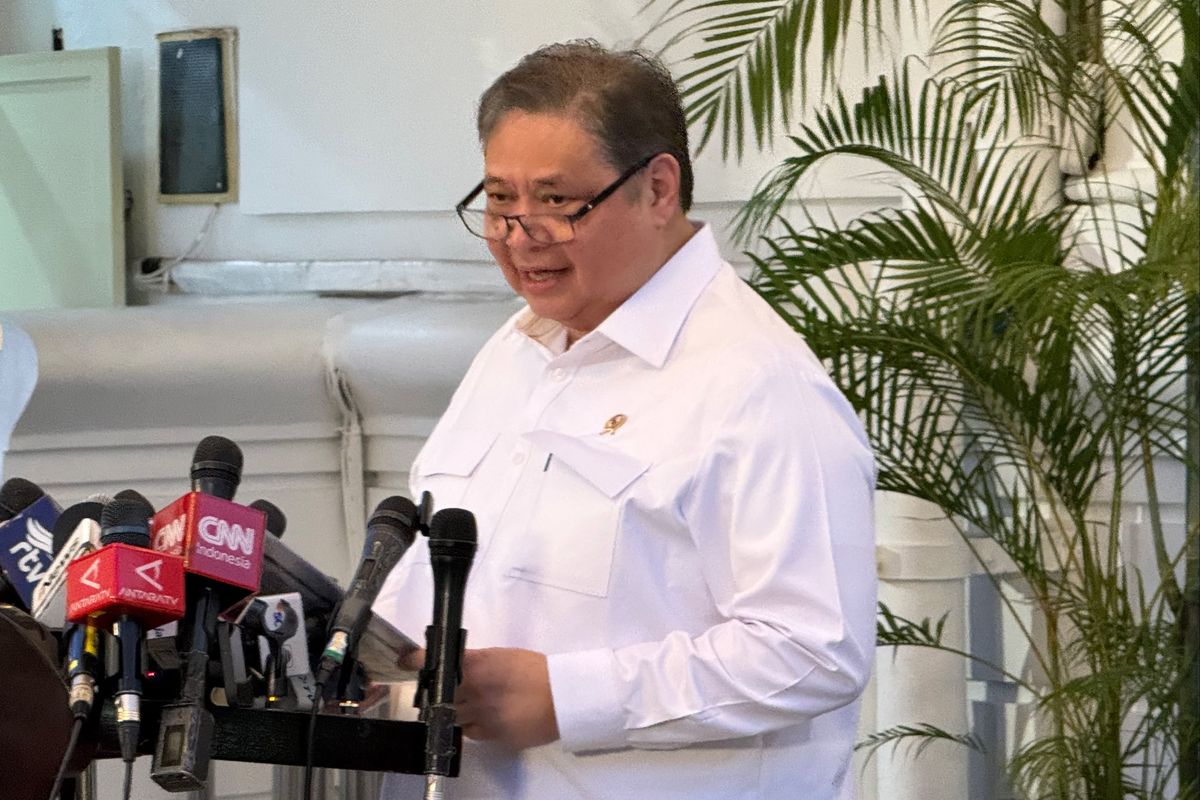
JAKARTA, KOMPAS.com - Coordinating Minister for Economic Affairs Airlangga Hartarto responded to the possibility of QRIS payment transactions being taxed in the future or remaining tax-exempt.
"We will see later," Airlangga stated when met at the Presidential Palace in Jakarta on Monday (2/11/2026).
In addition, digital tax is expected to cover bank transfers and e-commerce transactions.
When asked about the implementation of the digital tax regulations in November 2026, Airlangga said he would first coordinate with the Ministry of Finance.
"We will discuss this with the Ministry of Finance," he added.
Meanwhile, regarding the potential impact of the digital tax on people's purchasing power, Airlangga stated they would evaluate the situation first.
"We will see because it is related to payments," Airlangga noted.
According to an official announcement from the Directorate General of Taxes dated April 22, 2025, QRIS as a payment medium is not directly imposed with taxes charged to consumers.
Instead, the parties subject to tax from QRIS are payment system service providers (PJSP), such as banks, fintech companies, or other financial institutions that provide QRIS services. They are subject to VAT on electronic service provision and income tax (PPh) on the income from fees.
Consumers are not taxed for using QRIS; they only pay the normal price for goods or services.
Previously, Hashim Djojohadikusumo, the younger brother of President Prabowo Subianto, revealed that the government is committed to increasing tax coverage in Indonesia, including through the expansion of the digital tax collection scheme.
He mentioned that government banks, private banks, fintech companies, and e-commerce platforms like Shopee, Lazada, and GOTO will begin collecting and remitting taxes on November 9, 2026.
"Digital taxation will be implemented soon on November 9; all government banks, private banks, and all fintechs, including Shopee, Lazada, GOTO, and others must collect and remit taxes that have not been collected thus far," Hashim said at the opening of the Kadin National Leadership Meeting 2026 in Jakarta on Thursday (29/10/2026).
On social media, many netizens urged the public to switch to cash transactions instead of digital transactions to avoid these taxes.
The Directorate General of Taxes (DJP) of the Ministry of Finance confirmed that the policy mentioned by Hashim relates to the Tax Collection System for Foreign Digital Transactions (SPP-TDLN) and is not a new tax imposition.
The Director of Outreach, Services, and Public Relations at DJP, Inge Diana Rismawanti, stated that this system is designed to regulate VAT collection on foreign digital transactions that meet the criteria for tax objects.
“It should be understood that not all foreign transactions are subject to VAT. The collection through SPP-TDLN is only applied to foreign digital transactions that meet the criteria for VAT objects in accordance with the provisions,” Inge explained to Kompas.com on Monday (2/11/2026).
The DJP also assured that fund transfers and remittances are not automatically subject to VAT.
"Concerning fund transfers and remittances, they do not automatically become VAT objects. This system is not intended to impose VAT on personal fund transfer activities or public remittances," Inge said.