

DKPP Highlights KPU's Inconsistent Statements Regarding 'Gibran's Education Article'
-
News
-
6 hours ago
This article was translated by AI. Read the original article on Kompas.com. See Original
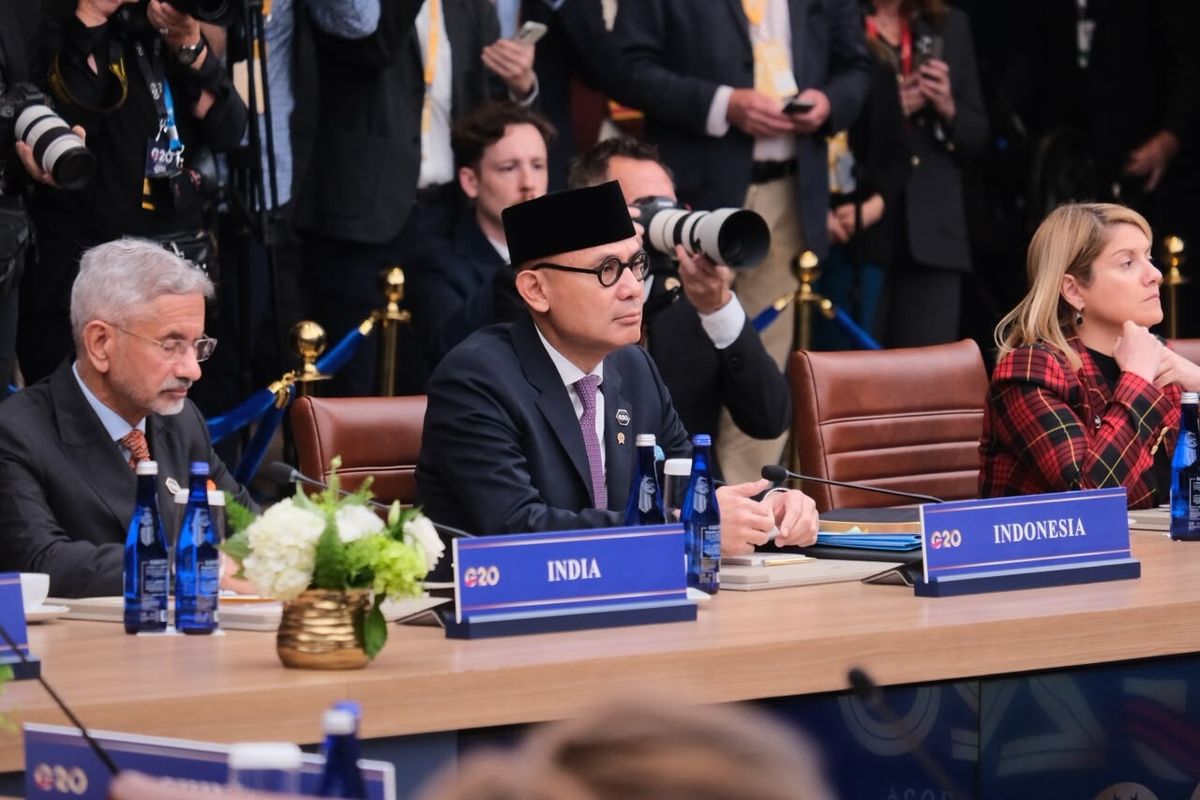
JAKARTA, KOMPAS.com - Indonesian Foreign Minister Arrmanatha Nasir attended the G20 Foreign Ministers’ meeting in Atlanta, United States, on October 30-31, 2026, marking his first visit in the role.
During three plenary sessions, Arrmanatha emphasized that national, regional, and global resilience are interconnected, necessitating effective multilateral cooperation.
"National resilience strengthens regional resilience, which in turn enhances global resilience," Arrmanatha stated, as quoted from a press release on Sunday (1/11/2026).
He also highlighted the importance of reforms to the multilateral system to make it more trustworthy, representative, responsive, and capable of addressing modern challenges.
"Food must not be used as a weapon," he asserted.
Furthermore, Arrmanatha underscored the impact of conflicts in the Strait of Hormuz, the Black Sea, and the Red Sea on global trade routes, energy supplies, fertilizers, and food, particularly for developing countries.
He noted that Indonesia encourages de-escalation of conflicts, dialogue, and cooperation.
Next, Arrmanatha stressed the significance of respecting UNCLOS 1982 as the legal foundation for maintaining freedom of navigation.
He introduced the concept of Responsible Freedom of Navigation, highlighting that freedom of navigation should come with responsibility and that sovereignty must be exercised with restraint.
During the energy session, Arrmanatha affirmed that energy resilience is part of national security.
He mentioned that Indonesia continues to strengthen energy independence through the implementation of B50 and a program to develop 100 GW of solar power.
"Crises should accelerate the energy transition, not reverse it," said Arrmanatha.
He also emphasized the importance of a fair and affordable energy transition, expanding access to clean energy technology and making financing and investment more accessible for developing nations.
During the supply chain session, Indonesia stressed the importance of supply chain certainty and the strengthening of the multilateral trade system.
Indonesia proposed enhancing preparedness for crises and emergencies, affordable long-term financing, and the need to build partnerships in technology so that developing countries can become creators, not just users.
"Supply chains must have more production centers, especially in developing countries," Arrmanatha stated.
Amid the activities, Arrmanatha also held bilateral meetings with the foreign ministers of Turkey, Russia, Argentina, Mexico, the United Kingdom, Canada, Germany, India, Saudi Arabia, Poland, and the High Representative/Vice President of the European Commission, as well as pull-aside meetings with the foreign ministers of the United States, Australia, Japan, and France.
These various meetings were utilized to strengthen bilateral relations, explore cooperation opportunities in various fields, and exchange views on geopolitical developments and international issues of mutual concern.























