
Cabinet Lawsuit: Are Our Civil Servants Ready for Change?
-
News
-
14 minutes ago
This article was translated by AI. Read the original article on Kompas.com. See Original
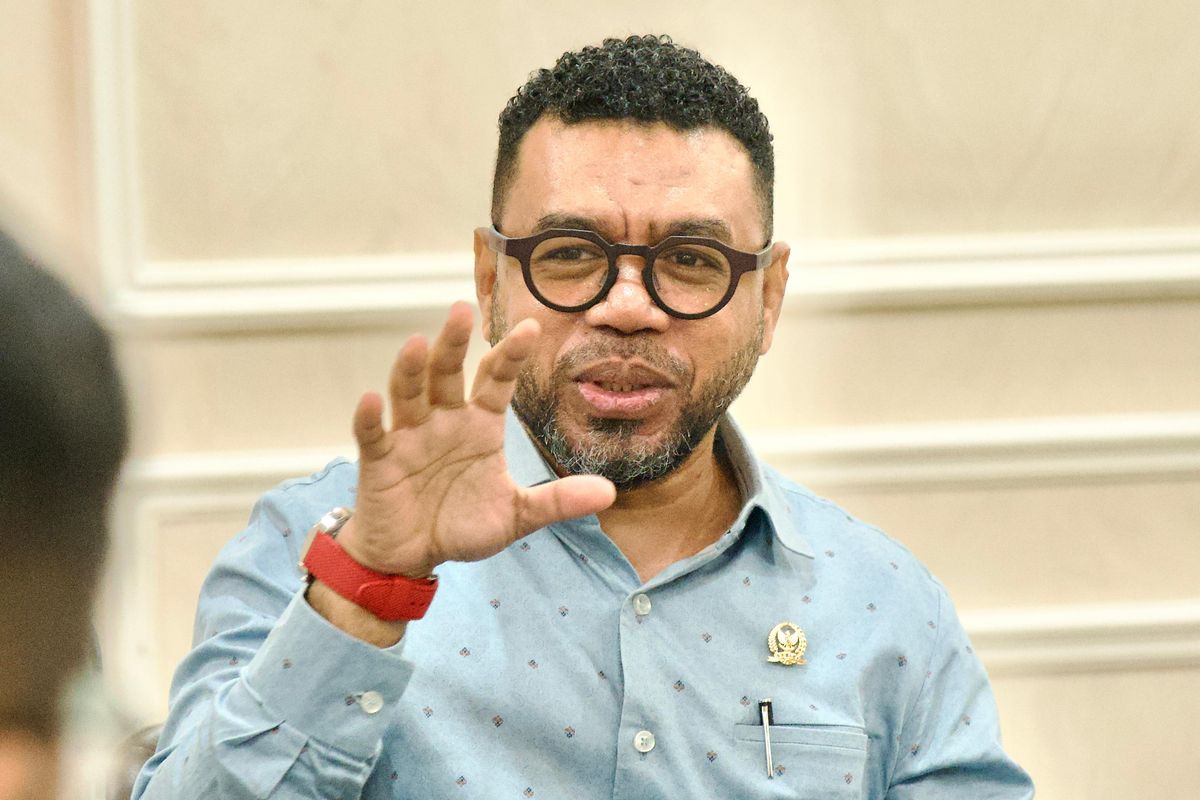
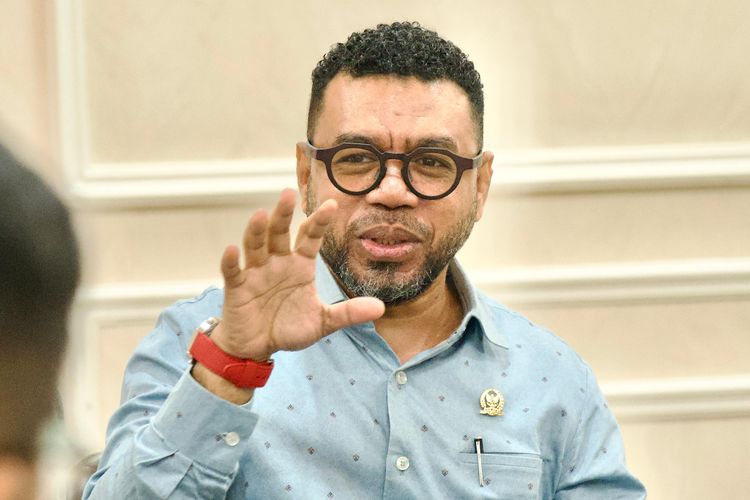
JAKARTA, KOMPAS.com - The Vice Chairman of the Special Committee (Pansus) on Papua at the Regional Representative Council (DPD RI), Filep Wamafma, has urged the government to prioritize public safety and ensure that development proceeds hand in hand.
"The state must be present not only through security forces but also via justice, human rights protection, education, healthcare, and the restoration of community life," Filep said in response to the directive from the Coordinating Minister for Political, Legal, and Security Affairs during a Coordination Meeting on National Defense and Security Stability in the Southwest Papua Province held in Sorong on Wednesday (28/10/2026), as cited in his statement on Sunday (1/11/2026).
During a hearing between the Papua Pansus of the DPD RI and the National Commission on Human Rights (Komnas HAM) on September 3, 2026, data was presented indicating 42 incidents of violence, resulting in 59 fatalities and 50 injuries occurring in Papua.
Furthermore, the issue of internal displacement in Papua is estimated to affect around 100,000 individuals, requiring an in-depth review and update of the data.
According to Filep, these figures illustrate that the security situation in Papua has extensive humanitarian dimensions that cannot be separated from the social conditions of the community.
In the presentation by the Coordinating Minister for Political, Legal, and Security Affairs in Sorong, data attributed to the West Papua Police recorded 32 incidents related to armed criminal groups from 2018 to 2026, resulting in 20 deaths, including eight members of the military, two police officers, and ten civilians.
Filep emphasized that these two sets of data cannot be directly compared due to differing scopes, periods, sources, and classifications of incidents.
"Security data must be interpreted comprehensively. We need to know how many people have died, been injured, displaced, lost their homes, and how many children have lost access to education. Therefore, the Papua Pansus encourages the alignment of data from the government, security forces, Komnas HAM, and related institutions so that state policies are truly fact-based," he stated.
Filep mentioned that the issue of displacement is one of the primary concerns.
The working data discussed by the Pansus estimates around 22,000-22,661 refugees within a specific monitoring area and period.
He believes that security policies need to have clear recovery indicators, including ensuring citizen safety, providing healthcare services, children's education, meeting basic needs, and facilitating the safe and voluntary return of refugees.
"We should not declare a region administratively safe if the local community still fears returning home, children have not resumed schooling, and the families of victims have not received legal certainty. This means that recovery is not yet complete because security must be genuinely felt by the community," Filep stated.
Filep stressed that security management should go hand in hand with the implementation of the Papua Special Autonomy Law, respect for indigenous people's rights, equitable development, and strengthening public services.
He remarked that a security approach is still necessary to protect the community from violence and should be executed professionally, proportionately, accountably, and with respect for law and human rights.
He also called for any allegations of violence against civilians, regardless of who is suspected to be responsible, to be addressed through a transparent and accountable legal process.
"Papua is not an empty land. Beneath its soil are indigenous communities, history, constitutional rights, and future generations that need protection. Development and investment must respect these rights," he affirmed.
As a follow-up, Filep urged the central government, local governments, the military (TNI), police, Komnas HAM, and related institutions to conduct a comprehensive evaluation of the security and humanitarian situation in Papua.
"The evaluation must include updates on conflict casualty data, handling of displaced persons, access to education and healthcare, legal case resolutions, and the involvement of indigenous communities in dialogue and recovery," he said.
Filep also requested that the outcomes of the Coordinating Minister's meeting be translated into an action plan with clear responsibilities, a schedule for implementation, success indicators, and monitoring mechanisms.
"The success indicators for security policies should not solely be based on the reduction of armed conflicts but also on the decrease in civilian casualties, the recovery of displaced lives, the rule of law, and increased public trust in the state. Sustainable security must be built on justice and welfare," Filep concluded.