Linked to Alleged Treason Post in Bogor, Who is Kombes Iman Imanuddin?
-
News
-
1 minute ago
This article was translated by AI. Read the original article on Kompas.com. See Original

JAKARTA, KOMPAS.com - Former official of the Nahdlatul Ulama Central Board (PBNU) and hajj officer, Miftah Faqih, revealed that the murur policy in the implementation of the hajj pilgrimage is a result of evaluations concerning the congestion of pilgrims in Muzdalifah during 2023.
Murur refers to the overnight stay (mabit) conducted by passing through Muzdalifah without disembarking from the bus after performing the standing at Arafah.
Initially, the defendant and former Special Staff to the Minister of Religious Affairs, Isfah Abidal Aziz, known as Gus Alex, questioned Miftah’s understanding of the murur concept implemented in the hajj pilgrimage.
"The murur concept stems from the congestion of pilgrims that occurred in 2023, leading to the decision that the murur would proceed directly without needing to disembark from the vehicle at Muzdalifah. It goes from Muzdalifah straight to Mina," Miftah explained.
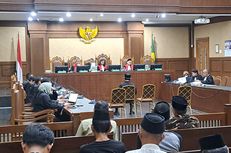
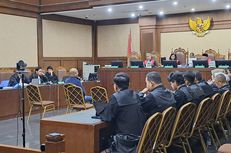
This testimony was delivered when Miftah was called as a witness at the trial concerning the alleged corruption in the management of additional hajj quotas for 2023-2024 at the Jakarta Central Corruption Court on Friday (30/10/2026).
He clarified that the murur scheme is intended for specific groups of pilgrims, particularly the elderly, high-risk pilgrims, and persons with disabilities.
Miftah also elaborated that the implementation of murur relates to the jurisprudential study concerning the law of staying overnight in Muzdalifah.
According to him, there has been a shift in the understanding of the law concerning mabit in Muzdalifah from being mandatory to being a sunnah.
Thus, the implementation of murur does not nullify the hajj pilgrimage nor necessitate the obligation to pay dam (compensation).
"This is an effect of the legal shift; it is indeed a manifestation of the legal transition from mandatory mabit in Muzdalifah to sunnah. Therefore, murur does not invalidate the hajj and does not result in dam payments," he stated.
During the trial, Gus Alex explained that the murur policy did not arise spontaneously.
The policy was preceded by evaluations of the previous year’s hajj implementation.
He also mentioned that studies regarding murur have been discussed by various Islamic organizations, including NU, Muhammadiyah, and Persis. Miftah confirmed this explanation.
According to him, experts, legal scholars, and jurisprudential experts from several Islamic organizations have discussed the policy.
"Starting from NU, Muhammadiyah, and then Persis, they have also discussed the murur policy," Miftah said.