

BRIN Researcher Warns Against Hasty Relocation of Javan Rhinoceros
-
News
-
4 hours ago
This article was translated by AI. Read the original article on Kompas.com. See Original
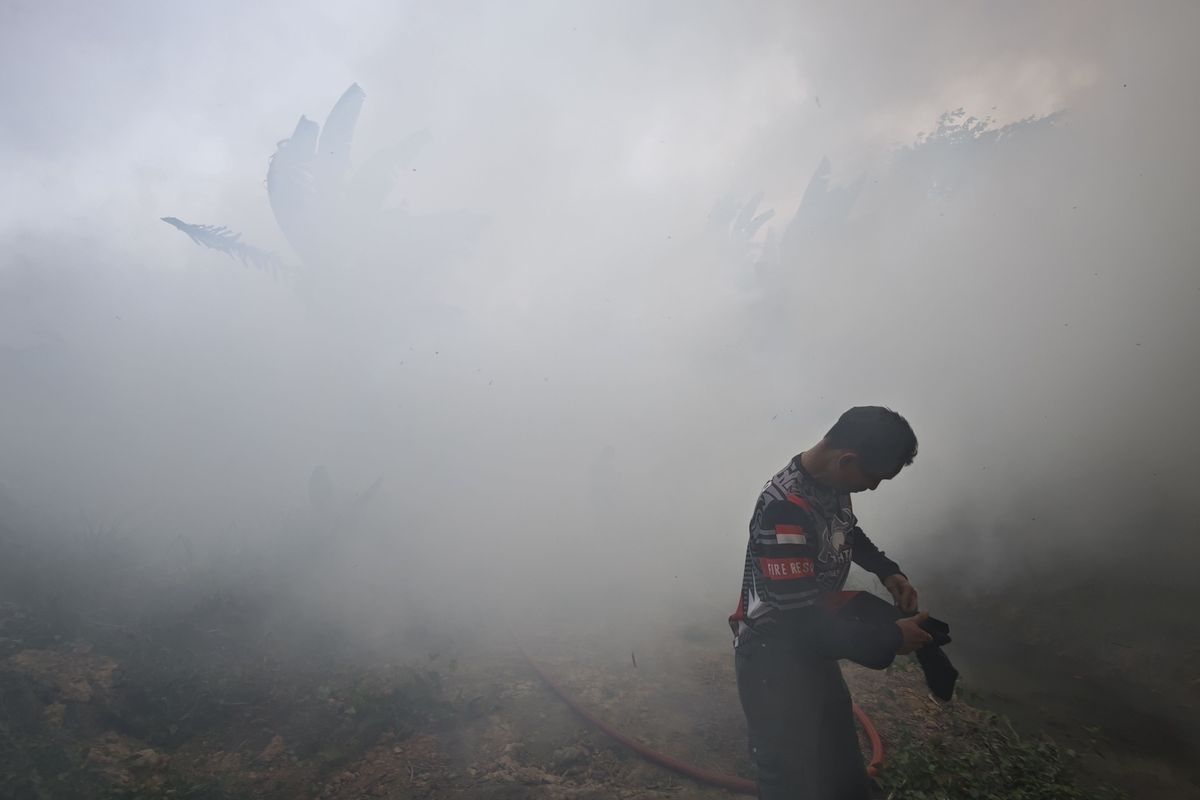
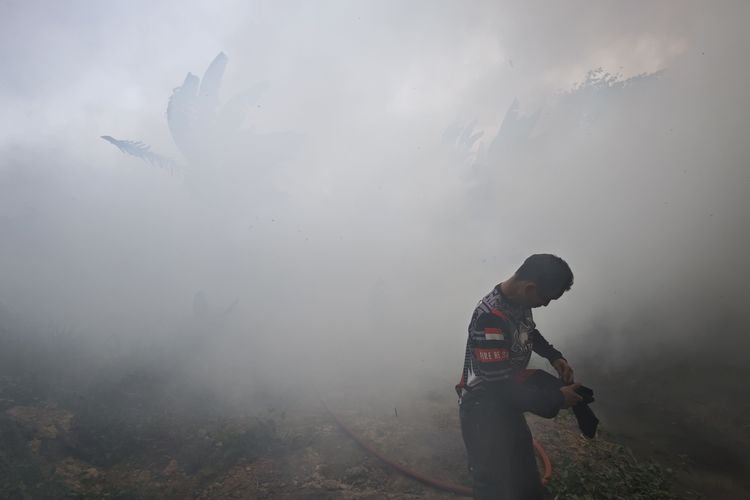
JAKARTA, KOMPAS.com - The Indonesian Air Force (TNI AU) is encountering several operational challenges while addressing forest and land fires (karhutla) in various regions.
One of the main issues is that aerial fire suppression cannot be conducted at night.
“This condition requires operations to be adjusted according to time and circumstances that ensure flight safety,” said Major General Feri Yunaldi, the Head of the Air Force Information Service, in a statement quoted on Friday (30/10/2026).
Weather conditions also impact the execution of fire suppression through water bombing and weather modification operations (OMC).
Rain, limited visibility, and thick smoke can obstruct flights to targeted locations.
“For OMC, its implementation depends on the presence of clouds that meet the criteria for seeding,” Feri explained.
Therefore, the Air Task Force must consider weather conditions and the potential for cloud development before deciding on the timing and location for seeding.
Moreover, the TNI AU is facing challenges regarding the availability of water for water bombing.
During the dry season, several water sources experience reduced flow rates, and some may even dry up.
Feri noted that the TNI AU is continually optimizing its support through equipment and personnel to assist in handling karhutla.
This effort involves operational planning and coordination with related agencies, with an emphasis on flight safety.
According to the Situational Report (Lapsit) from the Fire Control Post at Lanud Halim Perdanakusuma, East Jakarta, as of Tuesday (27/10/2026), there are 164 hotspots burning an area of 708.95 hectares in Central Kalimantan, South Sumatra, and South Kalimantan.
“Of these, 88 hotspots covering 224.93 hectares have been extinguished, while 76 hotspots affecting 484.02 hectares are still being addressed,” Feri stated.
Central Kalimantan has the highest number of hotspots, with 126 spots affecting an area of 602.65 hectares.
Fifty-five hotspots covering 130.33 hectares have been extinguished, while 71 hotspots over 472.32 hectares are still under management.
In South Sumatra, 26 out of 29 hotspots have been extinguished, and in South Kalimantan, seven out of nine hotspots have been successfully put out.