
Monetary Tightening, Fiscal Optimism
-
News
-
3 minutes ago
This article was translated by AI. Read the original article on Kompas.com. See Original
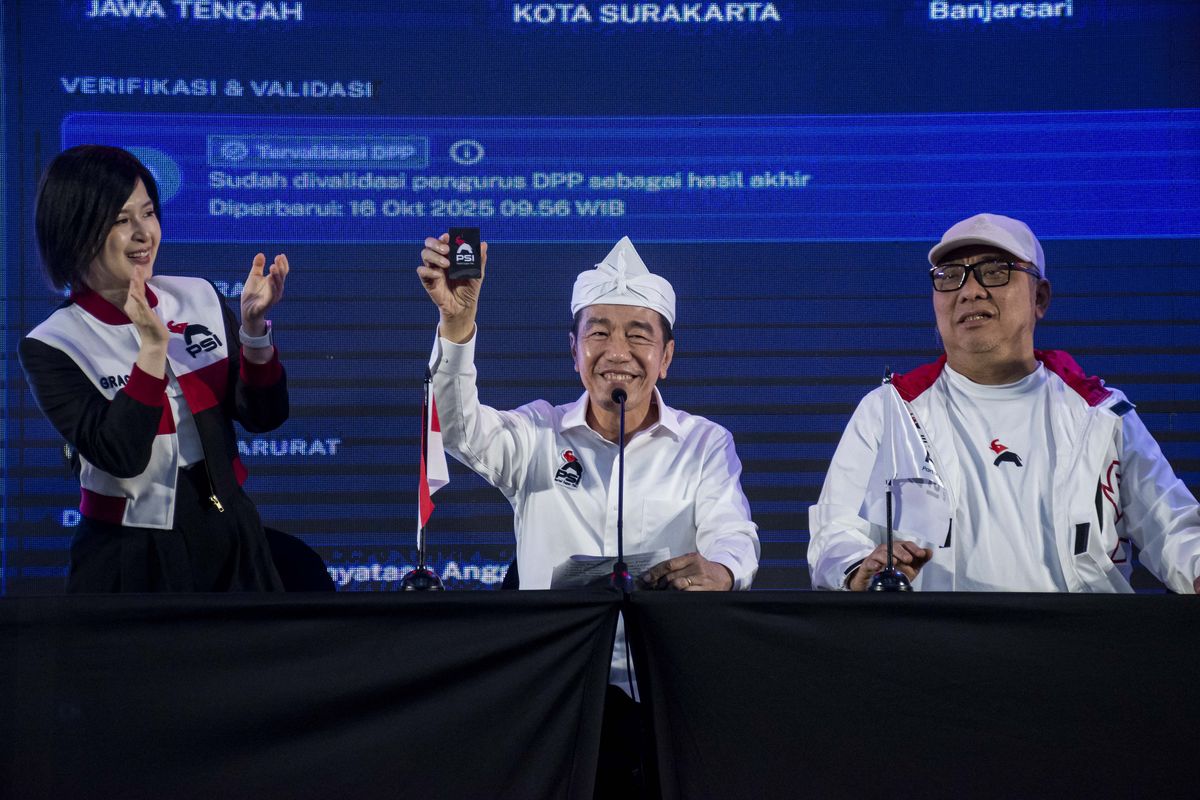
PARTY Solidaritas Indonesia and Joko Widodo are closely intertwined. After his presidency, Jokowi has aligned himself with PSI.
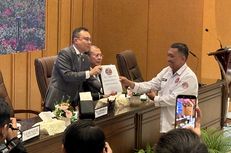
In Bandung, on September 22, he showcased his PSI membership card (KTA). While it seemed like a surprise, it was predictable given Jokowi's activities over the past two years.
The announcement that Jokowi has obtained a PSI membership card serves as communication—if not a 'soft campaign'—inviting his supporters to join this political party led by Kaesang Pangarep.
Jokowi has long been considered a factor that could elevate PSI onto the national political stage, potentially helping it secure a seat in the DPR. Has Jokowi's influence boosted PSI?
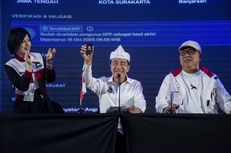
So far, the changes have not been significant. A Poltracking Indonesia survey shows PSI's electability remains at a mere 2.3 percent (from the survey conducted August 14-20, 2026).
The top three spots are held by Partai Gerindra (23.2 percent), PDI Perjuangan (11.6 percent), and Partai Golkar (10.4 percent). Other parties have electability ranging from 6.1 to 6.2 percent.
After Jokowi revealed his membership card, there was a slight increase in PSI's electability to 2.9 percent, up by 0.6 percent. This was reflected in a Poltracking Indonesia survey conducted from September 30 to October 7, 2026.
PSI surpassed PAN, PPP, and several other parties. Notably, PSI's electability is just 1.0 percent behind Nasdem, which recently saw several of its members switch to PSI.
The top three spots remain secured by Gerindra, PDIP, and Golkar, with their popularity ratings at 22.9 percent, 13.4 percent, and 9.1 percent, respectively. This trend suggests a slight drop for Gerindra and Golkar, while PDIP is rising.
Importantly, 24.2 percent of respondents indicated "don’t know/don’t answer." This is expected, given that the 2029 election is still over two years away from the survey period.
Parties holding seats in the DPR have yet to intensify their political activities. In contrast, PSI appears more active, with its base in Solo, Central Java.
The 0.6 percent increase noted by Poltracking is valuable for PSI as it heads toward 2029.
Moreover, the national political landscape indicates that the Prabowo Subianto-Gibran Rakabuming Raka duo is receiving insufficient support from Gerindra and allied parties in the KIM coalition.
Recently, Gibran has also faced scrutiny over a high school diploma issue. The Constitutional Court found no evidence of Gibran possessing a diploma equivalent to high school.
From Prabowo's perspective as well, we have yet to see any signals of praise or attention directed towards his vice-presidential nominee, unlike when he speaks about Agus Harimurti Yudhoyono or Pramono Anung.
In a light-hearted tone, Prabowo once remarked, "great governor, but not from my party" regarding the Governor of Jakarta.
Despite not being an official PSI member, Gibran remains an asset for the party branding itself as 'the elephant.' The vice presidency continues to capture media and public attention nationwide.
I believe that being RI 2 (Vice President) is not Gibran's final destination. It is likely just an intermediate target, especially since he is still young, allowing him ample time for a long career in politics.
Jokowi surely sees his eldest child as a figure who can be elevated in the political arena of 2029 or 2034.
Gibran's experience as a former mayor of Solo and now as vice president is a compelling résumé for pursuing significant roles in the republic.
This rise in PSI's electability by 0.6 percent is indeed aided by Jokowi's membership in the party.
In my opinion, it's hard to separate the two. Chronologically, the Poltracking survey took place four days after Jokowi announced his PSI membership. Thus, Jokowi's presence contributes to this uptick in electability.
Recently, the idea for Jokowi to take more involvement in PSI has surfaced. On October 21, PSI Deputy Chairman Ronald Aristone Sinaga visited Jokowi’s home in Solo.
He stated that several PSI members in the regions want Joko Widodo to become the Chairman of PSI. According to him, the regional cadres are eager for Jokowi to "level up," as Ronald asserted (CNNIndonesia.com, October 22, 2026).
The thesis of "Jokowi becoming PSI Chairman" is expected to accelerate the party's organization, as believed by some PSI cadres and political analysts.
Regardless, Jokowi is a two-term president (2014-2024). His image and legacy during his presidency remain vivid among his supporters.
From his public image as a proponent of massive infrastructure development to providing village funds to remote areas across the nation, Jokowism is ingrained within PSI cadres and has become their guiding principle.
The memory of Jokowi's down-to-earth persona and his penchant for grassroots visits can (and will) be reignited to bolster PSI's growth. This is Jokowi's gamble.
Megawati Soekarnoputri has led PDI and then PDI Perjuangan since she became a symbol of opposition strength during the New Order era.
Susilo Bambang Yudhoyono established the Democratic Party shortly after serving as the Coordinating Minister for Political, Legal, and Security Affairs during Megawati's government.
Jokowi, still a PDIP cadre while leading Indonesia, did not form a new political party. After his term ended, Jokowi chose to return to Solo.
However, he hasn't completely retired from politics. PSI needs his touch, suggesting that Jokowi might not fully retire.
If Jokowi wishes to remain active in national politics, PSI seems like the right vessel. There’s currently no opportunity for Jokowi to join another party.
In the past, while in power, there were rumors about him joining Golkar to lead that legacy party of the New Order. History tells us that scenario did not materialize.
Nevertheless, the core parties in the Indonesia Maju Plus Coalition understand that Jokowi is the central figure behind the united support of Gerindra, Golkar, PAN, and the Democrats for Prabowo-Gibran in the 2024 presidential election.
Jokowi is known as a nimble politician, adept at communicating with party elites, and importantly, has previously collaborated with leaders from parties holding seats in the DPR.
From this perspective, Jokowi can help ease PSI's mission compared to Kaesang or other PSI leaders, most of whom are still young.
To influence national politics, PSI must first elevate its profile. In my view, PSI should avoid overconfidence in competing with PDIP—a party with a strong electoral reputation, established infrastructure, and rich Sukarno-era ideology.
If PSI can garner 5-7 percent of the national vote in the 2029 elections, that would be a significant achievement for Jokowi. It's highly unlikely that PSI can soar to a 10 percent share.
Before that, PSI needs to advocate for its existence by promoting ideas to resist the increase in parliamentary threshold or the threshold for entering the DPR.
Nasdem is pushing for a threshold of 7 percent, while most parties in the DPR agree to raise the threshold from 4 percent to 5 percent.
If PSI is overly confident, as Jokowi stated, "PSI is ready for any threshold," I fear that PSI may merely be pursuing the wind in the 2029 election.
In politics, it’s both valid and common to urge Jokowi to step "one level" up as PSI’s chairman. Politics is about responding to situations accurately. Like in chess, strategy is key to winning the game.