
Gus Alex Reveals Series of Monetary Requests from House Members During 2024 Hajj Discussions
-
News
-
15 minutes ago
This article was translated by AI. Read the original article on Kompas.com. See Original
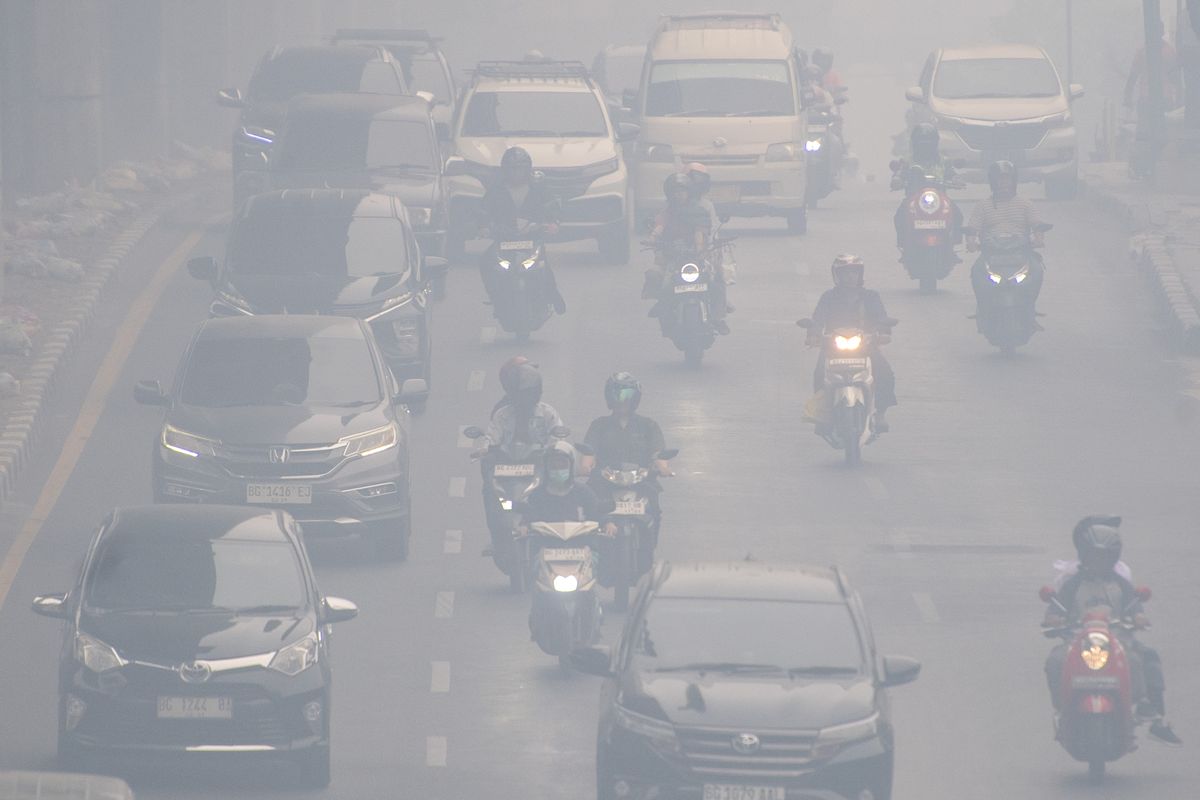
FOREST and land fires (Karhutla) are not merely environmental issues that can be resolved by extinguishing flames, deploying personnel, or inducing artificial rain.
When smoke crosses national borders, the issue shifts to public health, regional economics, state responsibility, and international trust.
The Indonesian government must not only explain the causes of the fires but also build trust that the state is present in preventing damage, protecting communities, enforcing the law, and restoring the environment.
Diplomacy cannot rely solely on statements that the government is working hard but must be based on verifiable evidence, measurable actions, and openness to criticism.
Historical data illustrate the significant risks of Karhutla. The World Bank estimated that fires in Indonesia from June to October 2015 devastated about 2.6 million hectares of land and caused economic losses of approximately $16.1 billion, nearly equivalent to 1.9% of Indonesia's gross domestic product at that time (World Bank, 2016).
The Ministry of Forestry’s statistics recorded that the area of forest and land fires in 2024 reached approximately 376,805 hectares.
This figure reflects the scale of challenges that must be addressed through appropriate policies for prevention, oversight, law enforcement, and ecosystem recovery.
Moreover, in 2026, threats loom once again over regional attention, thus the ASEAN Sub-regional meeting in Bali in July 2026 emphasized that the Karhutla issue cannot be handled solely through domestic policies but requires ongoing coordination among neighboring countries.
From the perspective of international political communication, the haze represents both a material problem and a perception issue.
Materially, smoke can disrupt health, education activities, transportation, tourism, and community economic activities.
Politically, Karhutla influences how other countries assess the Indonesian government’s capacity to manage the environment and fulfill regional responsibilities.
Malaysia, Singapore, Brunei Darussalam, and other neighboring countries may view the haze as a threat to the health and comfort of their citizens.
Consequently, they voice complaints, request explanations, and urge preventive measures.
However, Indonesia also has a stake in maintaining sovereignty, protecting its national reputation, and ensuring that international responses are based on facts and principles of fair cooperation.
Here, international political communication becomes crucial. Communication is not merely the delivery of messages from the Indonesian government to other governments.
It encompasses the process of meaning-making, conveying interests, managing differences, exchanging information, and negotiating joint actions among countries, international organizations, media, businesses, and civil society.
If the government highlights the successes of firefighting operations without disclosing data on hot spots, the extent of burned areas, air quality, sources of ignition, and legal follow-up, the message risks losing credibility.
Conversely, acknowledging problems, openness to information, and evidence of improvement can strengthen diplomatic efforts.
Upholding Indonesia's dignity does not require rejecting criticism. A nation’s dignity can be bolstered when the government is able to respond rationally to criticism, demonstrate evidence, and correct ineffective policies.
Indonesia has indeed established a foundation for regional cooperation. The ASEAN Agreement on Transboundary Haze Pollution provides a framework for member countries to prevent, monitor, and address haze pollution through national efforts as well as regional and international cooperation.
This agreement also regulates fire monitoring, information exchange, risk assessments, and actions to control or extinguish fires.
In December 2024, the parties meeting under the agreement reaffirmed the implementation of the agreement and progress on the ASEAN roadmap toward a haze-free region for the period 2023–2030.
This regional framework shows that addressing Karhutla has become a shared agenda, not merely a bilateral issue for Indonesia with a particular country.
However, the challenge lies in translating agreements into tangible results for communities.
Diplomacy must be present before, during, and after fires. Before the dry season, the government needs to convey risk forecasts, hazard maps, personnel readiness, and prevention plans to neighboring countries.
When fires occur, information about locations, the direction of smoke spread, air quality, and handling measures must be communicated swiftly and consistently.
Once the crisis passes, the government should publish evaluations, investigation outcomes, sanctions against violators, and updates on land recovery.