

Deputy Minister: SPPG Suppliers Are Less Engaging Local Potential, Instead Accommodating Large Players
-
News
-
Just now
This article was translated by AI. Read the original article on Kompas.com. See Original
JAKARTA, KOMPAS.com - The Ministry of Communication and Digital (Komdigi) claims that digitalization has significantly reduced the process of registering for social assistance (bansos) from a previous duration of up to 200 days to just 1 minute.
This acceleration results from an evaluation of the trial run of social protection digitalization (perlinsos) through Digital Public Infrastructure (DPI).
The Director of Digital Government Applications at Komdigi, Yessi Arnaz, stated that digitalization aims to simplify the registration and verification process for prospective beneficiaries of social assistance by integrating data across ministries and agencies.
“Previously, the manual bansos process could take 75-200 days from registration to receipt. That’s 200 days. Now, registration through DPI digitalization can be reduced to 1 minute to 6 hours,” Yessi said at the Komdigi Office on Thursday (29/10/2026).
In addition to speeding up the process, digitalization also aims to reduce the costs that citizens must bear when applying for social assistance.
“Previously, costs ranged from IDR 2,000 to IDR 150,000, including photocopying and other expenses, but now we can minimize that,” Yessi explained.
Yessi mentioned that about 15.7 million households (KK) have registered for the social assistance program digitally, which includes the Family Hope Program (PKH) and food assistance.
The registration target is set at around 48 million households out of a total population of about 98 million households in Indonesia.
“We are targeting around 50 percent, so approximately 48 million households. And now, thankfully, 15.7 million households have registered for social assistance through digitalization,” she said.
She explained that the existing recipients of food assistance and PKH total 18 million, while those in need amount to about 30 million.
“So, after we calculate, our system is registering approximately 300,000 to 500,000 households per day. In other words, we need around 400 to 500 distribution agents,” she added.
However, she acknowledged that implementing digitalization for social assistance requires communication support and collaboration with various parties.
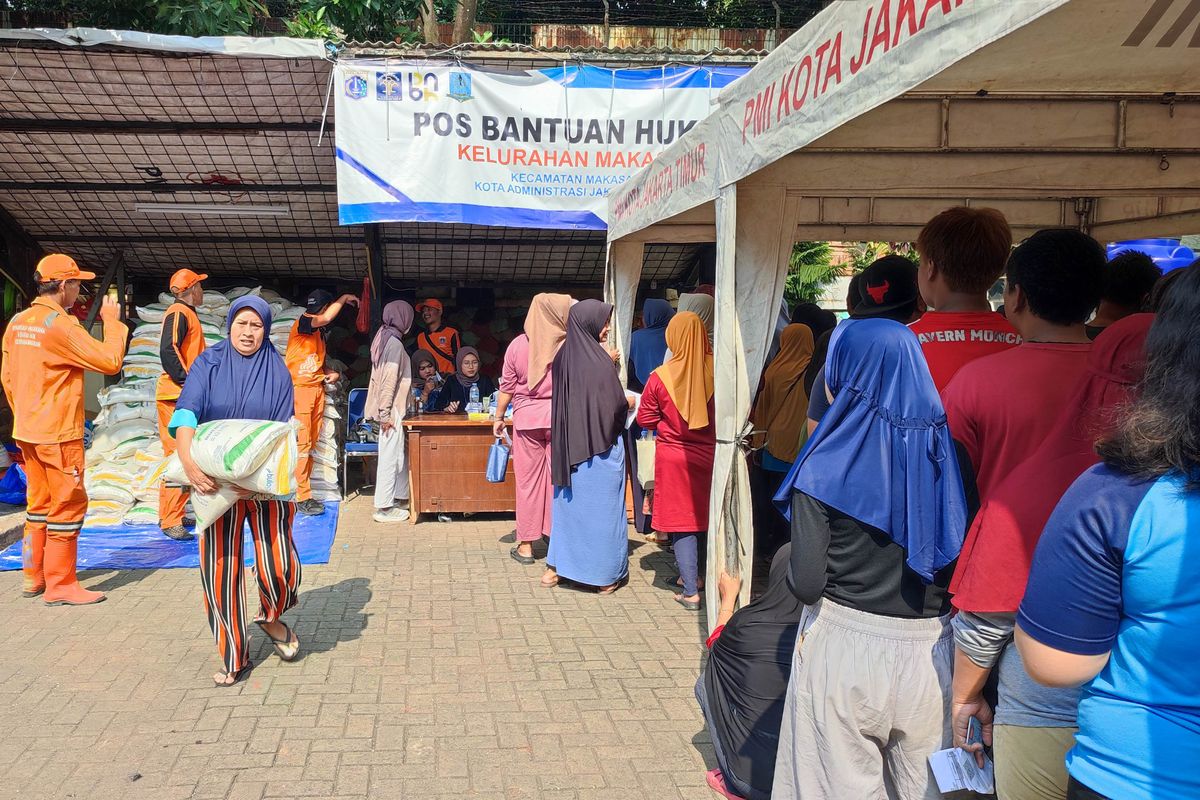
This is because not all people in need have mobile phones or can access digital services on their own.
“But the question is, often residents don’t really know how to access it. For those who are supposed to receive social assistance, do they have a cellphone? No. This is a system that needs communication support and collaboration from various parties,” she stated.