

Silmy Karim Claims to Have Stopped 'Click Money' Practices in Immigration: On the Contrary, I Opposed It
-
News
-
6 hours ago
This article was translated by AI. Read the original article on Kompas.com. See Original
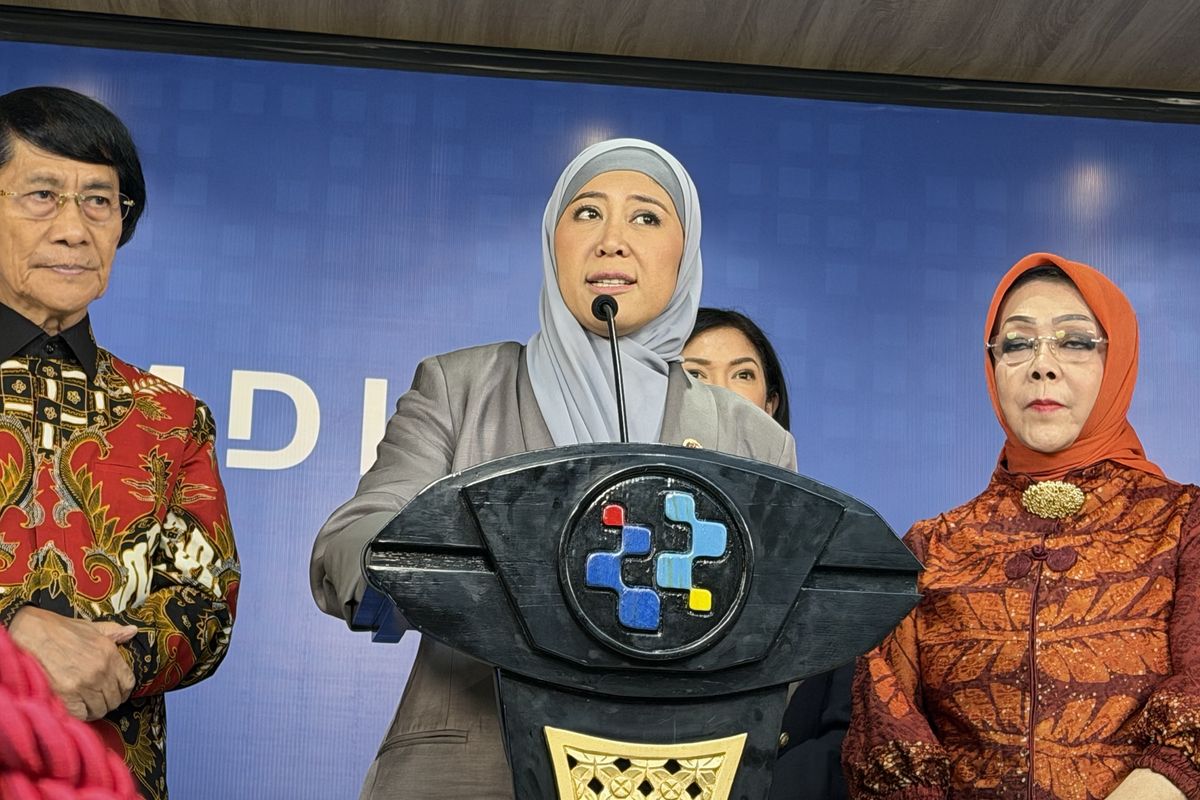
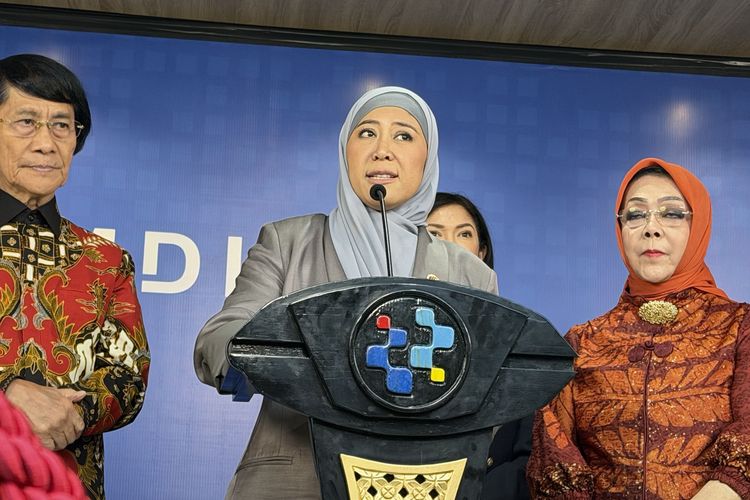
JAKARTA, KOMPAS.com - Minister of Communication and Digital Meutya Hafid stated that technological advancements have transformed the way people communicate.
However, these changes should not diminish the responsibility to provide accurate and trustworthy information.
“The media is evolving, technology is accelerating, but one thing must not change: our responsibility to deliver accurate, useful, and reliable information,” said Meutya in a video address during the launch of the book Menata Arus, Menjaga Pesan: Dari Penerangan ke Komunikasi Publik at Taman Mini Indonesia Indah (TMII), East Jakarta, on Wednesday (28/10/2026).
The book launch, coinciding with the commemoration of Youth Pledge Day, included a MuspenTalk discussion titled Menjaga Arus, Menata Pesan, attended by hundreds of students from SMK Budhi Agung, SMA Negeri 54 Jakarta, SMA Negeri 14 Jakarta, and SMK Negeri 51 Jakarta.
This event is part of an effort to introduce the history of communication in Indonesia and enhance young people's understanding of information challenges in the digital age.
According to Meutya, public communication today is not just about delivering information but also about building trust and maintaining a healthy public space.
She praised the Museum of Communication for preserving and presenting the history of Indonesian communication in a way that remains relevant for current generations.
The momentum of Youth Pledge Day is expected to remind us that communication has the power to unite society.
Representing Meutya at the event, Director-General of Public Communication and Media at the Ministry of Communication and Digital Fifi Aleyda Yahya reminded young people to be cautious about believing information received through social media and artificial intelligence.
She noted that society is now facing a tsunami of information, causing messages to spread much faster than the ability to verify their accuracy.
“The question is no longer whether we can access information. We are now facing this information tsunami. The issue is, do we still have time to think before we believe and share it?” said Fifi in her address.
Fifi also emphasized the importance of maintaining independent thinking amid advancements in AI.
This technology can aid in learning and foster creativity, but it must not replace the human capacity for critical thinking.
“AI is a tool, but we must keep learning to sharpen our genuine intelligence,” said Fifi.
In the same event, Head of the Museum of Communication Rizki Andono Prakoso mentioned that the publication of this book aims to document the journey of communication in Indonesia, from the era of telegraphs and radio to the evolution of digital media.
“Through this initiative, we aim to present the history of communication in a way that is closer and more relevant to today’s generation, especially the youth,” Rizki stated.