

National Police: Allegations of Treason by Listyo Sigit and Others Move to Investigation Stage
-
News
-
2 minutes ago
This article was translated by AI. Read the original article on Kompas.com. See Original
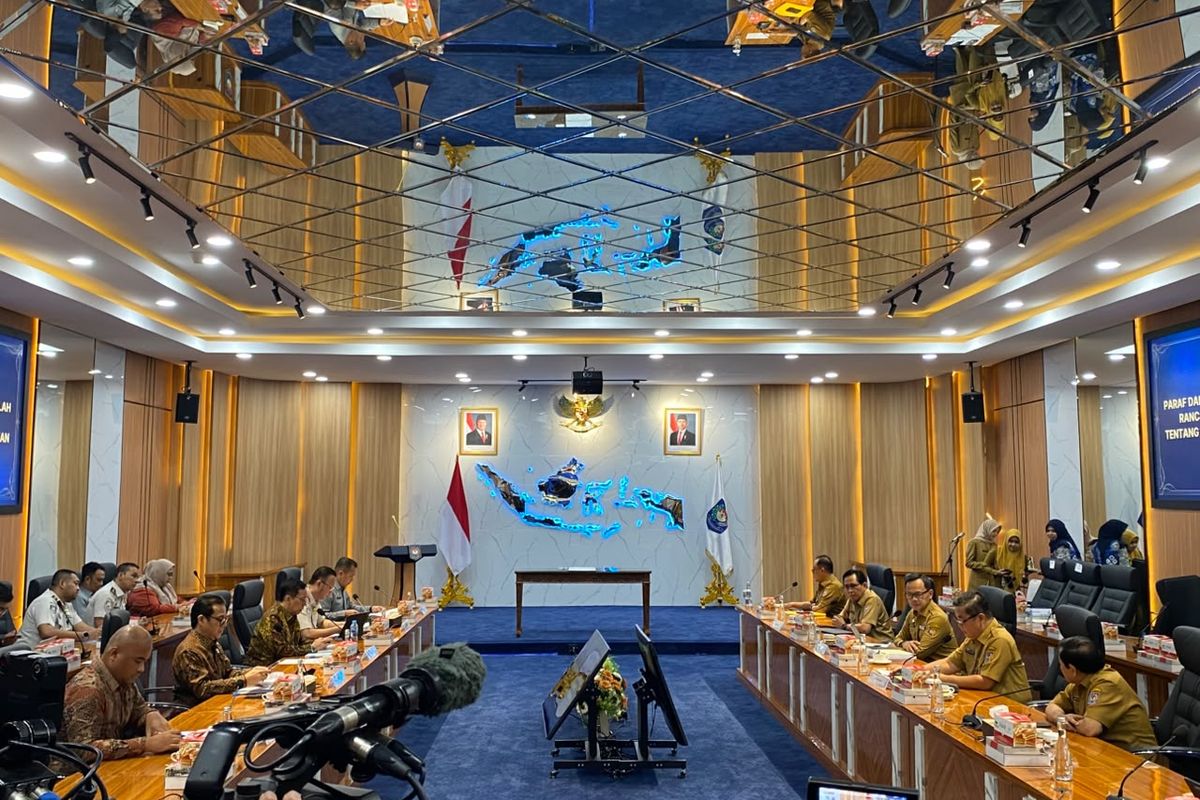
JAKARTA, KOMPAS.com - The government has established various provisions in the Inventory Problem List (DIM) of the Bill on Amendments to Law Number 23 of 2006 concerning Population Administration, which was jointly signed at the Ministry of Home Affairs in Central Jakarta on Tuesday (27/10/2026).
These provisions include strengthening the Single Identity Number (NIK), regulations on residence permits, passports, and the recording of dual citizenship.
Deputy Minister of Home Affairs Bima Arya Sugiarto stated that these regulations aim to create an integrated population administration system that is adaptive to the times.
Additionally, they are intended to facilitate more precise and directed development planning, high-quality public services, and protection of personal data.
"This also regulates several strategic matters, including reinforcing the NIK as a single identity number. Therefore, it integrates population data across all ministries and agencies to ensure that every citizen can access the basic services they need," Bima said after signing the DIM Bill on Tuesday.
Bima revealed that after the House of Representatives submitted the DIM to the government, various discussions took place.
The internal discussions at the Ministry of Home Affairs occurred from October 8 to 15, 2026.
Meanwhile, the kickoff meeting for the DIM Bill took place on October 13, 2026, involving seven relevant ministries designated by President Prabowo Subianto to represent the government in the discussions.
From these discussions, several changes and adjustments were made.
Overall, the drafting of this population administration bill resulted in 1,027 DIM and 150 articles.
The DIM was signed today and will later be submitted back to the House of Representatives no later than November 8, 2026.
"This will soon be shared with the House for discussion. I believe everyone can also follow this openly and observe the debate regarding which strategic issues will arise," Bima said.
Director-General of Immigration at the Ministry of Immigration and Human Rights, Hendarsam Marantoko, stated that his agency has proposed several substantial matters in the population administration bill.
This includes regulations on residence permits, foreign citizen data collection, limited stay permits, and permanent residence for individuals moving to or arriving from abroad.
"As well as the recording of dual citizenship for children that has been conducted by the Director-General of Immigration. This can be properly recorded within the immigration management information system or Immigration Management Information System (SIMKIM)," he said.
Additionally, there are matters related to the Republic of Indonesia travel documents, specifically how to utilize non-population identification numbers or identification numbers for Indonesian citizens residing abroad.
"This includes passport services at the Indonesian diplomatic missions, reporting name changes and deaths of Indonesian nationals for data updates, as well as the obligation for Indonesian citizens who lose their citizenship to collect their passports," Hendarsam noted.
Moreover, the Immigration Ministry proposed the addition and removal of certain articles.
One article proposed for removal is Article 49 of the population administration bill, which regulates the requirement for foreign nationals to carry proof of residence when traveling.
Hendarsam explained that the removal considers that proof of residence for foreign nationals with Limited Stay Permits (ITAS) is no longer used by immigration authorities.
Instead, the residence of foreign nationals will be registered based on guarantor statements and the results of immigration supervision.
"As there are many practices occurring in the field where we (the government -ed) hold the ITAS, and then the foreign national leaves. (With the population administration bill), what we maintain is the guarantor. Because the guarantor won’t be able to go anywhere," Hendarsam elaborated.
"So, in the future, not only related to this issue, the guarantor will be truly accountable for the foreign nationals present in Indonesia. That is what we are changing, as we believe it is the source of the problems that have occurred until now," he added.