

Gibran No Longer at the Palace, How to Interpret the Solidarity of the Prabowo Coalition?
-
News
-
6 minutes ago
This article was translated by AI. Read the original article on Kompas.com. See Original
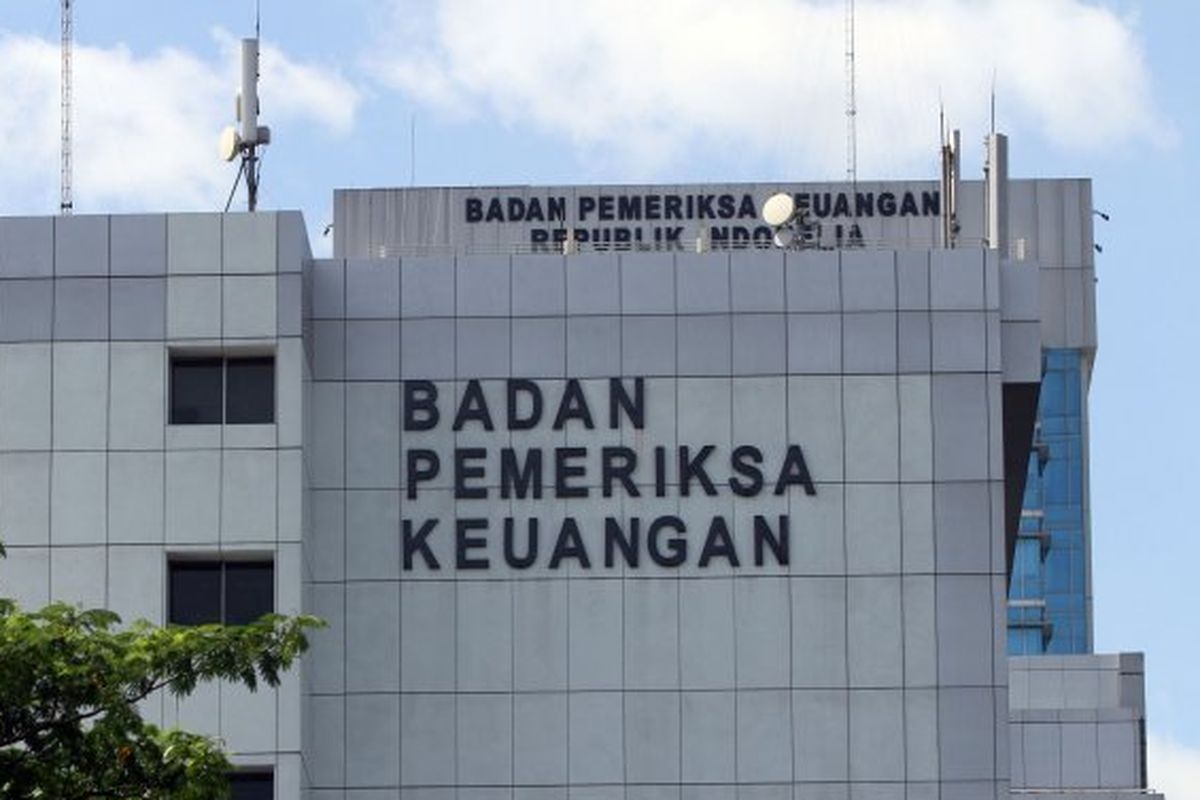
JAKARTA, KOMPAS.com - Legal expert from Atma Jaya University Yogyakarta, W. Riawan Tjandra, stated that the constitutional authority of the Audit Board of Indonesia (BPK) functions as external oversight.
This was mentioned while he was presented as an expert witness by the President/government in the case numbered 206/PUU-XXIV/2026, which questions which institution should calculate state financial losses.
"The constitutional function of the BPK should be understood as an external oversight function or external public audit of state financial management and not as a function of criminal law enforcement in this constitutional perspective," Riawan stated during the hearing, as quoted from the MKRI YouTube broadcast on Monday (26/10/2026).
For context, the petition numbered 206/PUU-XXIV/2026 was submitted by retired Navy Admiral Leonardi who is challenging the phrase "state financial audit institution" in the Explanation of Article 603 of Law Number 1 of 2023 concerning the Criminal Code.
The petitioner argues that the article does not explicitly state that the authoritative state financial audit institution is the BPK.
However, Riawan explained that the normative formulation of Article 23E paragraph (1) of the 1945 Constitution is not intended to establish a single auditor authority.
Article 23E paragraph (1) of the 1945 Constitution states, "To examine the management and accountability of state finances, a free and independent Audit Board shall be established."
He continued, from the perspective of oversight systems regarding state financial management, the norm in the 1945 Constitution is not designed to close off access for plural audit institutions that are inherently present in the governance/law enforcement system, such as the Inspectorate, the Financial and Development Supervisory Agency (BPKP), and forensic auditors/accountants at law enforcement agencies like the Corruption Eradication Commission (KPK) and the Attorney General's Office.
Moreover, Indonesia is regarded as a country with a division of external and internal oversight (multi-auditor system).
As for the phrases "examining the management and accountability of state finances" and "calculating state financial losses" in Article 23E paragraph (1) of the 1945 Constitution, they are considered to carry different legal meanings.
He explained that an examination is a comprehensive auditing process involving the management of state finances.
On the other hand, calculating state financial losses (PKKN) is merely one form of analysis regarding the financial consequences of specific actions.
Additionally, limiting the authority to determine state financial losses to a single institution is seen as narrowing the scope of oversight.
"Limiting the authority to determine state losses to only one institution with a formal interpretation constricts the surveillance scope. This not only undermines the oversight system but also fosters institutional absolutism, which contradicts the principles of the rule of law and the checks and balances system enshrined in our post-reform constitution," Riawan explained.
It is noted that the petition numbered 206/PUU-XXIV/2026 was submitted by retired Navy Admiral Leonardi, who is challenging the phrase “state financial audit institution” in the Explanation of Article 603 of Law Number 1 of 2023 concerning the Criminal Code.
According to him, the article does not clearly state that the authoritative state financial audit institution is the BPK.
This is seen as creating ambiguity in the norms and space for multiple interpretations in the application of criminal law, particularly in determining which institution is authorized to conduct examinations and calculate state financial losses.
Additionally, Leonardi believes that the vagueness of the phrase “state financial audit institution” in the Explanation of Article 603 of the Criminal Code could open avenues for unequal treatment of citizens.
In practice, he assessed that an individual could be prosecuted based on BPKP audit results, while in other cases, determining state losses could rely on the BPK, Inspectorate, or other auditing bodies.
In his petition, Leonardi requests that the Constitutional Court declare the Explanation of Article 603 of the Criminal Code, to the extent of the phrase, "...state financial audit institution..." as contradictory to the 1945 Constitution of the Republic of Indonesia and lacking legally binding force unless interpreted as the "Audit Board of the Republic of Indonesia".