

Managing Peak Traffic During Year-End Holidays 2026
-
News
-
1 minute ago
This article was translated by AI. Read the original article on Kompas.com. See Original
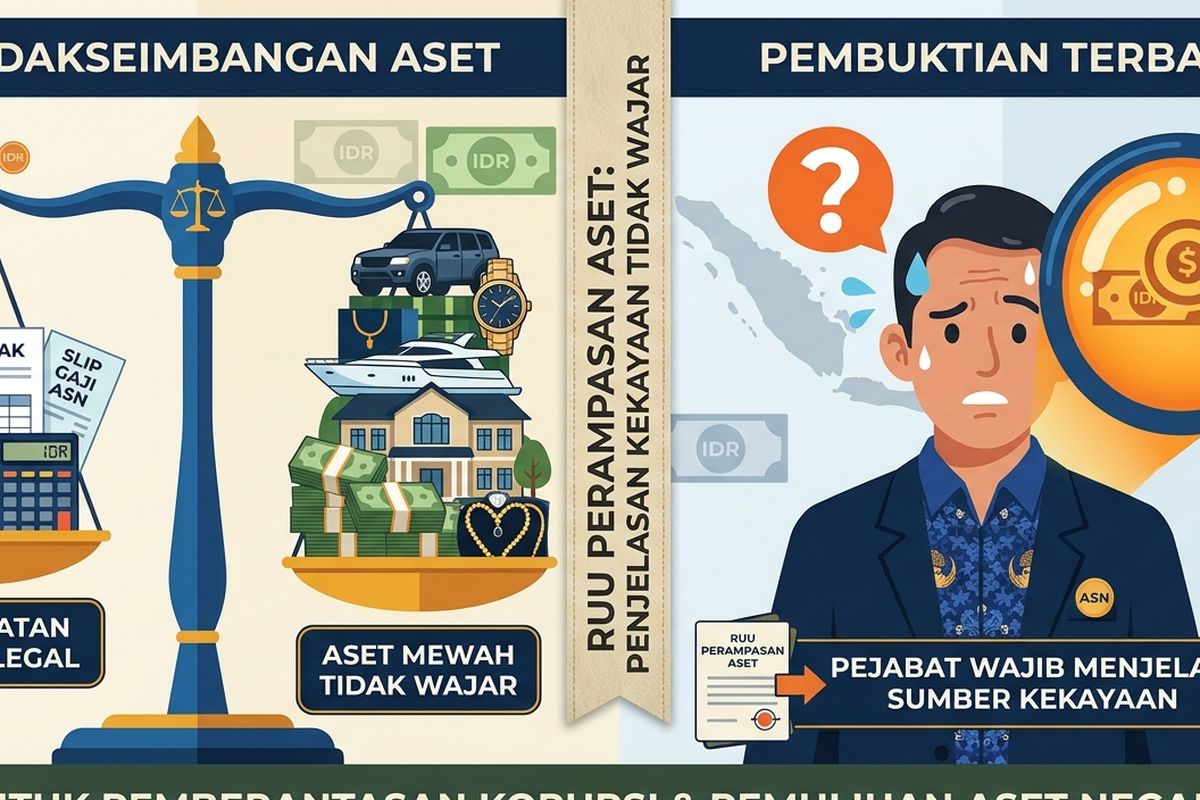
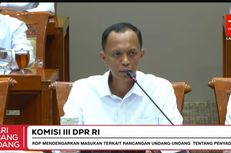
JAKARTA, KOMPAS.com - Professor Said Karim from the Faculty of Law at Hasanuddin University (Unhas) has rejected the regulation concerning illicit enrichment in the Draft Law on Asset Forfeiture Related to Criminal Offenses.
Said explained that the concept of illicit enrichment falls within the realm of substantive criminal law, while the Asset Forfeiture Bill pertains to procedural criminal law.
Therefore, he believes that these two matters should not be mixed within a single law.
"Is it necessary to regulate illicit enrichment or include it in the Asset Forfeiture Bill? I apologize if there are differing opinions, but I firmly state that it is not necessary. Once again, I say, it is not necessary," said Said during a public hearing related to the Asset Forfeiture Bill in Commission III of the Indonesian House of Representatives on Monday (26/10/2026).
Said elaborated that illicit enrichment refers to a significant increase in a public official's wealth that is disproportionate to their legitimate income and cannot be satisfactorily explained.
This concept is recognized in the United Nations Convention Against Corruption (UNCAC), which Indonesia ratified through Law No. 7 of 2006.
However, according to Said, Indonesia does not yet have a specific crime that independently penalizes illicit enrichment.
He also expressed concerns that implementing this concept could raise issues related to the presumption of innocence, particularly because it involves a reversal of the burden of proof.
"When a public prosecutor charges someone and brings them to trial, it is the prosecutor's obligation to prove the defendant's guilt," said Said.
Said reminded that merely possessing significant wealth does not automatically implicate someone in illicit enrichment.
According to him, the main issue lies in the unexplained increase in wealth based on legitimate income.
"Nevertheless, merely having wealth in large amounts does not automatically tie someone to illicit enrichment. The main issue is the unexplained rise in assets," Said noted.
Apart from the issues surrounding illicit enrichment, Said also urged the House of Representatives to carefully formulate mechanisms for asset forfeiture.
He emphasized that such regulations must be meticulously drafted to avoid providing law enforcement personnel with the opportunity to act arbitrarily.
"Caution is required in regulating asset forfeiture laws as they significantly affect implementation on the ground, and it is possible for certain law enforcement officials to act arbitrarily. It must be genuinely guaranteed and ensured that the law enforcement agencies are professional," he stated.