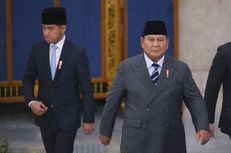
Prabowo Teases Yandri Susanto's Push to Become Minister of Village Development, Initially Intended for Bahlil
-
News
-
Just now
This article was translated by AI. Read the original article on Kompas.com. See Original
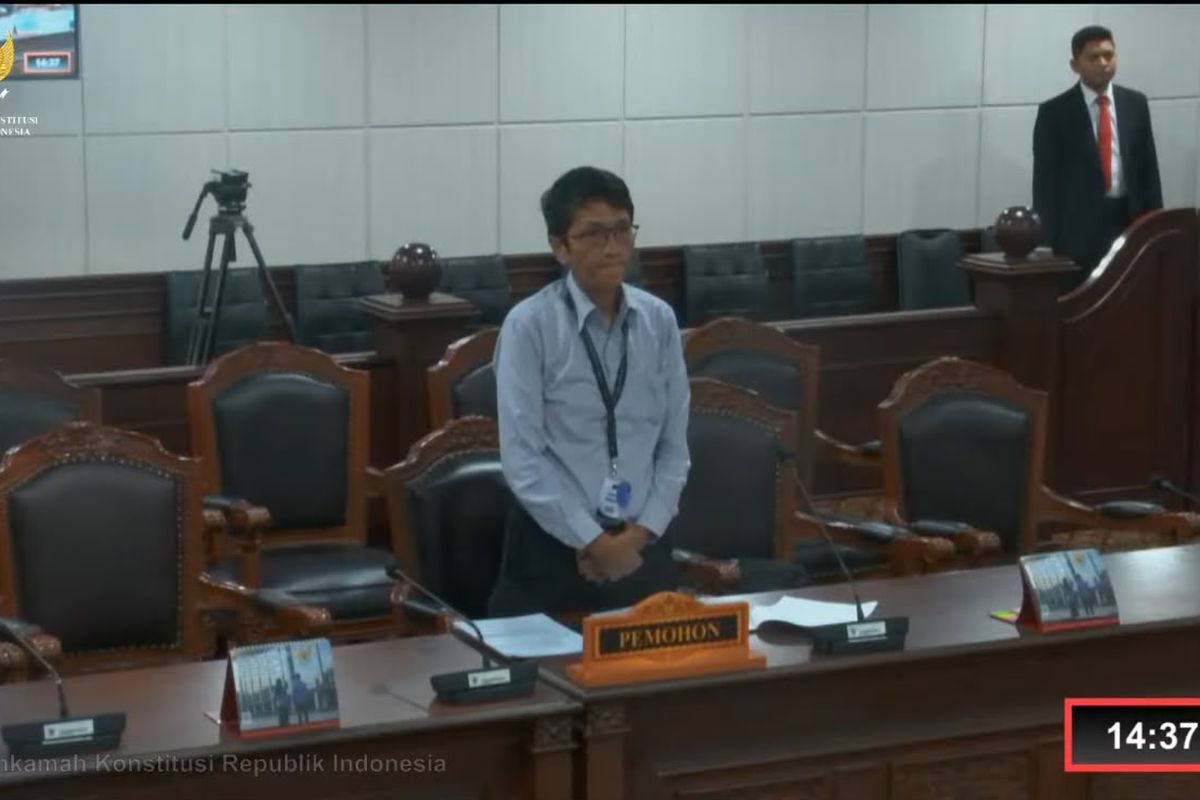
JAKARTA, KOMPAS.com - Online motorcycle taxi driver Eduwin Purba has raised concerns about the persistent disruptions to the practice of religious worship in Indonesia.
Despite the freedom of religious practice being enshrined in various laws, issues continue to arise.
"There are so many laws that restrict human freedom of action, yet disruptions to religious worship still occur," Eduwin stated during the Preliminary Examination Session of Application Number 386/PUU-XXIV/2026 on Wednesday (21/10/2026), as reported by the MK's YouTube broadcast on Friday (23/10/2026).
As a result, he is challenging Article 22 of Law Number 39 of 1999 on Human Rights, as well as Article 18 of Law Number 12 of 2005 ratifying the International Covenant on Civil and Political Rights (ICCPR) at the Constitutional Court (MK).
Eduwin is also contesting Articles 300 through 305 of Law Number 1 of 2023 concerning the Criminal Code.
He argues that disruptions manifest through the rejection of church construction projects that meet official requirements, as well as the denial of worship services during religious holidays in residential areas.
Moreover, there have been cases of opposition to the conversion of retail spaces or warehouses into places of worship, along with the cancellation of non-church religious activities such as retreats or prayer meetings.
One notable incident occurred on Sunday (10/9/2026), when members of the Rajeg Protestant Christian Church (GKPI) in Tangerang faced opposition during their worship service.
Eduwin contends that existing laws governing the freedom of worship do not align with the norms in Article 29 (2), Article 28E (1) and (2), as well as Article 28I (1) of the Constitution of the Republic of Indonesia of 1945.
In his petition, he requests the MK to uphold the legal rights of religious practitioners and affirm the legal consequences for violations of these laws.
"This way, the continuity of worship for each religion can proceed smoothly and without disruption from irresponsible parties, thus realizing the principle of Pancasila that states 'Belief in One God' and creating a conducive atmosphere for all adherents of their respective faiths," Eduwin concluded.