
Head of Bakom Did Not See PSI at Prabowo's Meeting with Party Leaders at Bogor Palace
-
News
-
9 minutes ago
This article was translated by AI. Read the original article on Kompas.com. See Original
TWO years have passed since the leadership of President Prabowo Subianto and Vice President Gibran Rakabuming Raka took charge of the Republic of Indonesia.
The political honeymoon is over, replaced by the harsh realities of governance.
Asta Cita, touted as the golden roadmap to national greatness, now faces a thick wall named budget constraints.
The noble vision encompassing eight main missions and quick-result programs is beginning to be tested by time.
Numerous achievements have indeed been made, yet the shadows of unfulfilled promises are becoming increasingly visible to the public eye.
The main problem lies in the chasm between high political ambitions and the narrow fiscal space of the state.
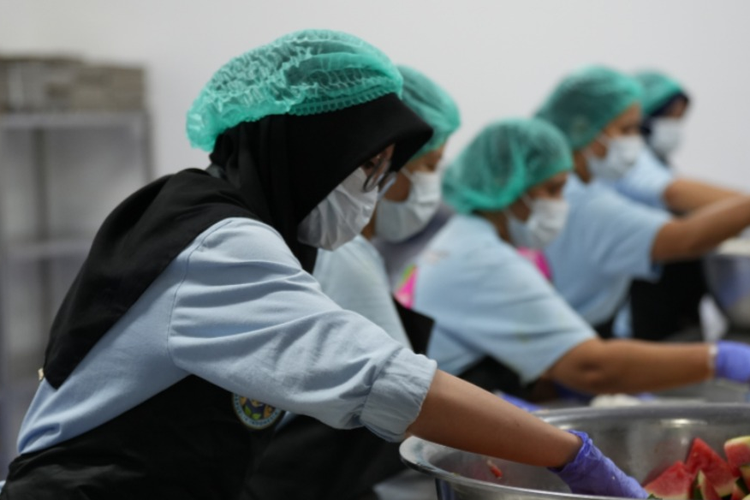
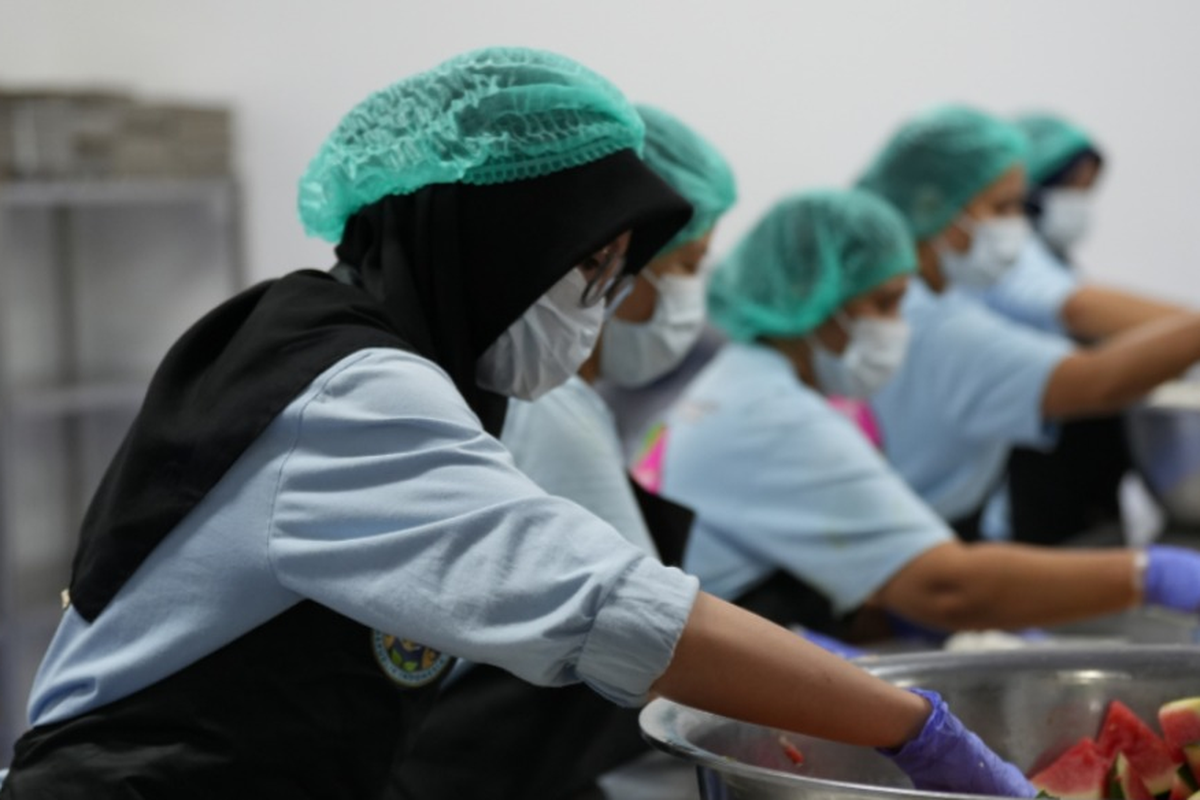
People see the Nutrient-Rich Food Program slowly starting to roll out in various remote areas, stimulating the grassroots economy.
However, giant structural ideas such as the establishment of an autonomous National Revenue Agency and the target of building three million houses per year still seem to be stalled.
Various economic research institutions have highlighted this imbalance.
Grand plans are often forced to be postponed or scaled down to save the budget posture from the threat of swelling deficits.
Why is this reality crucial to dissect now? With the remaining time in the administration, the public needs to recognize that it is very likely not all promises of Asta Cita will be fulfilled by the end of the term.
Public disappointment could escalate if the government continues to build a narrative of success without acknowledging the technical challenges on the ground.
We need a more objective and solution-oriented perspective.
Critiquing achievements does not equate to pessimism; rather, it is an effort to find solutions so that the remaining time can be optimally utilized for improving the most essential foundations of development.
The tight budget flexibility is the root cause of the slowdown in several priority programs.
As quoted from Kompas.id, the government is currently saddled with debt obligations with a tight schedule for repayment over the past two years.
This condition drains funds that should ideally be allocated for developmental innovations to cover principal payments and interest on debts.
Nearly seventy percent of our national spending is binding, such as salaries, regional transfer funds, and energy subsidies, which are vulnerable to fluctuations in global oil prices and the exchange rate of the rupiah.
As a result of these pressures, the government is forced to implement extreme efficiency measures to fund new initiatives.
Cutting travel and ceremonial event budgets deserves recognition as a short-term frugality measure.
However, efficiency measures taken without selectivity risk undermining the ministries' capacity to carry out essential public service programs.
Some technical ministries have complained about the lack of operational funds for field supervision.
This is the irony of our bureaucracy today; when top-level ambitions are very high, the bureaucratic machinery at the grassroots level is starved of fuel to keep moving.
As a solution, the government must shift its paradigm from budget cuts to creating sustainable new revenue sources.
Relying on off-budget financing schemes or public-private partnerships is indeed a smart solution, but their implementation is slow.
According to a press release from the Ministry of Investment, foreign direct investment realization has reached trillions of rupiah, but its distribution has yet to be even across labor-intensive sectors.
The government needs to be more aggressive in improving the core tax system to pursue tax dodgers, rather than pressuring the purchasing power of the middle class.
On the international stage, the president's proactive diplomatic style has brought a new dimension to our geopolitics.
Various state visits have yielded numerous large investment agreements and positioned Indonesia as a global power balancer.
Recent reports published by international research institutions note that Indonesia's non-aligned stance successfully attracted foreign investors in the national energy transition sector.
This achievement deserves high praise for keeping the economic wheel turning amidst global economic uncertainty due to recession threats and prolonged conflicts.
However, the real challenge lies not in signing memorandums of understanding abroad but in execution speed domestically.
Often, multi-trillion rupiah investment commitments are delayed simply due to complicated land licensing and the unpreparedness of detailed spatial planning in the regions.
This presidential-centric diplomacy creates a bottleneck effect, where ministers and local heads often hesitate to make technical decisions without direct guidance.
This structural weakness is what makes many investment promises slow to transform into physical factories that absorb millions of workers.
Political courage is needed to decentralize the authority to execute investments.
The central government must form special task forces that not only accompany investors in the capital but also tackle land disputes in the regions.
Additionally, the government needs to provide incentives for regions that successfully expedite spatial planning licenses.
If synchronization between the center and the regions is not rectified soon, the accumulated foreign investment commitments will merely be a beautiful string of numbers on paper without ever benefiting local job seekers.
Eventually, evaluating two years of the Asta Cita journey compels us to learn to accept political and economic realities more maturely.
It is entirely rational that during the remaining term there will be several fantastic programs that ultimately fail to meet full targets.
Failure to achieve a target does not automatically mean the government has failed overall, as long as the foundational groundwork laid is heading in the right direction.
The pragmatism of the cabinet in adjusting the scale of priority programs to budget availability is a wise step that is more prudent than forcing an expansion of national debt.
This remaining time in office must be used as a golden opportunity to improve the quality of bureaucratic governance, rather than merely as a showcase of new promises.
The government must honestly sort out which programs are most worthy of continuation and which plans should be abandoned due to existing limitations.
Through transparent public communication and radical reforms in the local licensing system, the noble vision of Asta Cita can be gradually maximized.
The maturity of a nation is tested not only by the number of promises made but also by its resilience in fulfilling commitments.