
The Divergence of Narratives Between the Palace and Gibran on Resignation and 'Fight Back': What Political Message Is There?
-
News
-
14 minutes ago
This article was translated by AI. Read the original article on Kompas.com. See Original
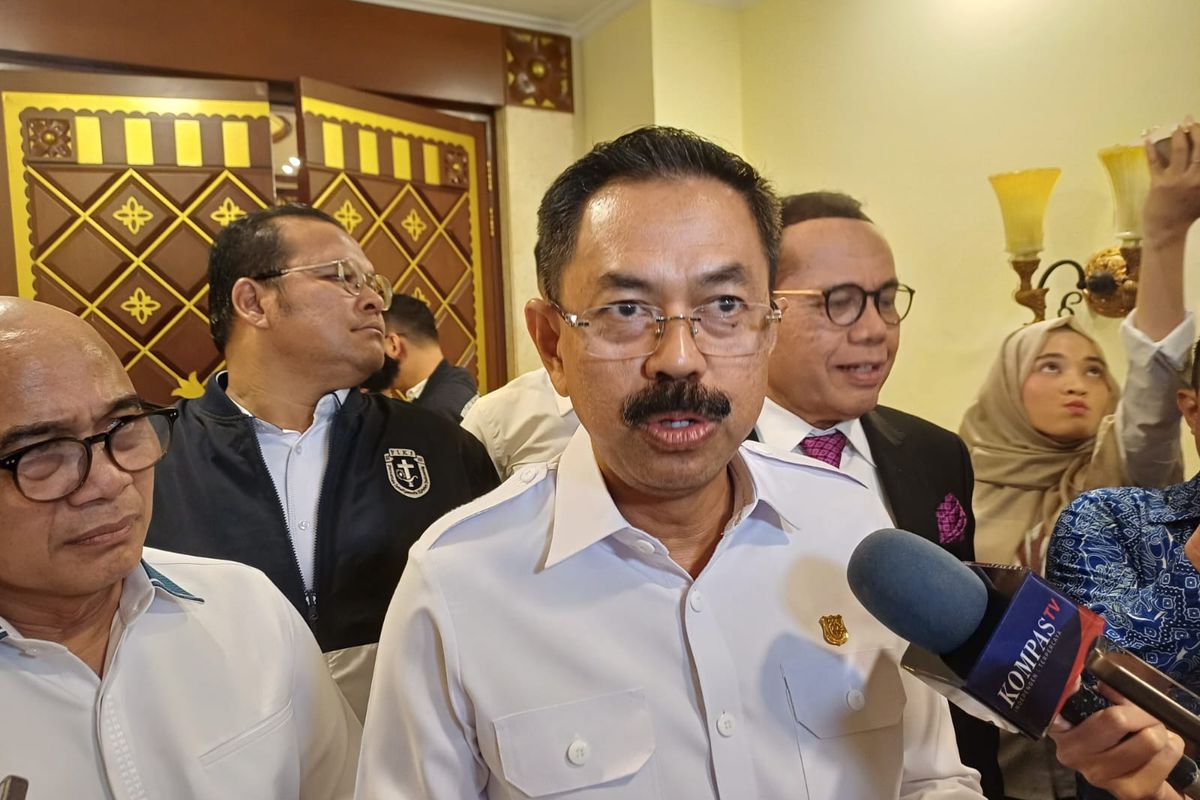
JAKARTA, KOMPAS.com - The Attorney General's Office (Kejagung) views the Constitutional Court's (MK) ruling regarding Law Number 31 of 1997 on Military Judiciary as a critical moment to shift the paradigm of law enforcement from being offender-based to action-based.
"We want to reconsider the differences in character between Law 31/1997 concerning military judiciary, which has been focused on the offender, and shift to being action-based," said Deputy Attorney General Asep Nana Mulyana at the Kartini Hall, Jakarta, on Tuesday (20/10/2026).
Asep stated that Kejagung respects the MK's ruling regarding Military Judiciary.
He believes that this move is a tangible manifestation of the principle of equality before the law without distinguishing between civilian and military distinctions.
"We will no longer differentiate between legal subjects due to the stipulations set forth in the law," he remarked.
The MK has set a two-year deadline for legal amendments.
While waiting for these amendments, Asep noted that the Assistant Attorney General for Military Crimes (Jampidmil) is prepared to serve as a bridge in addressing cases involving civilians and military personnel.
"We also have a Military Crime Attorney General. This role essentially serves as a bridging mechanism when there is a crossover between cases involving two different legal subjects: civilians and military personnel. Thus, Jampidmil acts as this bridge," he explained.
He emphasized that the existence of Jampidmil is crucial in addressing disparities in the legal system.
"After all, both individuals may commit the same act, at the same time, with the same victim and modus operandi, yet one is sentenced or charged under different articles—one for theft and the other for receiving stolen goods," he added.