
Cak Imin Encourages Pesantren-Based Vocational Schools to Elevate Standards to International Levels
-
News
-
3 hours ago
This article was translated by AI. Read the original article on Kompas.com. See Original
JAKARTA, KOMPAS.com - Teacher welfare remains a pressing issue for the government amidst efforts to improve the quality of national education.
Although the government has increased the teacher welfare budget and added professional allowances for some educators, the issue of teacher income has not been fully resolved.
As President Prabowo Subianto and Vice President Gibran Rakabuming Raka's administration marks its second year, the problem of teacher welfare extends beyond the size of the budget allocated by the state.
Differences in employment status, income disparity, and the absence of a minimum salary standard for teachers are all challenges that need to be addressed.
President Prabowo Subianto previously stated that the budget for teacher welfare would be increased.
During the peak celebration of National Teacher's Day on November 28, 2024, Prabowo announced an increase in the welfare budget for civil servant (ASN) and non-ASN teachers to IDR 81.6 trillion in 2025.
This figure represents an increase of IDR 16.7 trillion compared to the previous budget.
"The budget for the welfare of ASN and non-ASN teachers will rise in 2025 to IDR 81.6 trillion, an increase of IDR 16.7 trillion for teacher welfare," Prabowo said at the time.
Prabowo also announced an increase in professional allowances for non-ASN teachers who meet certification requirements, from IDR 1.5 million to IDR 2 million per month.
This policy is one of the government’s steps to improve the welfare of educators.
However, the Indonesian Teachers Union Federation (FSGI) believes that the impact of these policies has not been felt uniformly by all teachers.
The Chairperson of the FSGI Expert Council, Retno Listyarti, stated that income increases during the two years of the Prabowo-Gibran administration have mainly benefited non-ASN teachers who have received professional allowances.
"If we talk about actual implementation, it’s predominantly for non-ASN teachers," Retno told Kompas.com on Friday (October 16, 2026).
According to her, there remain groups of teachers who have yet to experience increases in income, particularly those who are uncredentialed and non-ASN teachers in private schools with limited financial resources.
Retno explained that teachers in Indonesia have varied employment and income conditions.
ASN teachers can hold status as civil servants (PNS), aspiring PNS, or government employees with work agreements (PPPK), whether full-time or part-time.
Meanwhile, non-ASN teachers often work in private schools where salary systems depend on the financial capacity of the educational providers.
This disparity results in inconsistent teacher incomes.
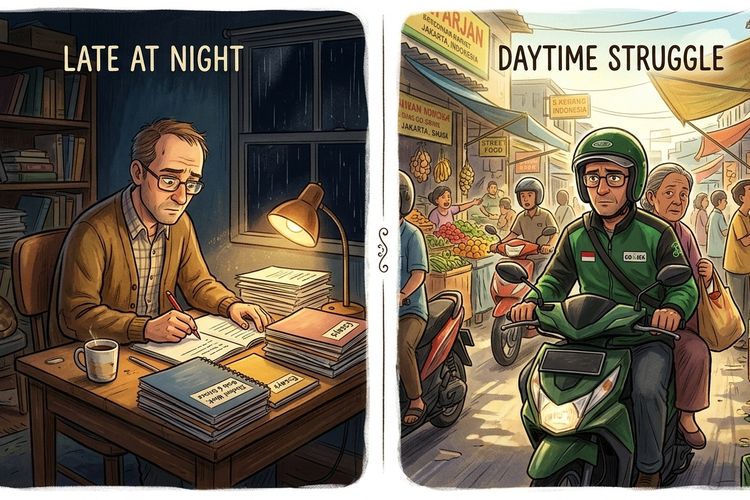
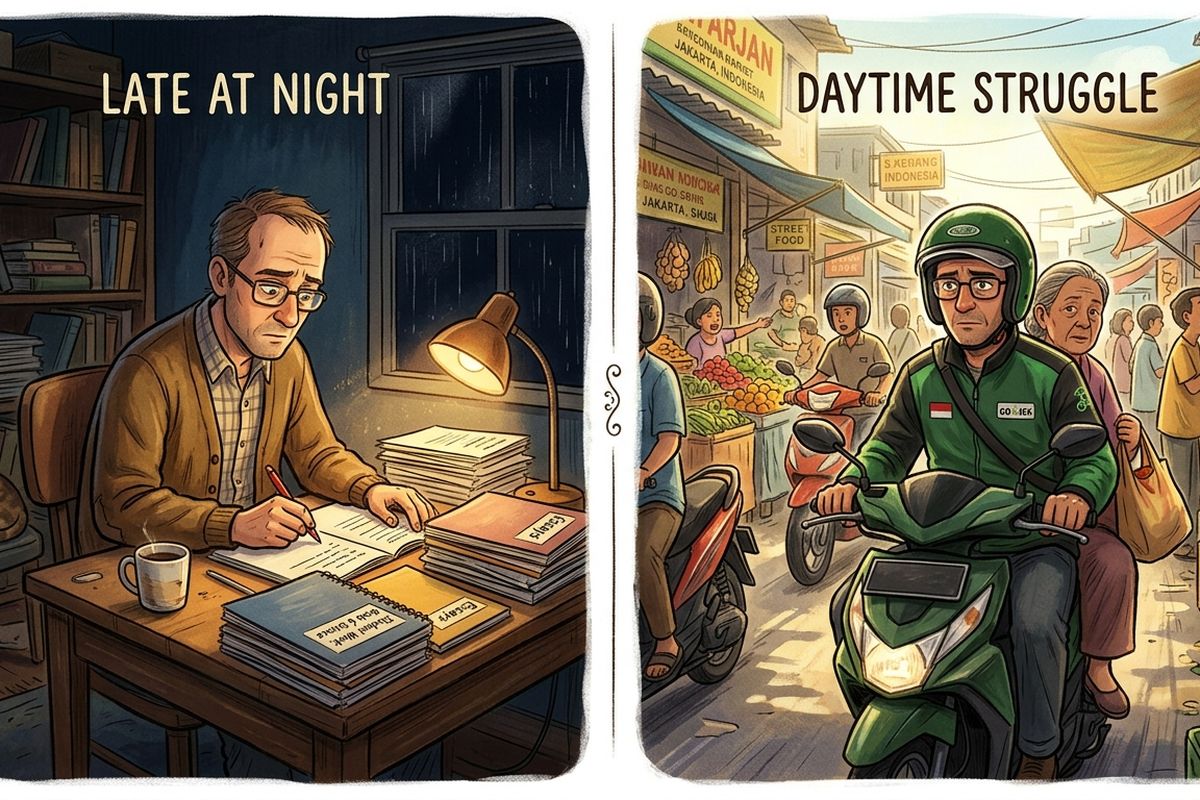
According to Retno, some teachers receive salaries according to the regional minimum wage (UMR), while others earn as little as IDR 150,000 per month.
The income of non-ASN teachers, she said, heavily relies on the conditions of the schools where they teach.
Schools with limited student enrollment and financial resources tend to struggle to provide decent salaries to their educators.
"So there's really no salary standard (for teachers), yet teachers are required to have at least a bachelor's degree, but their salaries don’t reflect that of a graduate," Retno explained.
This situation is problematic because the educational qualifications required for teachers do not always align with the income they receive.
Retno compared the situation of teachers to workers in other sectors that have minimum wage provisions.
She noted that teachers still lack a generally applicable minimum wage standard to ensure that their incomes do not vary excessively.
Despite teachers carrying the responsibility for the education process and being expected to meet certain qualifications, income disparities persist, especially for those who have yet to receive professional allowances.
Retno mentioned that there are aids or grants from the central government for certain groups of teachers who are still uncredentialed.