
Police Reform Discussions Resume: Should National Police Chief Suyudi Revisit KPRP Recommendations?
-
News
-
2 minutes ago
This article was translated by AI. Read the original article on Kompas.com. See Original
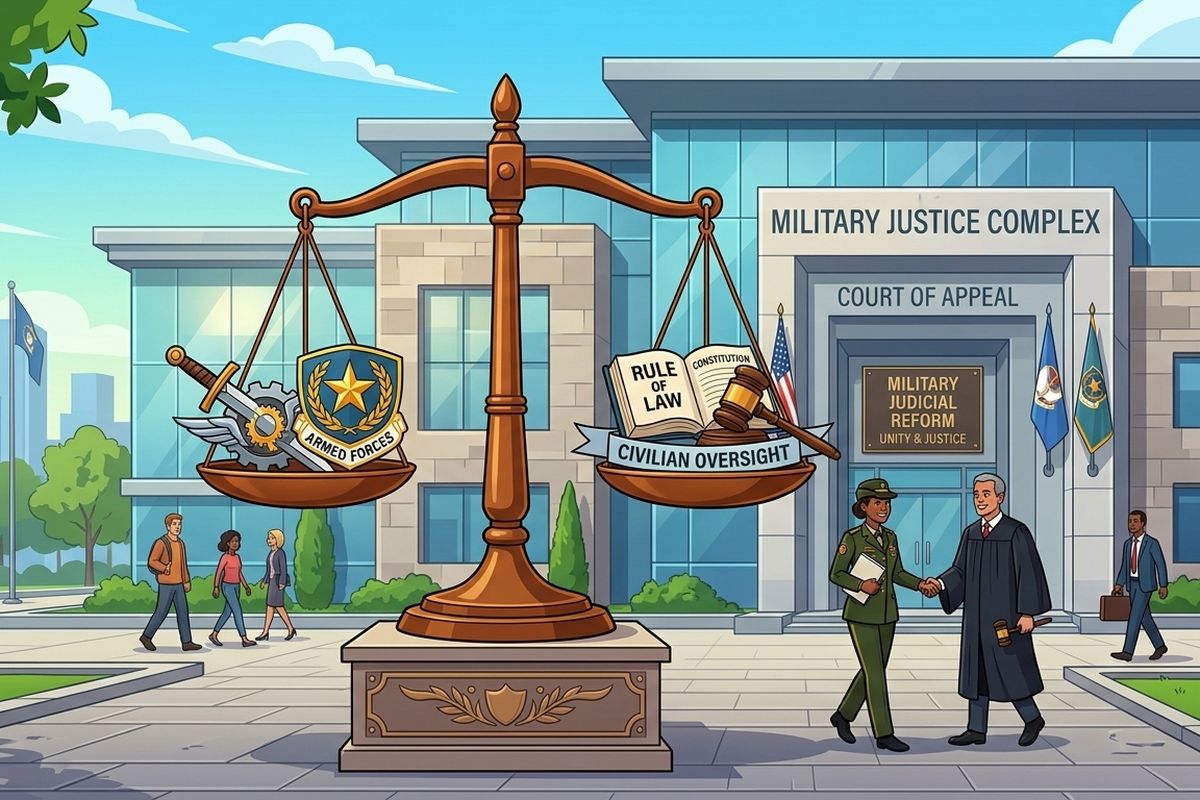
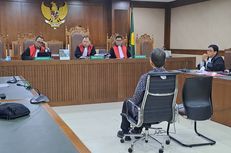
JAKARTA, KOMPAS.com - The Constitutional Court (MK) has declared Law Number 31 of 1997 on Military Justice to be in conflict with the 1945 Constitution and subject to being conditionally invalid if not revised promptly.
Through its ruling in case Number 260/PUU-XXIII/2025 delivered on Thursday (15/10/2026), the MK granted the government and the House of Representatives a maximum of two years to amend the legislation.
If not addressed, the Military Justice Law will cease to be valid.
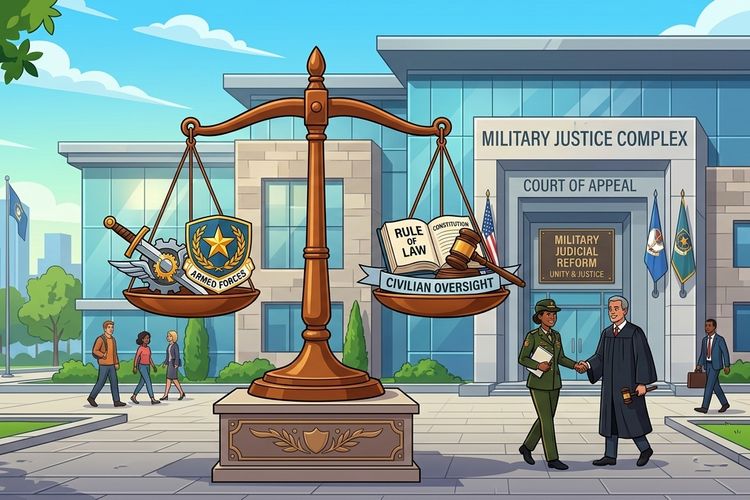
This decision paves the way for the clarification of the jurisdictional boundaries between military courts and general courts concerning offenses committed by TNI soldiers.
The MK emphasized that the revision must include a clear definition of military offenses and general offenses.
It should also establish a mechanism for resolving disputes regarding the appropriate court to handle certain cases.
The Indonesian National Armed Forces (Mabes TNI) respects the MK's decision, which declares the Military Justice Law unconstitutional unless amended within the two years following the ruling.
“As a law-abiding state institution, TNI respects and complies with all decisions of the Constitutional Court,” stated the Chief of the TNI's Information Center, Major General TNI Muhammad Nas, when contacted on Friday (16/10/2026).
Nas affirmed that TNI is committed to upholding the principles of the rule of law.
“The TNI is committed to consistently upholding the principles of the rule of law and legal supremacy in Indonesia,” he added.
Legal expert Abdul Fickar views this ruling as a significant moment for reforming the military justice system.
According to Fickar, the MK's decision reinforces that TNI soldiers who commit military offenses should be tried in military courts, while those committing general offenses should be tried in general courts.
He noted that previously, TNI soldiers accused of both military and general offenses were typically tried in military courts.
This situation has drawn public scrutiny, as general offenses committed by TNI members should be handled through the general court system.
“Yes, absolutely (a momentum). Because all this time, whether for military offenses or general offenses, such as in the case of Andri Yunus, and various other crimes, they were tried in military courts. They should be tried in general courts,” Fickar explained when contacted by KOMPAS.com on Friday (16/10/2026).