

Assessing the High Logistics Costs of the Archipelago
-
News
-
50 minutes ago
This article was translated by AI. Read the original article on Kompas.com. See Original
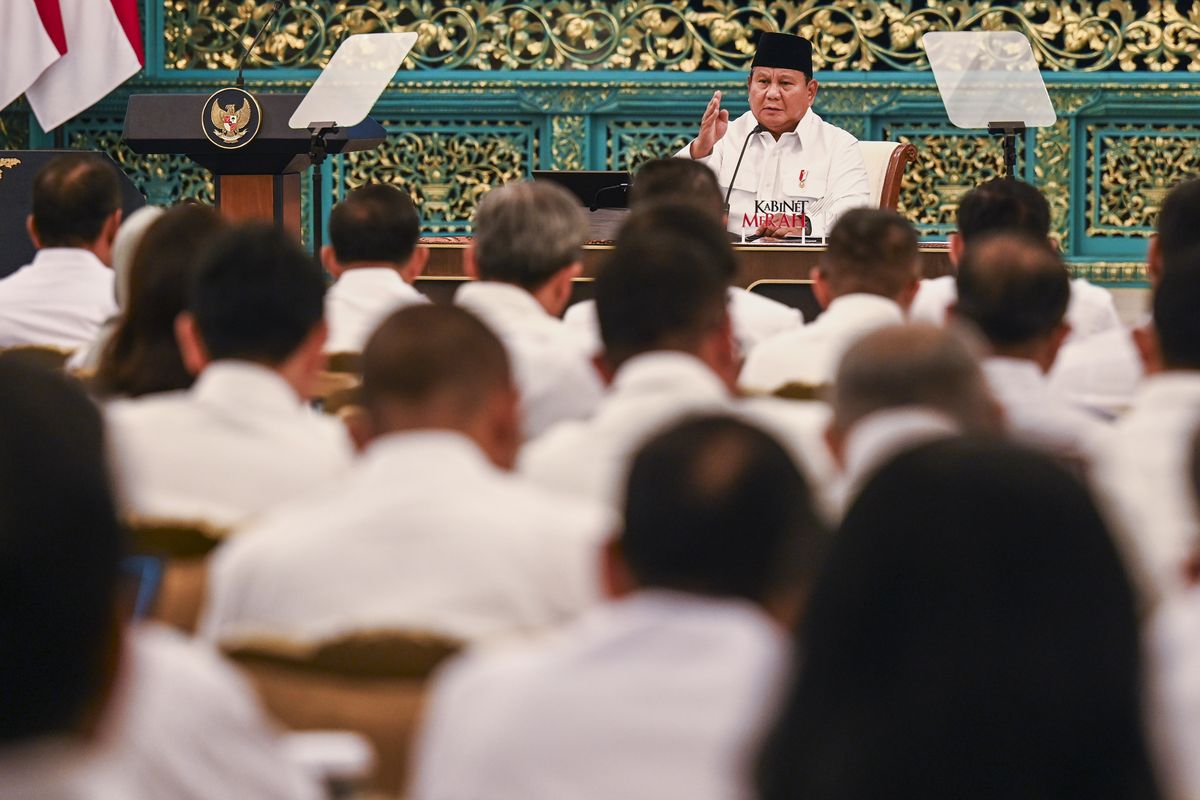
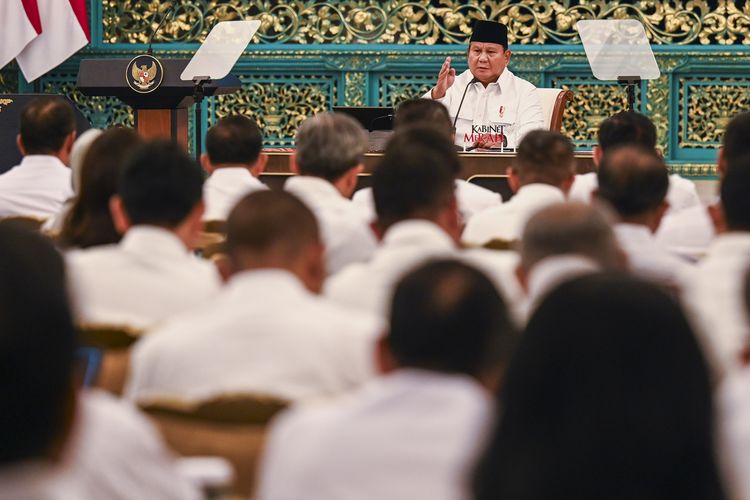
AS THE SECOND YEAR of President Prabowo Subianto's administration approaches (October 20, 2026), there is an intriguing cultural political analysis regarding the president's style in consolidating power.
I find it interesting to compare him with Soeharto, Indonesia's second president who ruled for 32 years and was, notably, Prabowo's former father-in-law.
While their durations of power are not comparable—Soeharto ruled for 32 years, while Prabowo has only been in power for 2 years—the sources of inspiration can certainly be hypothesized.
From a cultural political perspective, Indonesian scholars like Benedict Anderson (1972) and Fachry Ali (1986) see Soeharto's leadership as a representation of Javanese power ideology. Is Prabowo mimicking Soeharto?
Prabowo is not a pure Javanese, unlike Soeharto. His Javanese blood comes only from his father, Soemitro Djojohadikoesoemo.
However, in his book titled Military Leadership: Notes from Experience, Volume 2 (2022), Prabowo claims he studied Javanese culture seriously. He learned many Javanese terms from his grandfather, Margono.
Prabowo has explored the works of national and international figures. He examines models of leadership from both Western and Eastern traditions. However, Soeharto, with his Javanese philosophy, holds a special place.
In that book, Prabowo discusses Javanese leadership, along with insights he gained from Soeharto.
I believe it is very natural for Prabowo to absorb many lessons from Soeharto. To Prabowo, Soeharto is a commander (the supreme commander), a teacher, and also his father-in-law (the grandfather of his only son).
In the closing chapter of his book, Prabowo emphasizes the Javanese adage: “tata tentrem kartarahardja, gemar ripah loh jinawi”.
According to Prabowo, “gemah ripah loh jinawi” can only be achieved after “tata tentrem kertarahardja”. Prosperity presupposes order, security, and governance that produce goodness and justice.
More than half a century ago, the eminent American Indonesianist, Benedict Anderson, published his monumental study titled The Idea of Power in Javanese Culture (1972).
Anderson depicted that in traditional Javanese cosmology, power is not merely an abstract concept of laws and institutions but a concrete entity, homogeneous, of a fixed number (constant), and amoral.
Power is thought to have its own form or reality, derived from the Creator. It is homogeneous because it comes from a single source, thus not divided into various institutional forms (such as executive, judicial, or legislative).
Power is neither created nor destroyed but merely shifts or concentrates from one place/person to another.
Moreover, it is amoral because power is fundamentally neutral or outside moral categories (good or bad, legal or illegal). The moral or immoral nature lies with the “user” or holder of power.
Power must be wholly absorbed into a single center to create a state of harmony (order or alignment). This principle of harmony is the essence of Javanese power. Harmony is the Javanese aspiration for all social relations.
This traditional political philosophy found its modern incarnation during the New Order era under Soeharto. For 32 years, Soeharto practiced total consolidation of power through the legendary doctrine: “political stability for economic development (growth)”.
Regional autonomy was curtailed through absolute centralization. Political parties were forced into fusion.
Thus, Golongan Karya (Golkar) was formed with a triangular relational structure: A Line (ABRI/TNI-Polri), B Line (Bureaucracy), and G Line (Golkar). All three lines converged on Soeharto.
Civil society elements were absorbed into state-formed corporate organizations. All organizations were compelled to adopt the single principle of Pancasila.
Since the amount of power is considered fixed (zero-sum game), any ripple of opposition outside the Palace orbit was suspected of undermining the Palace's authority.
Soeharto then controlled mass media, campuses, and public expression spaces. He even resorted to intimidation with the “petrus” model (mysterious shootings) and sent opponents to prison as well as other forms of violence, branding anyone who opposed him as “communist/PKI”.
Faux stability and order were glorified as a cosmic sign that “divine mandate” still resided with him. For 32 years, Soeharto survived by absorbing power to center on himself.

























