

The Opening of Talent Transfer Market
-
News
-
8 minutes ago
This article was translated by AI. Read the original article on Kompas.com. See Original
JAKARTA, KOMPAS.com - Legal expert Abdul Fickar views the Constitutional Court's (MK) ruling on the Military Justice Law as a pivotal moment to reform the judicial system for Indonesian National Armed Forces (TNI) personnel who commit crimes.
According to Abdul Fickar, the MK's ruling reinforces the principle that TNI personnel accused of military crimes should be tried in military courts, while those charged with common crimes should be prosecuted in civilian courts.
He noted that historically, both military-related crimes and general offenses committed by TNI personnel have been adjudicated in military courts.
This situation, he argues, has drawn public attention, as general crimes committed by TNI personnel should be handled through the civilian judicial system.
"Yes, it is indeed a momentum. Because up until now, whether it’s a military crime or a common crime like that of Andri Yunus and others, all have been tried in military courts. They should be tried in civilian courts," Abdul Fickar stated in an interview with Kompas.com on Friday (16/10/2026).
Abdul Fickar explained that changing the judicial system requires an amendment to the Military Justice Law.
The MK's ruling is seen as a catalyst to expedite the development of fairer regulations.
“The Constitutional Court's decision also urges the Parliament to swiftly amend the Military Justice Law to ensure that it focuses solely on adjudicating military offenses committed by military personnel,” he said.
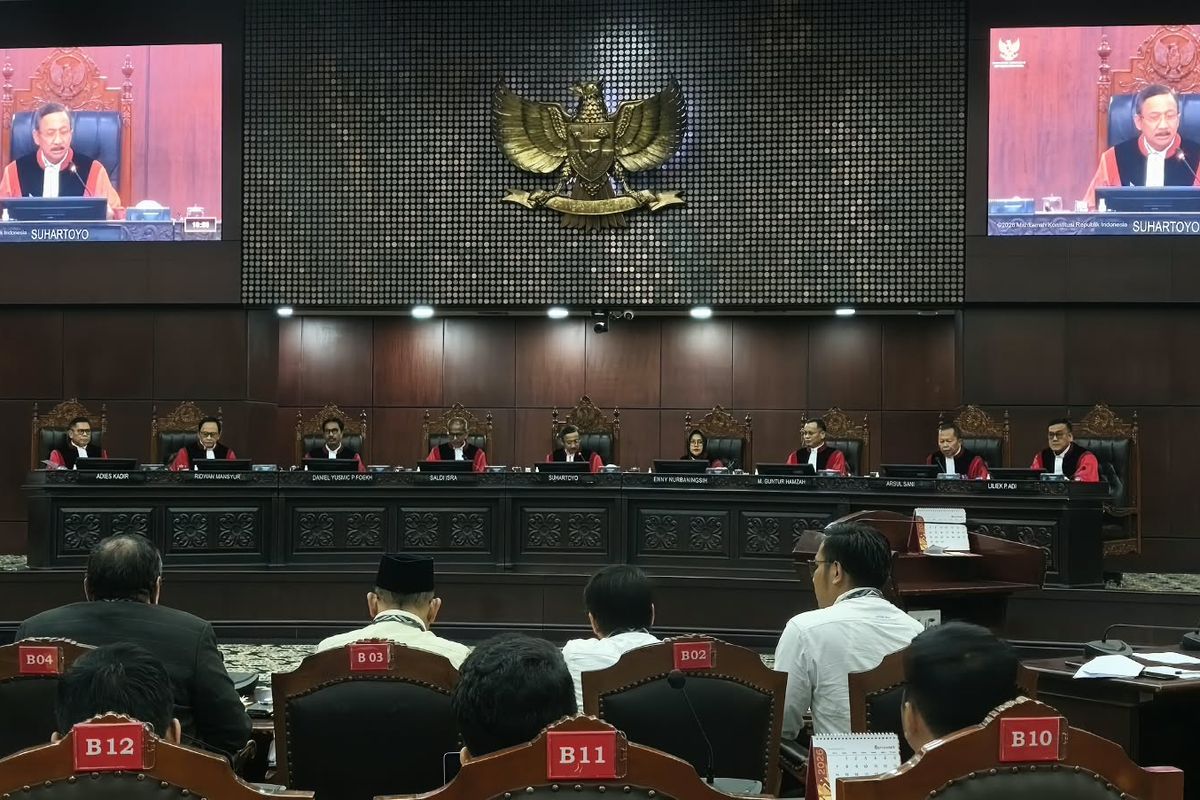
As previously reported, the MK ruled that Law Number 31 of 1997 concerning Military Justice is incompatible with the 1945 Constitution and lacks legally binding authority unless amended within a maximum of two years from the date of the ruling.
This decision was outlined in case Number 260/PUU-XXIII/2025, announced on Thursday (15/10/2026).
The MK has called for a revision of the Military Justice Law to include clear definitions for military and common crimes, as well as to delineate the jurisdiction of military and civilian courts concerning offenses committed by TNI personnel.
The MK also requested the establishment of a mechanism for resolving disagreements regarding which judicial forum is competent to handle TNI cases.
If the law is not amended within two years from the date of the ruling, the MK stated that the law would be declared unconstitutional and would no longer be in effect.

























