

The Opening of Talent Transfer Market
-
News
-
7 minutes ago
This article was translated by AI. Read the original article on Kompas.com. See Original
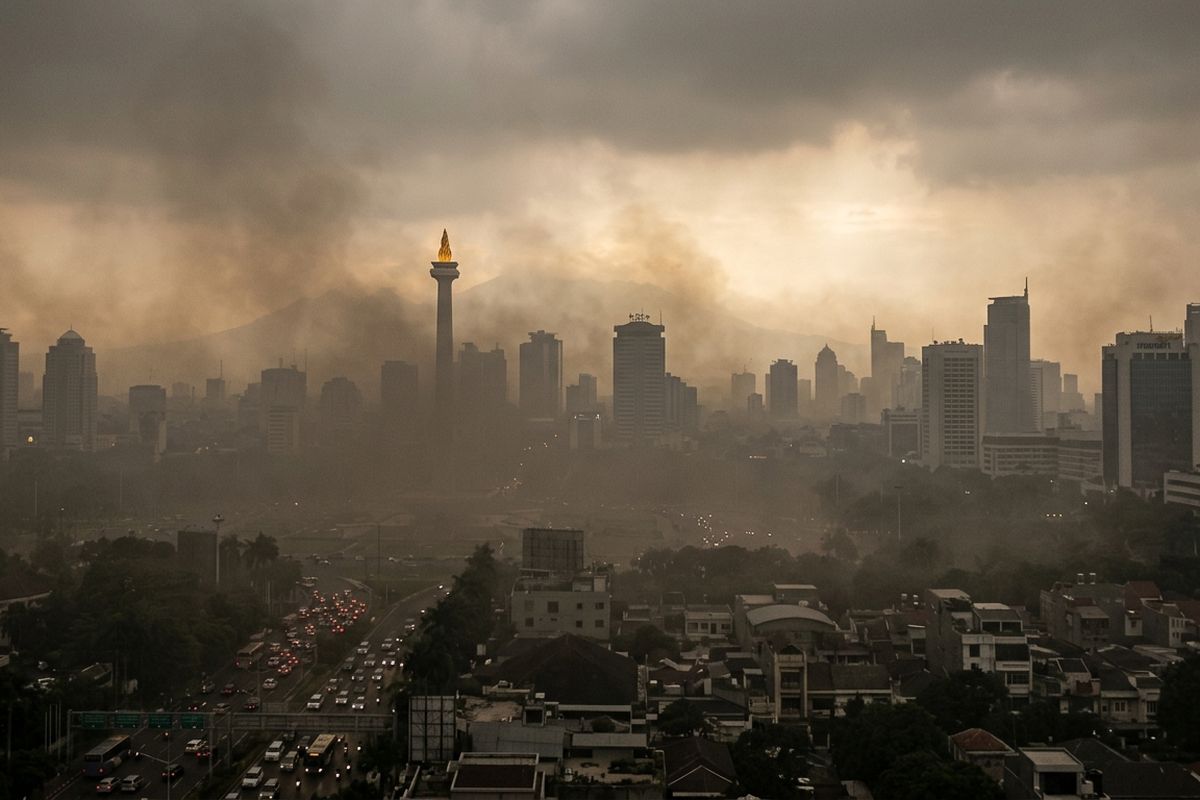
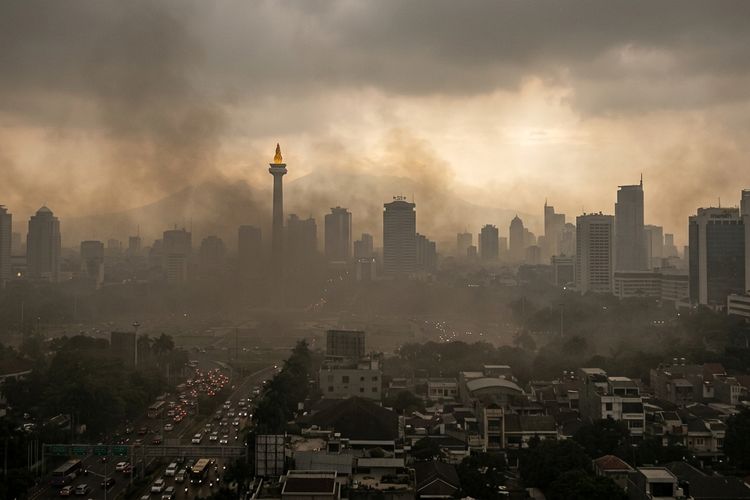
JAKARTA, KOMPAS.com - The Meteorology, Climatology, and Geophysics Agency (BMKG) has confirmed the presence of smoke from forest and land fires (karhutla) in the atmosphere of Jakarta.
So, how does the karhutla smoke reach Jakarta?
Daryono, a member of the Indonesian Disaster Experts Association, explains that meteorologically, the smoke from Kalimantan can still reach Jakarta even though the eastern wind season is currently taking place.
He stated that eastern winds do not always move directly from east to west.
"The eastern wind is the dominant circulation pattern during the dry season in Indonesia. However, the direction of the wind can change depending on location, altitude, time, and atmospheric conditions. Therefore, winds in Kalimantan may not necessarily flow in the same direction as those over the Java Sea or Jakarta," Daryono remarked in a statement on Friday (16/10/2026).
Additionally, Daryono explained that karhutla smoke can also be carried by winds at different atmospheric layers.
He noted that PM2.5 fine particulate smoke can be lifted by turbulence and convection to heights of hundreds or thousands of meters.
At certain altitudes, the wind direction may differ from that at the surface.
"This condition allows smoke to travel along atmospheric transport pathways that are not always aligned with the winds perceived by people at the surface," he said.
Furthermore, Daryono believes that changes in regional wind direction can also serve as transport routes for the smoke.
The former Director of Earthquake and Tsunami at BMKG explained that atmospheric disturbances, low-pressure areas, cyclonic circulation, and transitional monsoon periods can temporarily alter wind patterns.
"If a flow of air is formed from the fire areas towards the Java Sea and Jakarta, smoke particles have the potential to be carried across distances of hundreds of kilometers," he elucidated.
Finally, Daryono clarified that although smoke can spread far, during its journey, it undergoes dilution, mixing, chemical transformation, and deposition.
Therefore, he indicated, the smoke entering Jakarta's atmosphere does not necessarily lead to severe air pollution.
"The impact depends on the magnitude of emissions, the direction and speed of the wind, rainfall, and atmospheric stability," he concluded.

























