

Condemning the Case in Malang, Minister PPPA Asserts No Child Should Die Due to Violence
-
News
-
40 minutes ago
This article was translated by AI. Read the original article on Kompas.com. See Original
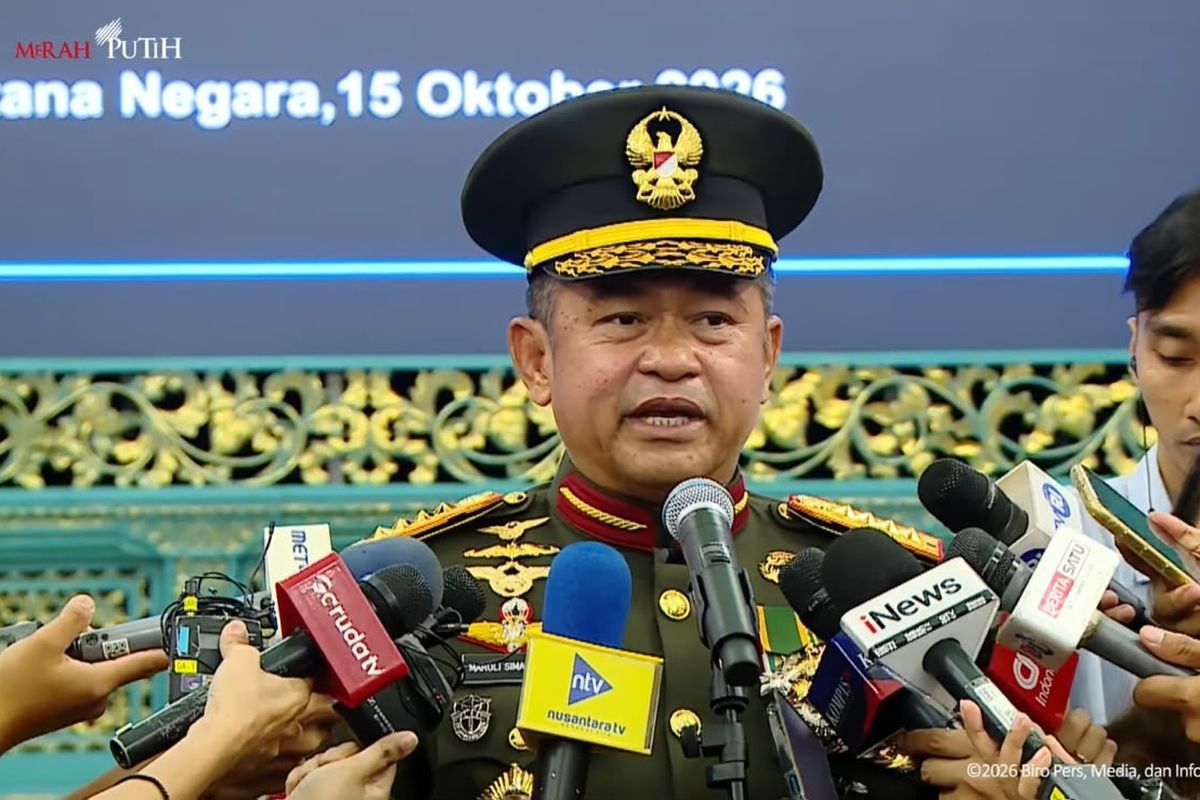
JAKARTA, KOMPAS.com - Deputy Commander of the Indonesian National Armed Forces, General TNI Maruli Simanjuntak, responded to the Constitutional Court's ruling declaring Law No. 31/1997 on Military Justice unconstitutional with conditions.
He addressed the criticisms regarding impunity that were also mentioned in the Court's considerations, which evaluated the potential for impunity when TNI personnel facing criminal offenses are tried in military courts.
"In fact, if we compare many cases, there are quite a few instances where we (military courts) are firmer than in any criminal incidents," he said to reporters at the State Palace in Jakarta on Thursday (15/10/2026).
He noted that many military personnel have received life sentences from military courts.
This is considered much stricter compared to civilian courts, which rarely impose such maximum sentences.
"In civilian courts, that's actually quite rare," he remarked.
"And I think the rules in the military are actually much stricter," Maruli added.
He also explained that a thorough examination of military court proceedings would reveal the reasons for the imposition of sentences, whether they are lighter or heavier.
However, Maruli mentioned that he would attempt to study the Constitutional Court’s ruling declaring the Military Justice Law unconstitutional with conditions.
"Perhaps in the future, the decision Number 260/PUU-XXIII/2025 will be clearer, as read today, Thursday (15/10/2026).
In its ruling, the Constitutional Court asserted that the Military Justice Law contradicts the 1945 Constitution unless improvements are made within a period of two years.
One of the petitioners' arguments considered by the Court was regarding the risk of impunity that occurs within military courts.
According to the Court, the more serious the criminal offenses based on military characteristics, the weaker the justification for maintaining military court jurisdiction.
Therefore, the Court believes that for general criminal offenses committed by TNI personnel, using civilian courts can prevent the risk of impunity.
From various arguments, the Court concluded that the Military Justice Law must be amended to include clear definitions of military and general criminal offenses, as well as the boundaries of jurisdiction between military courts and civilian courts concerning offenses committed by TNI personnel.

























