

Condemning the Case in Malang, Minister PPPA Asserts No Child Should Die Due to Violence
-
News
-
1 hour ago
This article was translated by AI. Read the original article on Kompas.com. See Original
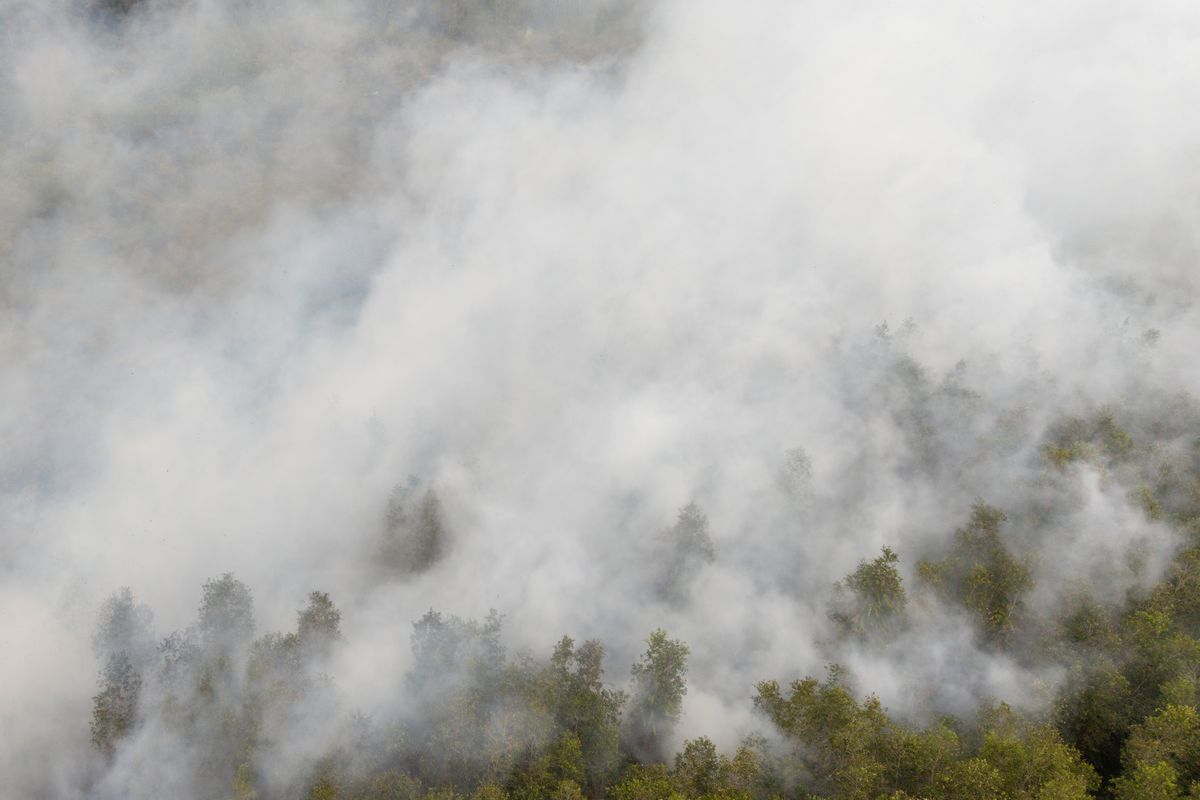
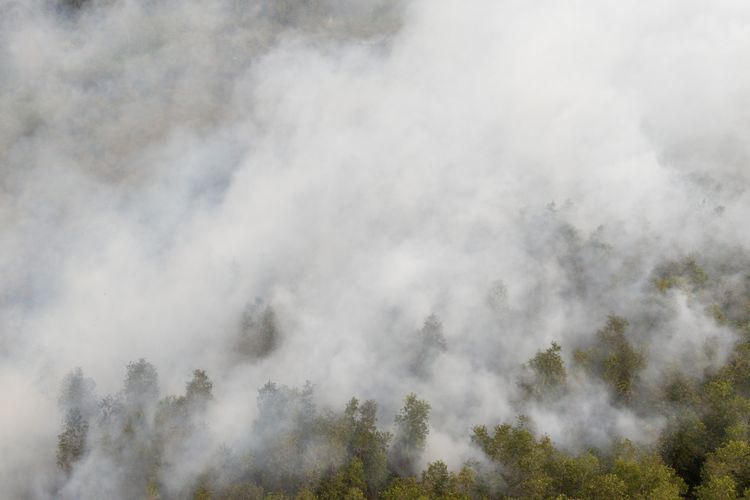
FOREST and land fires in Sumatra and Kalimantan have not yet completely subsided.
This year's fire season has been described as the worst in the last eleven years.
Smoke knows no administrative boundaries. It envelops numerous regions of Indonesia, moving towards Malaysia and Singapore, even prompting school closures in several areas of Malaysia due to deteriorating air quality.
The health impacts are already evident. Data from the Ministry of Health cited by Reuters shows that over 12.5 million people in seven provinces across Sumatra and Kalimantan have been exposed to haze.
The number of respiratory disorder cases related to the fires surged from 50,891 cases on September 1 to 113,336 cases on September 9, 2026.
For the healthcare sector, the response to this situation is relatively clear. The public needs information about exposure risks, vulnerable groups must be protected, masks should be provided, air quality needs to be monitored, and healthcare facilities must prepare for an increase in respiratory diseases.
However, up to a certain point, the healthcare sector's capacity also has its limits.
Doctors can treat shortness of breath. Community health centers can manage respiratory infections.
Hospitals can care for patients whose conditions worsen. Health workers can educate the public to reduce outdoor activities when air quality is poor.
But at the root of it all—the forest fires—health workers cannot resolve this issue.
Improving peatland management, controlling land clearing with fire, formulating plantation policy, restoring ecosystems, and ensuring law enforcement against arsonists fall outside the health sector's realm.
Here, forest fires remind us of a concept often overlooked in health discussions: health is not merely a biomedical issue.
It is also a social and political matter. When the root causes of illness stem from social conditions...
The WHO has long emphasized the importance of social determinants of health: the conditions in which people are born, grow, work, live, and age also determine their health.
However, there is an even deeper layer, namely the political determinants of health.
Ilona Kickbusch, a health policy expert, explains that health is political partly because health equity is unevenly distributed, many health determinants rely on political actions, and health is part of rights and citizenship.
The distribution of power, resources, interests, and governmental decisions ultimately determines who is healthy and who bears the risk of disease.
Forest fires are a clear example. PM2.5 from the smoke can penetrate deep into the lungs and enter the bloodstream.
This exposure is linked to an increased risk of respiratory and cardiovascular diseases and can worsen conditions for those with asthma, chronic lung disease, and heart disease.
Children, the elderly, pregnant women, those with chronic illnesses, outdoor workers, and groups unable to protect their homes from smoke face greater risks.
However, the levels of PM2.5 in the air are not solely caused by natural events.
Behind it lie decisions regarding land-use planning, land utilization permits, peat protection, agricultural and plantation practices, law enforcement, ecosystem restoration, as well as government investment in fire prevention and management.
Extreme weather and El Niño certainly increase the risks. Nevertheless, a region's vulnerability to fires is also influenced by its ecosystem conditions.
As a result, when millions breathe polluted air, the issue is no longer merely whether health facilities provide enough masks or medication. We need to ask further: what policies keep these risks recurring?
There are at least three ways to understand how politics can impact public health.
First, through public policies outside the health sector. Policies concerning forestry, energy, transportation, industry, plantations, housing, and the environment can have health impacts as significant—if not greater—than some policies explicitly labeled as health programs.

























