

Directorate General: Immigration Thwarts Departure of 39 WNI Suspected of Becoming Russian Mercenaries
-
News
-
18 minutes ago
This article was translated by AI. Read the original article on Kompas.com. See Original
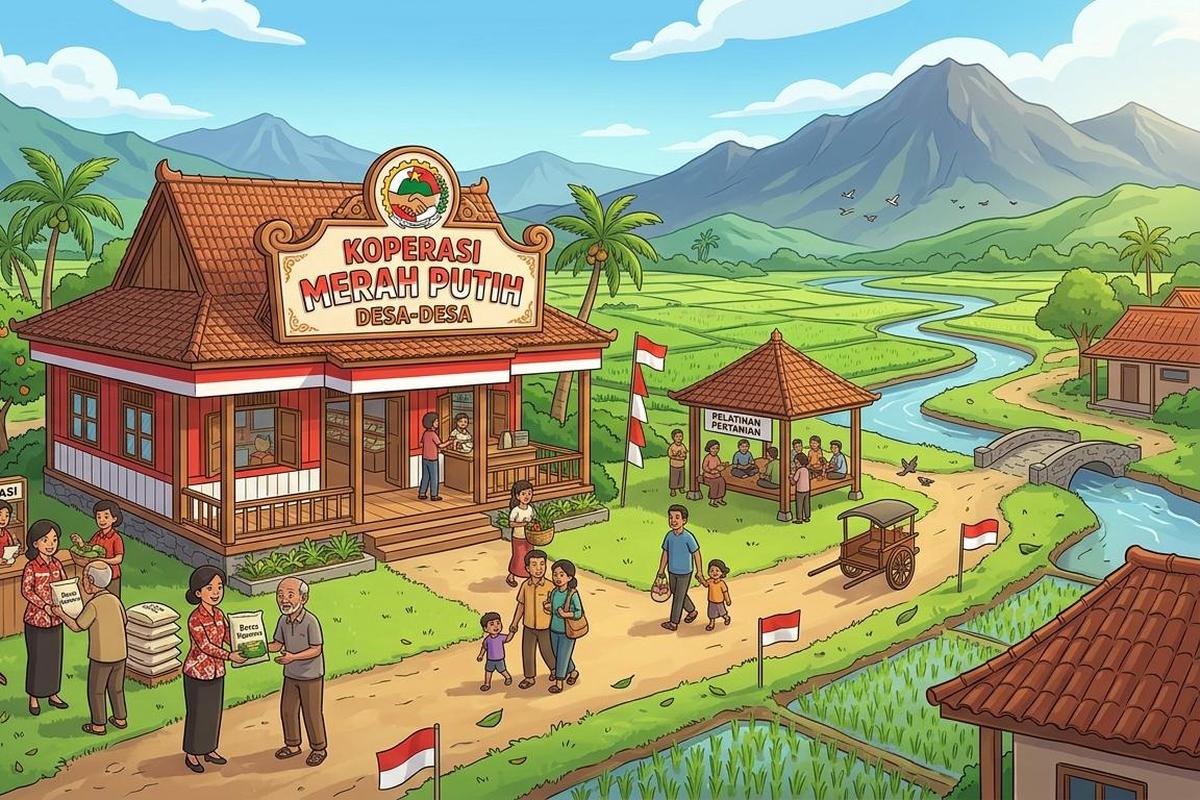
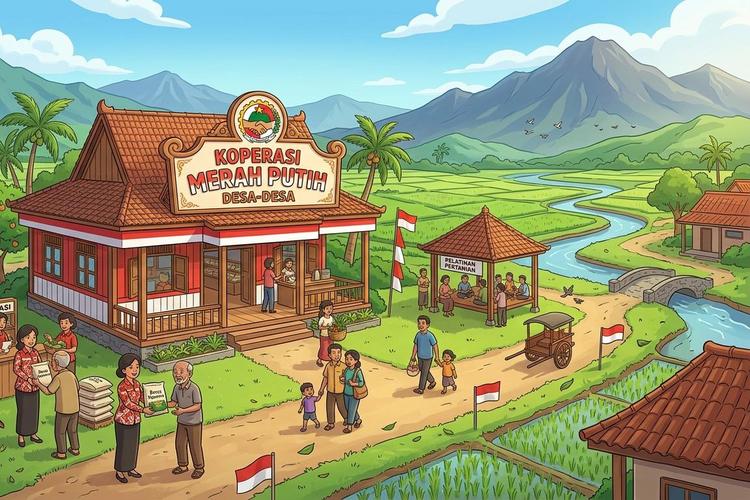
JAKARTA, KOMPAS.com - The Red and White Village Cooperatives have become one of the priority programs initiated by President Prabowo Subianto during his two-year tenure.
This program is designed as a governmental effort to stimulate the economy by developing cooperatives in various regions.
To realize this goal, Prabowo aims to establish tens of thousands of village cooperatives supported by the development of outlets, recruitment of managers, and financial backing amounting to hundreds of trillions of rupiah.
By the end of 2026, the President envisions 30,000 operating village cooperatives capable of dominating supply chains.
"Our target by the end of 2026 is to have 30,000 Red and White cooperatives established and operating effectively," President Prabowo stated in his state speech at the Annual Session of the MPR RI and the Joint Session of the DPR RI and DPD RI in the Senayan Parliament Complex, Jakarta, on Friday (14/8/2026).
However, the implementation of the Red and White Village Cooperative still faces various challenges.
As of August 2026, of the 10,000 units, only about 3,300 cooperatives are operating optimally.
One of the ongoing challenges is branding. Therefore, Minister of Cooperatives (Menkop) Ferry Juliantono stated that he will rebrand the Red and White Village Cooperatives to enhance public understanding, particularly among the youth.
Through this rebranding, the Red and White Village Cooperatives will become more appealing to Gen Z.
Ferry explained that rebranding is also a governmental step to reinforce the role of cooperatives in Indonesia, considering Gen Z's limited understanding of their function.
"Many people, especially young people, millennials, and Gen Z, are not aware of cooperatives anymore," Ferry remarked at the Ministry of Cooperatives office in Jakarta on Monday (21/9/2026).
In addition to rebranding, efforts will be made to strengthen cooperative governance by shifting the focus from institutional aspects to business development.
According to Ferry, cooperatives are business entities, and business development should be a primary focus. For instance, cooperatives in the palm oil sector are encouraged to establish crude palm oil (CPO) processing factories.
Meanwhile, dairy cattle cooperatives should have milk processing industries.
Ferry indicated that a similar concept was previously implemented in the 1990s when the Indonesian Batik Cooperative had textile and garment factories.
"Cooperatives were quite successful before 1998. They had factories; the Indonesian Batik Cooperative had textile and garment factories," he explained.
Another challenge is the minimal funding for the Red and White Village Cooperatives through the Revolving Fund Management Institution (LPDB).
LPDB President Director Krisdianro Sordarmono reported that the number of cooperatives applying for funding has only reached around 5-6 units since the mock-up phase in 2025 until the issuance of further regulations.
Most of the cooperatives that have applied for funding from LPDB are revitalized cooperatives, which were previously operating and had business activities.
For example, Village Unit Cooperatives (KUD) and women's cooperatives in East Java. These existing businesses then transformed into KDMP.
The funding requests from these cooperatives are aimed at expanding their businesses, not to cover losses from business activities.
"About five or six cooperatives have applied to LPDB, with average ticket sizing of no more than Rp 1 billion per KDMP," Krisdianto mentioned during a meeting in Yogyakarta on Monday (12/10/2026).
Krisdianto believes that the limited applications are partly influenced by the cautious attitude of cooperative management in responding to regulatory dynamics.
This includes matters related to the involvement of PT Agro Industri Nasional (Agrinas) in managing the KDMP scheme over the next two years.
However, he assessed that the opportunities for KDMP funding will widen in light of Presidential Regulation (Perpres) No. 82.
This regulation opens avenues for various institutions to support funding, from state-owned bank associations to BLU entities like LPDB and the Government Investment Center.
"Once everything is clear and starts running, funding is sure to follow after the operational phase," he asserted.
On the other hand, the placement of cooperative managers still poses issues. Several prospective managers have not received confirmation regarding job locations after completing the training they attended.
As many as 35,476 participants took part in the training program for managers of the Red and White Village Cooperatives and Red and White Fisherman Villages from June 17 to July 31, 2026.
This number consists of 30,000 prospective managers for Red and White Village Cooperatives and 5,476 prospective managers for Red and White Fisherman Villages.
The placement issue has drawn attention from Darmadi Durianto, a member of Commission VI of the DPR RI.
He urged the government to guarantee the availability of job locations beforehand, before the prospective managers complete their training.
"If the workplaces aren't ready, why finish the training first? This is noted because the budget isn't small, which exceeds Rp 1 trillion," he said.
Moreover, there are complaints about placements far from their residences. Unsurprisingly, around 1,501 people have withdrawn or opted not to continue the process.
Commission VI member Rahmat Saleh urged the government to conduct thorough mapping to ensure that manager placements consider geographical conditions, community characteristics, and regional needs.
"Placement must consider the location of residence. Inclusion of gender-related issues should also be considered," Rahmat stated on Sunday (6/10/2026).
On another note, the Ministry of Cooperatives confirmed that those who withdrew would not face penalties since their numbers are deemed insignificant.
Additionally, staffing problems arose due to unclear status.
However, Joao Angelo De Sousa Mota, the President Director of PT Agrinas Pangan Nusantara, explained that the managers of Red and White Village Cooperatives will be employees of state-owned enterprises under Agrinas.
They will obtain Fixed-Term Employment Contracts (PKWT) for two years. During their assignments, they will also be placed under PT Agrinas Pangan Nusantara and PT Agrinas Jaladri Nusantara.
Nevertheless, after the two-year PKWT contracts end, Joao said that the managers would be evaluated according to needs.
Thus, it is possible that the managers may be assigned outside the cooperative after completing their two-year contract.
"After two years, they will be evaluated based on the needs of the BUMN, and if necessary, they will be reassigned, potentially to other activities outside the Red and White Village Cooperatives. But future policies will be determined after two years," Joao explained.
On the other hand, Joao emphasized that the Managers have not received salaries as they have not yet been placed in their respective outlets.
"They will only be paid once they start working. I believe you also receive compensation after you start working. Even if you apply, you typically don't receive payment. This is quite normal," he added.
Another issue is determining the region or locations for development. Regarding this, Minister of Cooperatives Ferry mentioned that location determinations were agreed upon through village-level deliberations, although there are several locations that are not ideal.
The number of Kopdes locations deemed subpar is very minimal compared to nationwide developments.
"Maybe less than 10 out of the 30,000 being constructed are considered not ideal," said the Gerindra Party politician.
However, the designation of location points results from mutual decisions made with local village governments, factoring in land limitations in their respective areas.
The Minister of Cooperatives assured that local governments are fully engaged in this decision-making process.
If technical obstacles arise in locations already determined, the local government will devise solutions.
"They determine those aspects themselves. Therefore, they must have considerations. In cases where there's a not ideal location, they will find solutions," stated the Minister of Cooperatives.
President Prabowo envisions that in the future, the Red and White Village Cooperatives will become an integrated village economic service center and the primary instrument for enhancing community welfare.
"KDKMP will become an integrated village economic service center in the future," he expressed during the 79th Cooperative Day Celebration held at the Indonesia Arena, Jakarta, last July.
To support this, he desires a well-rounded ecosystem. Within these cooperatives, there will be cooperative offices, grocery stores, savings and loan services, and village pharmacies.
"We will establish pharmacies in the villages. The medicines will be generic, far cheaper than those in the city pharmacies. There will be village logistics. Warehouses will be built. There will be cold storage facilities so that farmers' produce will not spoil, along with various other economic services," Prabowo outlined.
Furthermore, the government will strengthen fishing cooperatives by providing cold storage facilities, ice plants, and fishing vessels managed cooperatively.
He asserted that all these facilities will be financed and paid back by the cooperatives through the fishermen's business revenues.
Additionally, Prabowo revealed that the idea of establishing KDKMP has long been on his mind since his days as a soldier in various regions.
Witnessing firsthand the hardships faced by rural communities convinced him that cooperatives are a solution for strengthening the people's economy and protecting the most vulnerable groups.
"I am increasingly convinced that the only way to protect the most vulnerable is through the strength of cooperatives," he concluded.

























