

Amran Vs Sugiono: Analysts Weigh Public and Elite Acceptability
-
News
-
6 hours ago
This article was translated by AI. Read the original article on Kompas.com. See Original
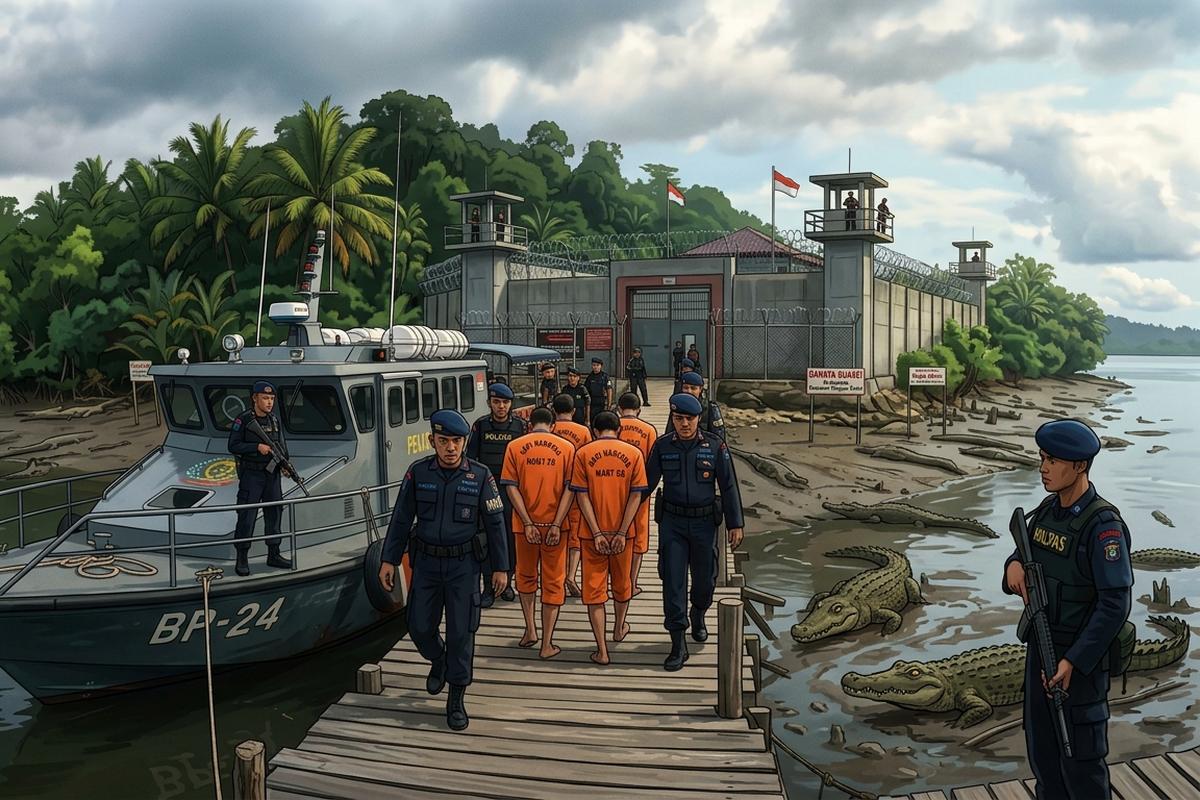
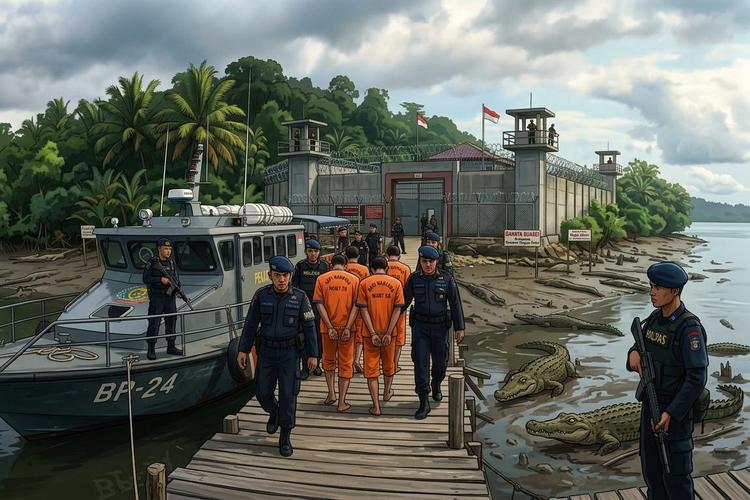
JAKARTA, KOMPAS.com- The government plans to prepare a special island as a rehabilitation center for convicted drug offenders, equipped with facilities for breeding pigs and crocodiles.
This proposal was announced by the Coordinating Minister for Law, Human Rights, Immigration, and Corrections, Yusril Ihza Mahendra, amid persistent issues of overcrowding in correctional facilities.
So, is this proposal effective?
Abdul Fickar Hadjar, a Criminal Law expert from Trisakti University, stated that establishing special correctional facilities on a crocodile island could be one approach to address overcrowding.
However, he emphasized that effectiveness cannot be measured merely by the addition of inmate capacity.
The crucial aspect is ensuring that the correctional system successfully prevents inmates from reoffending.
"The measure of success in corrections is the deterrent effect on those who have previously been incarcerated," Fickar told Kompas.com on Monday (12/10/2026).
Fickar revealed that this effectiveness also relates to preventing the spread of narcotics.
The government must assess whether rising crime rates, particularly concerning convicted drug offenders, are linked to a high number of recidivists returning to criminal activities.
"Thus, effectiveness hinges on the activities implemented to reintegrate individuals who have previously failed societal norms due to criminal behavior. It raises the question of whether the increase in drug-related crime is due to the number of recidivists involved," Fickar stated.
Fickar noted that there are indeed alternative methods to consider instead of relocating prisoners to a designated island simply to increase prison capacity.
One such alternative is to impose sentences that do not require incarceration.
These sentences could include community service, as the new Criminal Code recognizes such punishment.
Fickar suggested that similar penalties should only apply to minor offenses.
"This should be considered for minor offenses; in the context of drug-related crimes, users could face rehabilitation rather than incarceration in correctional facilities, whether in rehabilitation centers or other appropriate locations, such as pesantren or other institutions," Fickar advised.
Meanwhile, criminologist Adrianus Meliala from the University of Indonesia (UI) expressed that the government should focus on passing the Narcotics Law Draft instead of proposing measures related to prison overcrowding.
This law would allow the government and the Indonesian House of Representatives (DPR) to regulate the intake and release of inmates.
"Thus, we would create policies that would be reflected in the Law or subordinate regulations that would truly be evidence-based," he explained.
Unfortunately, the draft has yet to gain traction. On the contrary, the government continues to propose various ideas that lead to budget constraints.
"Ultimately, this will likely put pressure on the budget. So, it is important to focus first on resolving the Narcotics Law, which centers on the effectiveness of corrections," Adrianus emphasized.
In his statement, Minister Yusril mentioned that rehabilitating drug users cannot solely rely on medical treatment.
This process must also encompass mental conditioning, education, and skills training, enabling victims to reintegrate into society. Therefore, he put forth the idea.
"We are looking at uninhabited islands. There are many islands, some stretching up to 700 hectares, that are void of people, only inhabited by crocodiles," said Coordinating Minister for Law, Human Rights, Immigration, and Corrections, Yusril Ihza Mahendra, following a ministerial-level meeting in Jakarta on Friday (7/10/2026).
However, he cautioned against misinterpreting the crocodile island concept. Crocodiles are not intended to harm inmates but are for breeding purposes.
"It should not be misconstrued that inmates will be placed there to be eaten by crocodiles. The crocodiles will either be driven away or possibly kept in pens to breed, as crocodile skins are valuable in the business world," he remarked.
As planned, this initiative to segregate drug offenders would involve the military and police.
On another note, addressing prison overcrowding can only occur through discussions on revising the Narcotics and Psychotropic Drugs Law.
This law revision is crucial as it will clarify the distinctions between victims of drug abuse, drug dealers, and those who use and deal drugs.
"Since the number of drug offenders already exceeds half of the total inmate population, separating them could potentially reduce about half of the total number of inmates," he stated.
The Minister of Human Rights, Natalius Pigai, indicated that they will review this proposal further.
"As part of the cabinet, we will definitely study this," Pigai asserted.
He also noted that relocating drug offenders is an ongoing issue.
According to Pigai, this idea can only be realized if the management of inmates in prisons is led by a figure of integrity.
"So, it's not just a matter of management and administration of the prison, but it is a question of ethics and morals in the leadership of prison management," he concluded.