

Amran Vs Sugiono: Analysts Weigh Public and Elite Acceptability
-
News
-
1 hour ago
This article was translated by AI. Read the original article on Kompas.com. See Original
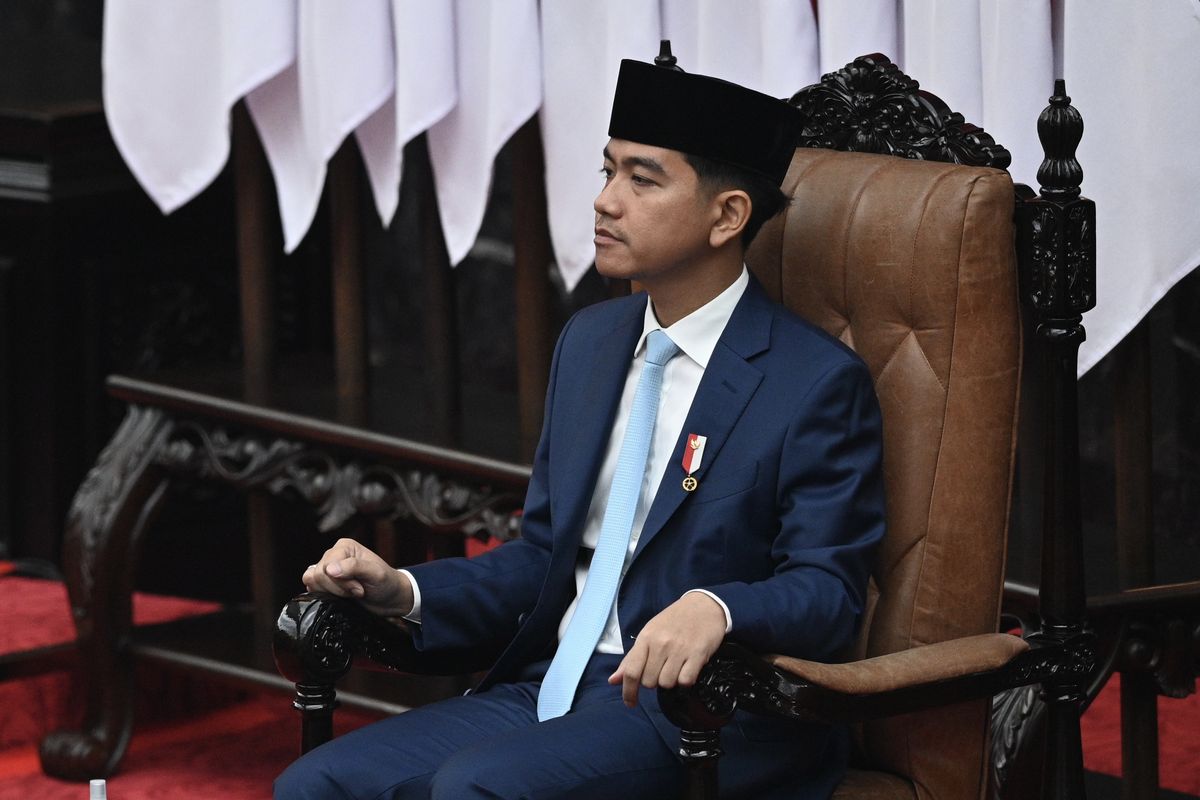
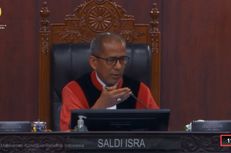
IN a previous article, “Understanding the Constitutional Court's Decision on Gibran's High School Diploma” (Kompas.com, 10/9/2026), the writer seeks to understand the Constitutional Court's Decision No. 01/PHPU.PRES-XXIV/2026 dated October 6, 2026, and encourages respect for it.
Now, a legal question arises: does the Constitutional Court's consideration that there is no convincing evidence to prove that Gibran Rakabuming Raka holds a diploma/certificate from abroad that can be equated with at least a high school diploma, madrasah aliyah, vocational high school, or other equivalent institution, as stated in Article 169 letter r and Article 227 letter l of the Election Law, mean that Gibran is no longer valid as Vice President?
Article 169 letter r of Law No. 7 of 2017 regarding General Elections stipulates that candidates for President and Vice President must have at least graduated from high school, madrasah aliyah, vocational high school, or other equivalent institutions.
On the other hand, Article 227 letter l of the Election Law requires that the registration of prospective pairs of Presidential and Vice Presidential candidates be accompanied by proof of graduation in the form of a photocopy of a diploma, certificate of completion, or other supporting letters legalized by educational institutions or secondary education programs.
Referring to the norms of Article 169 letter r and Article 227 letter l of the Election Law, it is required that when registering as a candidate for vice president, prospective vice president Gibran must provide proof of graduation in the form of a photocopy of a diploma, certificate of completion, or other supporting letters legally issued by educational institutions or secondary education programs which demonstrate a minimum education level equivalent to a high school diploma, madrasah aliyah, vocational high school, or other equivalent institutions.
During the trial at the Constitutional Court, cross-national education expert Ina Liem, presented by the Associated Party, explained that Gibran, who studied at Orchid Park Secondary School (O’Level 2 Years) and Pathway Programs UTS Insearch Diploma MDIS Advanced Diploma, is equivalent to a high school (3 years) in Indonesia. (page 301)
However, Ina Liem's statement was refuted by Gogot Suharwato (Director General of Early Childhood Education, Primary Education, and Nonformal and Informal Education, Ministry of Elementary and Secondary Education), who was presented during the trial by the Court.
According to Gogot, MDIS is located in Singapore and the Singapore system does not have an Advanced Diploma. (page 353)
Referring to Gogot's statement, the expert testimony of Ina Liem claiming that Gibran's education at Orchid Park Secondary School (O’Level 2 Years) and Pathway Programs UTS Insearch Diploma MDIS Advanced Diploma are equivalent to high school (3 years) in Indonesia, according to the writer, cannot be justified because the MDIS system in Singapore does not have an Advanced Diploma.
The court also revealed legal facts that when Gibran registered as a vice presidential candidate, he did not complete the requirement with proof of graduation from abroad that equates to at least a high school diploma, madrasah aliyah, vocational high school, or other equivalent institutions. What was revealed in the trial was a Certificate of Attendance.
Based on the testimony of I Gusti Putu Artha, one of the KPU Commissioners during Gibran's registration as a vice presidential candidate, Gibran submitted a Letter from the Directorate General of Primary and Secondary Education of the Ministry of Education and Culture dated August 6, 2019.
The content states that Gibran completed “Grade 12” at UTS Insearch, Sydney, Australia in 2006, and was assessed as having knowledge equivalent to finishing Vocational High School (SMK) with a focus on Accounting and Finance in Indonesia. (page 119)
The same statement was made by Hasyim Asy'ari, the KPU Chairman at that time. He explained that when delivering the documents, Gibran attached two letters issued by the Ministry of Education and Culture Directorate General of Primary and Secondary Education.
The first was Letter No. 9149/D.D1/KS/2019 dated August 6, 2019, stating that Gibran completed “Grade 12 at UTS Insearch, Sydney, Australia in 2006, and is deemed to have competencies equivalent to a vocational high school graduation (SMK) in Accounting and Finance in Indonesia.”
The second was Decree No. 229 of 2019 dated August 8, 2019, on the Results of Equivalence Assessment of Graduates from Foreign Higher Education Institutions, which stipulates the assessment results of Gibran Rakabuming Raka's foreign diploma equivalency to the University of Bradford. (page 268)
Both witnesses stated that the requirements documents submitted by Gibran were not supplemented with his diploma/certificate that equaled the minimum education requirement of a high school diploma, madrasah aliyah, vocational high school, or other equivalent institutions.
The statement of I Gusti Putu Artha and Hasyim Asy'ari was also supported by the statements of Gogot Suharwato and Taufik Damarjati (Assessment Team, Ministry of Elementary and Secondary Education).
According to Gogot, there would be no diploma unless the entire program structure or level has been completed, which is why what was given was a Certificate of Attendance. (page 353)
Meanwhile, Taufik Damarjati explained that the certificate received regarding UTS Insearch was only a Certificate of Attendance, and no other certificate existed. According to him, a Certificate of Attendance shows that Gibran attended education at UTS Insearch but does not indicate whether he graduated or not. (page 355)
Thus, based on the statements of Gogot and Taufik, a Certificate of Attendance is not equivalent to a diploma because the program structure or level has not been fully completed.
Furthermore, Gogot explained that the issue regarding Gibran’s equivalency was a diploma, not senior high school. Therefore, the submission was for the Diploma of Business Studies course, which does not exist in Indonesia. (page 354)
Taufik clarified Gogot's statement. According to Taufik, evaluating Gibran's equivalency documents, what was assessed for Gibran's school abroad to be equivalent to high school in Indonesia was based on the analysis of Orchid Secondary School in Singapore attended in 2003-2004, which is supported by transcripts or report cards from Secondary 3 and Secondary 4.
The outcome from the Orchid Secondary School education level was the GCE O-Level Certificate. For the O-Level Certificate, it cannot yet be considered as a high school or vocational high school graduate. (page 355)
Consequently, Taufik continued, assessing the next level of education, which is UTS Insearch in 2005-2006 with the Diploma of Business Studies program. The assessment was based on documents that included the Certificate of Attendance as well as transcripts and enrollment letters. (page 355)
Based on the statements of Gogot Suharwato and Taufik Damarjati, it was revealed legally that when assessing Gibran's school abroad for equivalency with vocational high school graduation (SMK) is based on:
First, Orchid Secondary School in Singapore in 2003-2004, evidenced by transcripts or report cards from Secondary 3 and Secondary 4, as Gibran only holds an O-Level certificate, which means he did not complete (the graduation requirement until A-Level takes 3 years), thus cannot be equated with an SMK graduate.
Second, UTS Insearch in 2005-2006, evidenced only by a Certificate of Attendance, which does not serve as proof of graduation.
Therefore, it is quite logical that the Court, in its legal considerations, stated that:
“According to the Court, a certificate of attendance and the other document are not forms of evidence of graduation but rather proof of presence in the learning process. In general, a diploma/certificate that states an individual has completed a certain level of education usually reads: ‘This is to certify that… (name of the graduate) has been awarded…’ Not only that, this certificate also accompanies or is accompanied by the scores or academic results obtained because those scores issue diplomas/certificates as proof of having completed education. Meanwhile, the certificate of attendance and other documents used as the basis for Suket Number: 9149/D.D1/KS/2019 do not explain the success of finishing a particular level of education but merely states attendance in classes.” (page 373)
In its ruling, the Court found no convincing evidence that demonstrates Gibran possesses a diploma/certificate from abroad that could serve as a basis for being equated with having at least graduated from high school, madrasah aliyah, vocational high school, or other equivalent institutions as stipulated in the norms of Article 169 letter r and Article 227 letter l of the Election Law. (page 375)
The legal issue is whether when Gibran does not fulfill the required documentation as stipulated in Article 169 letter r and Article 227 letter l of the Election Law, it implies that he legally does not meet the qualifications as a vice presidential candidate or is no longer qualified as vice president?
On this critical legal issue, the Constitutional Court did not “dare” to answer. Instead of giving a judgment in its legal considerations, the Court chose to “throw” its constitutional moral responsibility to “the institution authorized to assess the validity and fulfillment of the requirements for presidential and vice-presidential candidates as stipulated in the 1945 Constitution of the Republic of Indonesia.”
In the author’s perspective, when registering as a vice presidential candidate, Gibran clearly did not meet the requirements as stated in Article 169 letter r and Article 227 letter l of the Election Law.
The requirements to be a vice presidential candidate as regulated in Article 169 letter r and Article 227 letter l of the Election Law are cumulative requirements. Both in Article 169 letter r and Article 227 letter l of the Election Law, the word “and” is used for each specified requirement.
However, these legal facts were known after the end of the nomination period (candidate registration). Gibran has been inaugurated and holds the status of vice president.
The writer believes that legal facts that have already occurred (post factum) cannot be subjected to laws that arise afterward.
Since the Constitutional Court ruling in this case, Decision No. 01/PHPU.PRES-XXIV/2026 dated October 6, 2026, similar to legislation, cannot be applied retroactively.
For the ruling of the Constitutional Court, the principle of Non-Retroactivity applies; that the law binds only for the future and does not apply backward.
Thus, in formal legal terms, Gibran's nomination as a vice presidential candidate in the 2024 elections should be considered having met the requirements. However, it becomes invalid if it happens again in the subsequent nominations.
Nonetheless, the writer cannot accept this legal fact from a moral standpoint.
Borrowing from natural law teaching, the law is considered good or bad based on its moral perspective. The law is deemed good if it aligns with and is in accordance with morality.
Conversely, if it is contrary to morality, then it is not good law. What is the law without morality (quid leges sine moribus), this is the adage held by proponents of natural law teaching.
The failure to fulfill important requirements related to proof of graduation is a legal moral issue.
This is a question of electoral principles, particularly the principles of honesty and fairness. From this perspective, Gibran's registration as a vice presidential candidate in the past elections did not meet the moral law requirements, even though it is a fact that has already passed.
So, following the Constitutional Court's ruling, is Gibran legally valid as Vice President?
If we refer to the Constitutional Court's decision, it is clearly answered by the Court stating, “… substantially it is the realm of the institution authorized to assess the validity and fulfillment of the requirements for presidential and vice-presidential candidates as stipulated in the 1945 Constitution of the Republic of Indonesia.” (page 376)
The Court did not provide an assessment of whether he meets the requirements and whether he is valid or not. The Constitutional Court handed over to other institutions authorized for that according to the 1945 Constitution of the Republic of Indonesia.
In formal legal terms, according to the writer, Gibran remains valid as vice president until another institution provides a contrary assessment that Gibran is not valid and no longer meets the requirements as vice president.
However, from a moral legal perspective, the writer consistently believes that Gibran's position as vice president has moral issues.
The registration process to become a vice presidential candidate was not clear and clean of the principles of honesty and fairness, as revealed in the Constitutional Court's ruling.
Ultimately, we leave it to Gibran and the institutions authorized to assess the validity and fulfillment of the requirements for presidential and vice-presidential candidates as stipulated in the 1945 Constitution of the Republic of Indonesia to apply their legal morality.