

Prabowo: I Want to Confess, I’m a Soldier but Afraid of Doctors
-
News
-
8 minutes ago
This article was translated by AI. Read the original article on Kompas.com. See Original
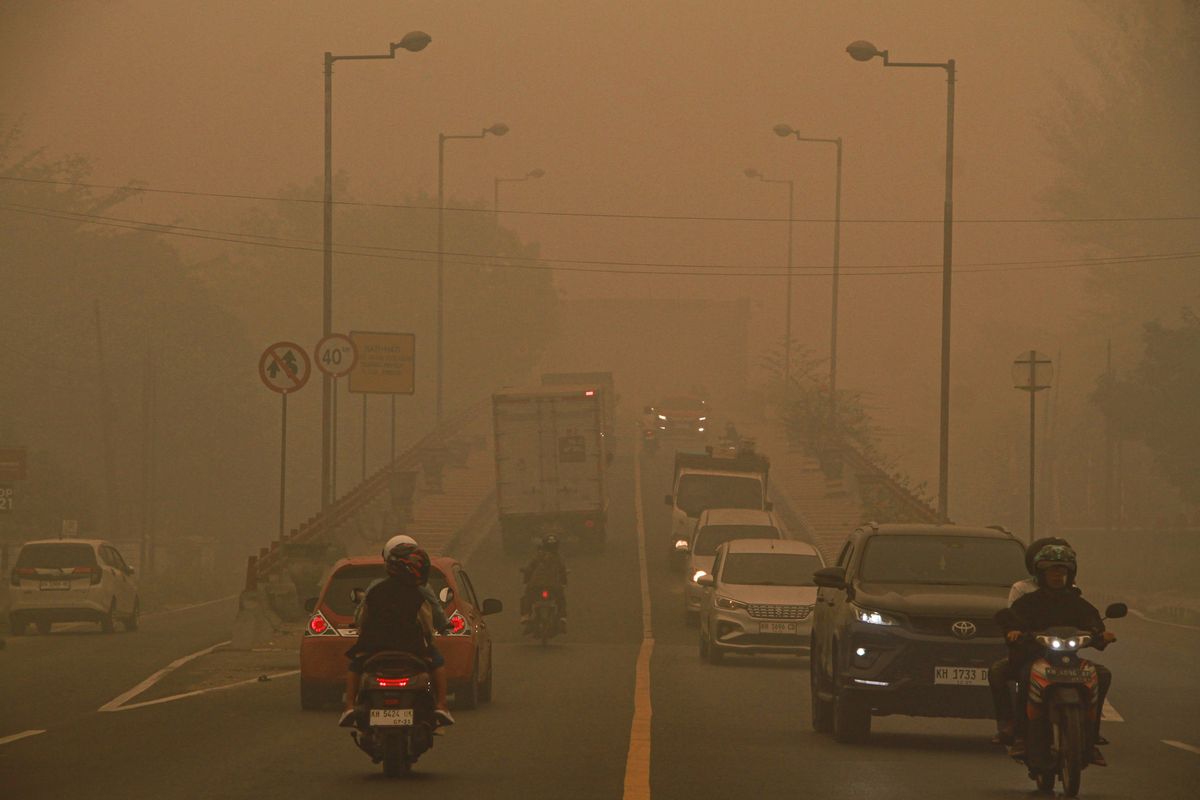
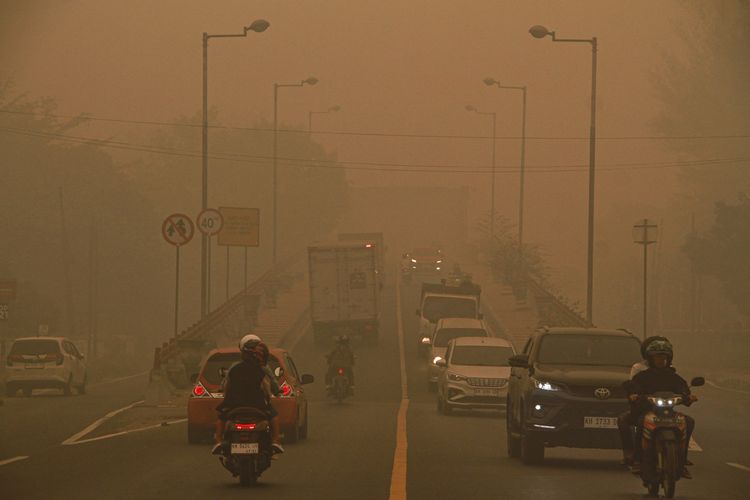
WHEN smoke blankets the roads and causes traffic accidents, the question that almost always arises is whether drivers are being cautious enough?
Are vehicles speeding? Are drivers maintaining a safe distance? Or are they persisting in their journeys despite significantly limited visibility?
These questions are indeed important. However, I believe that they are insufficient to comprehensively explain transportation safety issues.
When accidents occur due to hazardous environmental conditions, we must also question how the transportation system functions when faced with such scenarios.
It is essential to understand that traffic accidents are not always the result of a single isolated mistake. There is an interaction among humans, vehicles, roads, the environment, and traffic management systems.
In certain situations, accidents result from a series of failures occurring simultaneously.
Drivers may take time to recognize danger, yet there might not have been any prior information regarding the road conditions.
Vehicles may be roadworthy, but their safety technology may not provide adequate assistance under certain visibility conditions.
Roads may meet technical standards but lack sufficient warning systems for environmental disruptions.
Thus, attributing accidents caused by smoke solely to driver negligence risks missing opportunities to improve a transportation system that genuinely needs reform.
In transportation science, accidents are understood not only through the behavior of the individuals involved. Safety is the result of how all transportation components are planned, constructed, operated, maintained, and supervised.
A road that geometrically meets specifications is not always safe to use. Likewise, a vehicle meeting technical requirements may not be able to handle all potential hazards on the road.
Visibility impairment due to smoke is a prime example to illustrate this issue.
As smoke begins to cover the roads, drivers' ability to recognize objects, gauge distances, and make decisions diminishes.
Meanwhile, vehicles still require a specific distance to come to a safe stop. At the same speed, reduced visibility decreases drivers' chances of evasive action.
This scenario can be explained through a simple relationship between vehicle speed, driver reaction time, braking distance, and available sight distance.
The higher the speed, the greater the distance required to stop a vehicle. When visibility is shorter than the stopping distance needed, the risk of an accident seriously increases.
This means that when smoke occurs, the issue is not just whether the driver remains focused, but also whether vehicle speed has been managed according to the changing environmental conditions.
This is where traffic management plays a crucial role. A good transportation system should be able to respond to changing risks rather than merely operate based on normal conditions assumed when the road was designed.
So far, we have tended to focus heavily on road construction and capacity improvements. Roads are widened, intersections are improved, toll roads are built, and travel speeds are expected to increase.
All of this is necessary to support community mobility and economic activities. However, increases in capacity and smooth travel should always go hand in hand with improvements in safety management.
The problem is that safety is not automatically achieved merely because infrastructure is available to high standards.
Roads designed for specific vehicle speeds still require operational control in adverse conditions like heavy rain, smoke, flooding, or other environmental disturbances.
Under such conditions, safe speed limits can change. In certain situations, temporarily halting traffic may be a more responsible choice than allowing vehicles to continue moving.
In modern road management practices, the approach known as active traffic management adjusts operational actions to the actual conditions in the field.


























