

Health Minister Prays for President Prabowo to Live to 100 Years
-
News
-
3 minutes ago
This article was translated by AI. Read the original article on Kompas.com. See Original
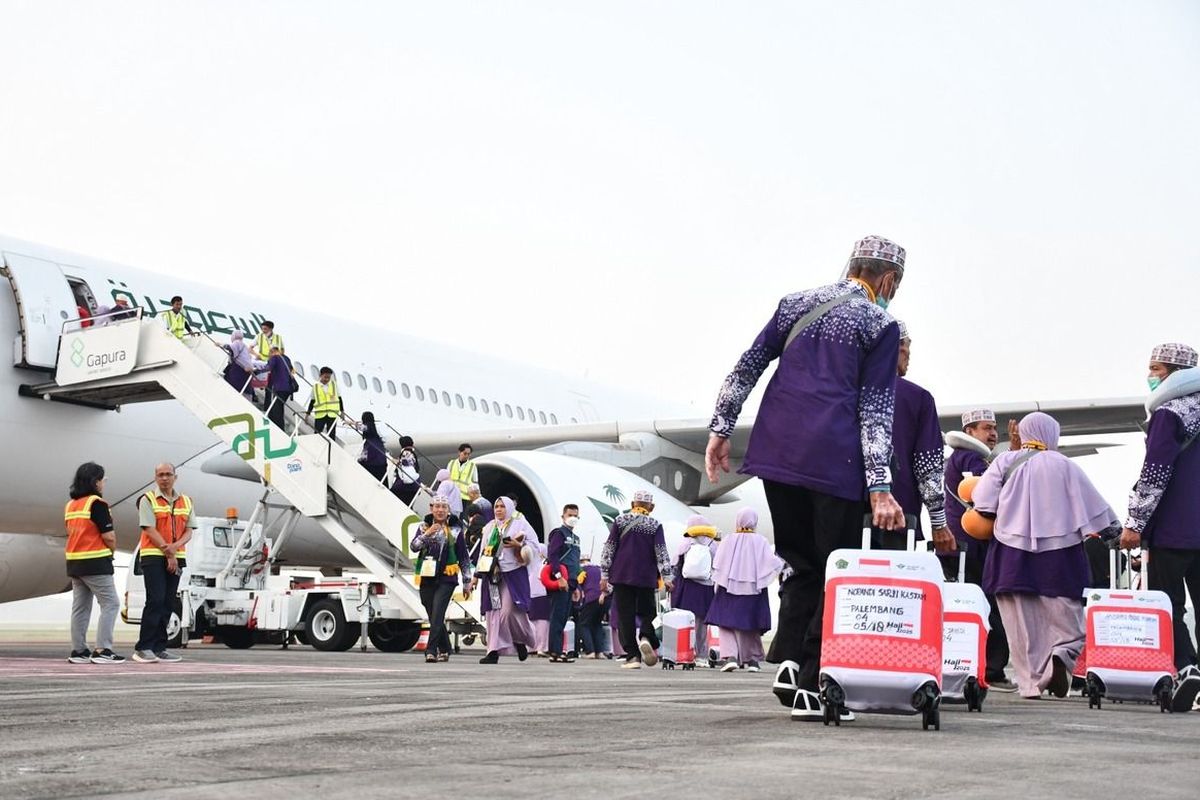
JAKARTA, KOMPAS.com - Minister of Home Affairs Muhammad Tito Karnavian stated that demographic data and facial recognition technology will be utilized to prevent identity misuse in the organization of the Hajj pilgrimage.
This initiative is a collaborative effort between the Ministry of Home Affairs and the Ministry of Hajj and Umrah to verify the identities of prospective pilgrims heading to the Holy Land.
"We have agreed with the Ministry of Hajj and Umrah to use this registry data to verify all candidates who will be going on Hajj," said Tito while discussing the synergy in Hajj and Umrah services on Friday (9/10/2026).
Tito explained that the population data managed by the Ministry of Home Affairs will be enhanced with biometric data, including facial recognition, fingerprints, and retinal or iris scans.
He noted that utilizing this data could prevent the practice of using someone else's name or identity to circumvent the Hajj queue.
For instance, someone who is supposed to wait for years to go on Hajj might attempt to use a different identity to secure an earlier opportunity.
"Thus, if someone tries to go under a different name, for example, if they are originally queued for a departure in ten years, they suddenly want to go next year, it would be difficult. It would be tough to play those games again because the face is adequate; it will reveal who they are," Tito explained.
He emphasized that the high demand for performing Hajj in Indonesia, coupled with a quota set by the Saudi Arabian government, could potentially foster deviations.
"The issue of quotas and queues can lead to moral hazards," said Tito.
Therefore, biometric verification is necessary to match the identities of prospective pilgrims with the population data stored in the Ministry of Home Affairs.
With this system, a person’s identity can be recognized through their face without them needing to state any personal information first.
"Verification only takes a few seconds using the device to read it, and it will know from the face; they won’t need to speak about their identity, and it will know their name, address, date of birth, status, occupation, and more," said the former national police chief.
Tito mentioned that the population data stored on the Ministry of Home Affairs’ servers covers approximately 290 million people in Indonesia, with 98 percent of them already registered in the system and possessing biometric data.
He emphasized that the utilization of this demographic data is a form of support from the Ministry of Home Affairs to help streamline the organization of Hajj.
"This is one way the Ministry of Home Affairs supports the orderly planning of Hajj issues in the Ministry of Hajj and Umrah," Tito concluded.


























