

Klaten Chicken Soup Amidst Hamenang Corruption Case
-
News
-
16 minutes ago
This article was translated by AI. Read the original article on Kompas.com. See Original
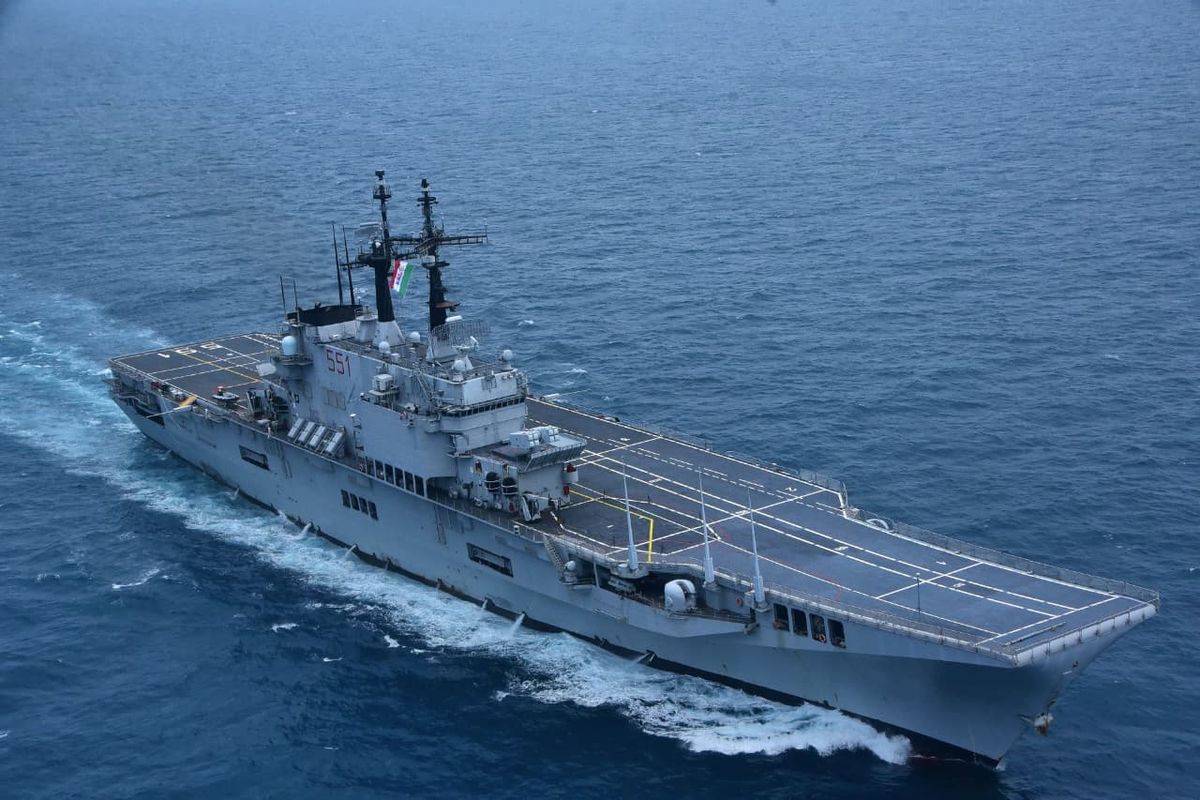
THE ENTRY of KRI Sriwijaya-100 into the ranks of the Indonesian Navy is not just a story about adding the largest warship to Indonesia's fleet.
More than that, this aircraft carrier should be seen as a marker of Indonesia's shift in defense orientation: the sea must no longer be viewed as a backyard, but rather as the epicenter of strength, sovereignty, and the strategic future of the archipelago.
Thus, when the red and white flag was hoisted on the KRI Sriwijaya at Tanjung Priok Port in Jakarta on September 24, 2026, Indonesia was gaining more than just a combat platform and operational support.
With a weight of approximately 13,850 tons, a length of about 180 meters, and the capability to reach 30 knots, this vessel carries strategic consequences: the Navy is demanded not only to have modern defense equipment but also a modern maritime mindset.
At this juncture, the issue becomes larger than mere procurement of military hardware.
No matter how large the ship, Indonesia will not become a maritime power—if not backed by appropriate doctrines, adequate escort fleets, sensor and intelligence networks, logistics capabilities, interoperability among branches, and leadership that understands that warfare and security in the 21st century are increasingly determined by mastery of sea, air, cyberspace, and integrated information.
For this reason, the presence of KRI Sriwijaya comes at a pivotal moment.
Amid the heated discussions surrounding the change of the TNI Commander, Indonesia is actually facing a much more fundamental question: will the modernization of military equipment merely increase the inventory list of the TNI?
KRI Sriwijaya must be positioned as one of the nodes in the transformation of Indonesia's maritime defense, rather than merely as a symbol of military grandeur.
Consequently, the succession of the TNI Commander should not be debated solely based on the branch of service, seniority, or rotational traditions, but primarily on who can best translate the resurgence of maritime strength into an integrated defense system for the archipelago.
The introduction of KRI Sriwijaya arrives at a time when discussions about the TNI Commander's succession are heating up.
This moment is intriguing because the modernization of military equipment never stands alone.
Every new platform ultimately requires doctrine, organization, human resources, interoperability, and leadership capable of translating it into real strength.
In this context, discussions regarding the next TNI Commander should not be viewed merely as a matter of position change.
What is far more important is the strategic direction of the TNI in facing a rapidly changing security environment.
Indonesia needs leadership that can view defense as an integrated strength across branches while also understanding the geographical characteristics of Indonesia as an archipelago.
The dynamics surrounding the branch of service of the potential TNI Commander are certainly legitimate from an organizational tradition perspective.
However, inter-branch rotation should not get trapped in being merely a matter of turn-taking.
What is more crucial is competence, strategic vision, the ability to integrate strengths, and skills in interpreting changes in the strategic environment.
The name of Navy Chief of Staff, Admiral TNI Muhammad Ali, is also drawing attention amid these dynamics.
On the other hand, Army Chief of Staff General TNI Maruli Simanjuntak is also mentioned as a contender.
General Maruli himself stated on October 7, 2026, that all chiefs of staff have the opportunity to be candidates for TNI Commander.
This statement indicates that the succession process is still open. Therefore, it is too early for the public discourse to lock in on only one figure.
President Prabowo Subianto holds constitutional authority to determine the direction of the TNI Commander's succession, while the strategic needs of the nation should be the primary consideration.
This is precisely where the momentum needs to be placed proportionally. The question is not whether the TNI should be led by an officer from a specific service branch, but rather what kind of leadership is necessary as Indonesia enters a new phase of defense modernization.
KRI Sriwijaya provides one indicator regarding this challenge: the sea is increasingly important, but naval power cannot stand alone.