

Prabowo Instructs Renovation of All Community Health Centers and Every District to Have a Good Hospital
-
News
-
2 minutes ago
This article was translated by AI. Read the original article on Kompas.com. See Original
JAKARTA, KOMPAS.com - Hot food does not automatically mean it is safe to consume.
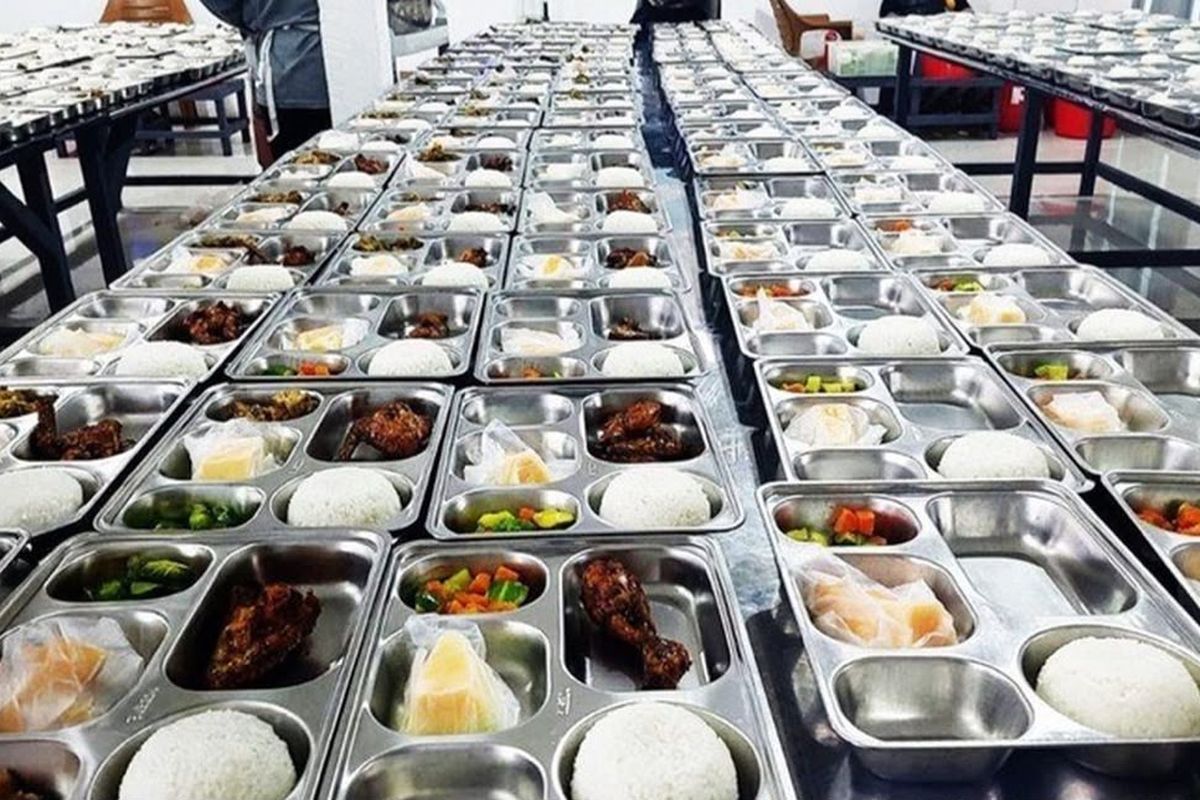
Behind the shift in serving free nutritious meals (MBG) from boxed to buffet style, one crucial aspect must be ensured: how food remains safe from the kitchen to the students' plates.
This question has become increasingly relevant as the National Nutrition Agency (BGN) begins piloting buffet-style MBG delivery in schools.
The pilot involves over 60 kitchens in various regions starting from Monday (October 5, 2026).
BGN Head Sudaryono stated that food is transported from the kitchen to schools while still warm.
Upon arrival at the schools, the food is immediately served in the classrooms.
"As of today, since October 5, we have piloted at more than 60 kitchens for buffet-style service in classrooms. So, the food is brought warm to the classrooms and then served there," Sudaryono said during a visit to the Ministry of Agriculture Office in Jakarta on Monday.
The trial is taking place in several regions, including Central Java, East Java, Yogyakarta, Papua, and others.
According to Sudaryono, this system is expected to keep the food fresher by minimizing the time from kitchen to consumption by the students.
It is also hoped that this will reduce the risk of spoiled food that could pose health issues.
"Of course, it will be more fresh because there is no delay, which reduces the risk of food spoilage that could then lead to health problems," he added.
However, the new serving method makes the adherence to standard operating procedures (SOP) even more essential.
Food safety is not only determined during cooking but also through the processes of delivery, placement, serving, and until the food enters the students' bodies.
So, what SOPs should the BGN consider before officially implementing buffet-style MBG to prevent student poisoning from recurring?
The National Coordinator of the Indonesian Education Monitoring Network (JPPI), Ubaid Martaji, noted that buffet systems still have potential risks if the timing from when the food is cooked to when it is consumed is not clearly established.
He emphasized that there must be strict time limits to prevent food from spending too long in conditions conducive to bacterial growth.
"The potential for poisoning from this buffet model can still occur, as it relates to the standards for dishes being cooked, then distributed to schools, and finally consumed by the children," said Ubaid to Kompas.com on Wednesday (October 7, 2026).
Thus, time management becomes a critical component of the SOP.
Simply ensuring that cooked food arrives warm at the school is not enough.
Time taken for transport, the time food is arranged, and the maximum time food can be consumed needs to be documented and monitored.
"If there are no appropriate time restrictions, such as more than two hours, there exists the potential for bacteria to enter the food. Therefore, it should be limited to no more than two hours," he said.
Commission IX member of the House of Representatives, Irma Chaniago, believes that the readiness of the Nutrition Fulfillment Service Unit (SPPG) should also be included in the standards before widely implementing buffet systems.
She pointed out that SPPG must have facilities and personnel to ensure food safety, including food handlers who meet hygiene standards.
"Firstly, SPPG needs to have hygienic food handlers, proper wastewater management systems, and adequate cooling rooms including sufficient freezers for storing raw meat, chicken, and fish. Plus, chilled storage for vegetables, fruits, and milk," Irma stated to Kompas.com on Thursday (October 8, 2026). She also highlighted the schools' readiness to adopt such systems.
According to her, implementing buffet service might be easier in schools with multiple levels in one complex.
However, different conditions may be encountered in schools with limited classes and no designated meal service areas.
"For schools within a complex, like elementary, junior high, and senior high, it may be feasible. But for elementary or junior/senior high schools with only four classes and without a cafeteria space, it seems difficult to implement," she explained.
She cautioned against altering the service system in a way that adds extra burden to MBG kitchen staff.
"In terms of budget, the kitchen staff of 47 individuals are only volunteers, not employees; their salary is only Rp 2 million per month. If their duties increase to include serving buffet meals, it would be unfortunate for them," said Irma.
The next challenge lies within the schools.
BGN plans for the food to be transported warm and served directly in classrooms.
Students will also be involved in helping to serve food in turns.
"Because the ones serving will be the students, so the students will have shifts, like in Japan," Sudaryono mentioned.
This concept gives schools a much larger role in implementing MBG.
Thus, the division of responsibilities between SPPG and the schools must be clearly defined in the SOP.
Agustinus Subarsono, a lecturer at Universitas Gadjah Mada's Department of Management and Public Policy, opined that this system could lessen the SPPG's workload during packaging, but simultaneously increase the tasks within the schools.
"In fact, SPPG will benefit further in terms of time and operational costs because they won’t need to spend time packing menus and serving since students will take shifts, which means additional responsibilities for both students and teachers to supervise," Agustinus told Kompas.com on Wednesday.
Therefore, if the buffet system is implemented, each party's responsibilities need to be clearly articulated from the start.
Schools must know what to do when food arrives, who checks its condition, who manages the serving, how to maintain equipment cleanliness, and how to handle leftovers.
"If they want to go with the buffet model, then the buffet service should remain the responsibility of SPPG; the school's role is to prepare the facilities, and that takes time for procurement," Agustinus added.
The implementation of the buffet system can also draw lessons from various institutions accustomed to serving food in large quantities.
Aliansi Ibu Indonesia's Annette Mau, for instance, encourages using the experience of boarding school kitchens as a learning material for the MBG buffet implementation.
According to her, boarding school kitchens provide solid examples of how to manage large-scale food service.
"When it comes to buffet service, boarding school kitchens are certainly the best—guaranteed quality for decades without any poisoning incidents," Annette told Kompas.com on Thursday.
In addition to looking at existing practices, Annette reminded that trials should not be limited to specific areas.
She noted that the geographical conditions and characteristics of schools in Indonesia are diverse, necessitating tests in various contexts.
"Piloting must cover a wide geographical area with unique school traits and food characteristics, along with operational details that will vary at each school," she emphasized.

























