

Prabowo Inaugurates Harapan Kita-Tokushukai Building Resulting from Indonesia-Japan Cooperation
-
News
-
4 minutes ago
This article was translated by AI. Read the original article on Kompas.com. See Original
AFTER the diploma of the 7th President of Indonesia, Joko Widodo, was questioned, now the diploma of his son, who is currently serving as Vice President of Indonesia, Gibran Rakabuming Raka, is also under scrutiny.
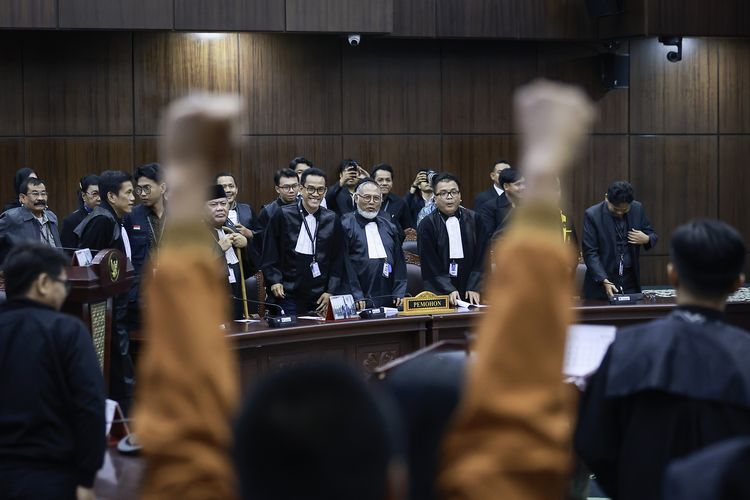
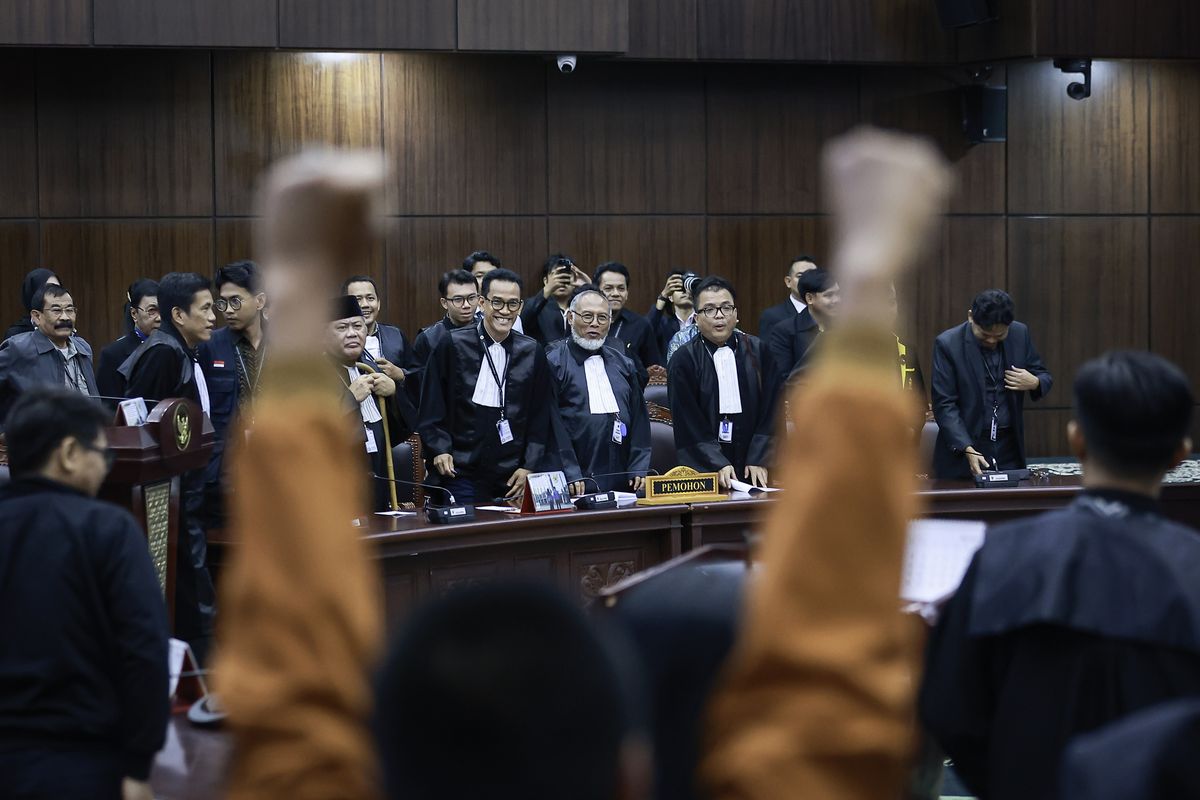
While Jokowi's diploma was brought up in public discourse, Gibran's diploma issue has been taken to the Constitutional Court, certainly stirring public debates.
A list of individuals and organizations, including Denny Indrayana, the Independent Election Monitoring Committee (KIPP), the Ummat Party, the Forum of Retired Military Personnel (FPP TNI), and Bonatua Silalahi, have submitted a request for a Dispute over the Results of the General Election (PHPU) 2024 regarding the validity of Gibran's educational qualifications as a vice presidential candidate.
Some names raising questions about Jokowi's diploma have also questioned Gibran’s, such as Refly Harun and Roy Suryo.
Their demands are baffling: they ask the Constitutional Court to disqualify Gibran as a vice presidential candidate due to not meeting educational requirements, necessitating the court to annul the establishment and inauguration of Gibran as vice president.
The MPR (People's Consultative Assembly) also needs to follow up with a session to elect a vice president from two candidates proposed by the president.
It can be said that these demands are quite unusual in the realm of Indonesian politics.
In essence, the petitioners aim to impeach Gibran. Although the Constitutional Court has decided that the lawsuit regarding Gibran's diploma is not admissible.
However, the court unveiled something significant that the petitioners truly desired during the hearing: that it found no documents indicating that Gibran holds a diploma equivalent to high school.
The attempt to impeach Gibran has not just emerged today. At the beginning of 2025, less than a year into the Prabowo-Gibran administration, there was an effort to impeach Gibran initiated by the Forum of Retired Military Personnel (FPP TNI) through a letter sent to the DPR and MPR.
The question arises: why is Gibran, who is the vice president, consistently targeted for impeachment? Is this effort to impeach Gibran closely related to the 2029 presidential election?
The demand to impeach the vice president feels politically odd. The power of the vice president is quite limited, essentially to assist the president in administering the government. If so, why seek impeachment?
It can be read that the efforts to impeach Gibran by a group of people are purely a political operation, not a law enforcement matter, closely tied to preparations for the 2029 presidential election.
The actual target is not to impeach Gibran today or in the near future, as proven by the Constitutional Court's ruling, which did not accept the lawsuit regarding Gibran's diploma.
They are not working solely for today. They are working for today and the days ahead leading to the 2029 presidential election.
The goal is to demoralize and delegitimize Gibran as someone who will compete in the 2029 presidential election, whether as a vice presidential or presidential candidate.
In this context, demoralization aims to dismantle an individual's moral standing so the public no longer supports them, while delegitimization means undermining the validity of a person's position to eliminate public trust in them.
Recent survey numbers indicate that Gibran is regarded as a potential candidate for both vice president and president by the public.
According to the Tempo Data Science survey conducted from July 31 to August 11, 2026, 21 percent of respondents view Gibran as a suitable young leader for Indonesia's future.
Gibran is in tight competition with Agus Harimurti Yudhoyono (20%). Survey results from Indikator Politik Indonesia in July 2026, publicly released, reveal a strong potential for Gibran as both a vice presidential and presidential candidate.
In a simulation of 10 vice presidential candidates, Gibran ranked second with a score of 18.3 percent.
In first place is Dedy Mulyadi (31.4 percent) and third is AHY (16.1 percent).
A simulation with three presidential candidates positions Gibran in third place with a score of 21.4 percent, while first is Prabowo (38.9 percent) and second is Anies Baswedan (27.8 percent).
Add in the Joko Widodo effect, with a simulation of seven presidential candidates, Gibran's electability rises by 6.1 percent, from 9.5 to 15.5 percent.
These promising survey figures are worrying many parties, especially those who will be Gibran's political rivals in the future.
Thus, the impeachment of Gibran is consistently and continuously undertaken as a means of demoralization and delegitimization.
The initial instrument is controlling public opinion. Sessions in the Constitutional Court serve as an effective arena to dominate public opinion.
In the era of social media, discussions during Constitutional Court sessions can easily reach the public in the form of video snippets, as has already been done.
Controlling public opinion necessitates relentless repetition, resulting in ongoing operations of demoralization and delegitimization against Gibran.
The end goal is to erode public trust in Gibran.
It should be suspected from the outset that the intention is not to impeach Gibran today.
The petitioners are well aware that impeachment cannot solely be carried out in the Constitutional Court. Especially regarding the Dispute over the Results of the General Election (PHPU) lawsuit, which is now time-barred.
According to the 1945 Constitution, impeaching the president and vice president involves many high state institutions, including the DPR, Constitutional Court, and MPR.
When the Constitutional Court states it found no documents regarding Gibran abroad equivalent to a high school diploma, that is when the foundation for operations of demoralization and delegitimization against Gibran for the upcoming 2029 presidential election is firmly in place.
In the coming days, political operations aimed at demoralizing and delegitimizing Gibran will continue.
Both through controlling public opinion on social media and via legal actions.
Bambang Wijayanto, the legal counsel for the petitioners in the case regarding Gibran's diploma at the Constitutional Court, clearly elucidates the motives behind this political operation with his statement that Gibran will not be able to run in the 2029 presidential election.


























