

Minister: Heart Disease Leads to Most Deaths Among Indonesians, 300,000 Each Year
-
News
-
3 minutes ago
This article was translated by AI. Read the original article on Kompas.com. See Original
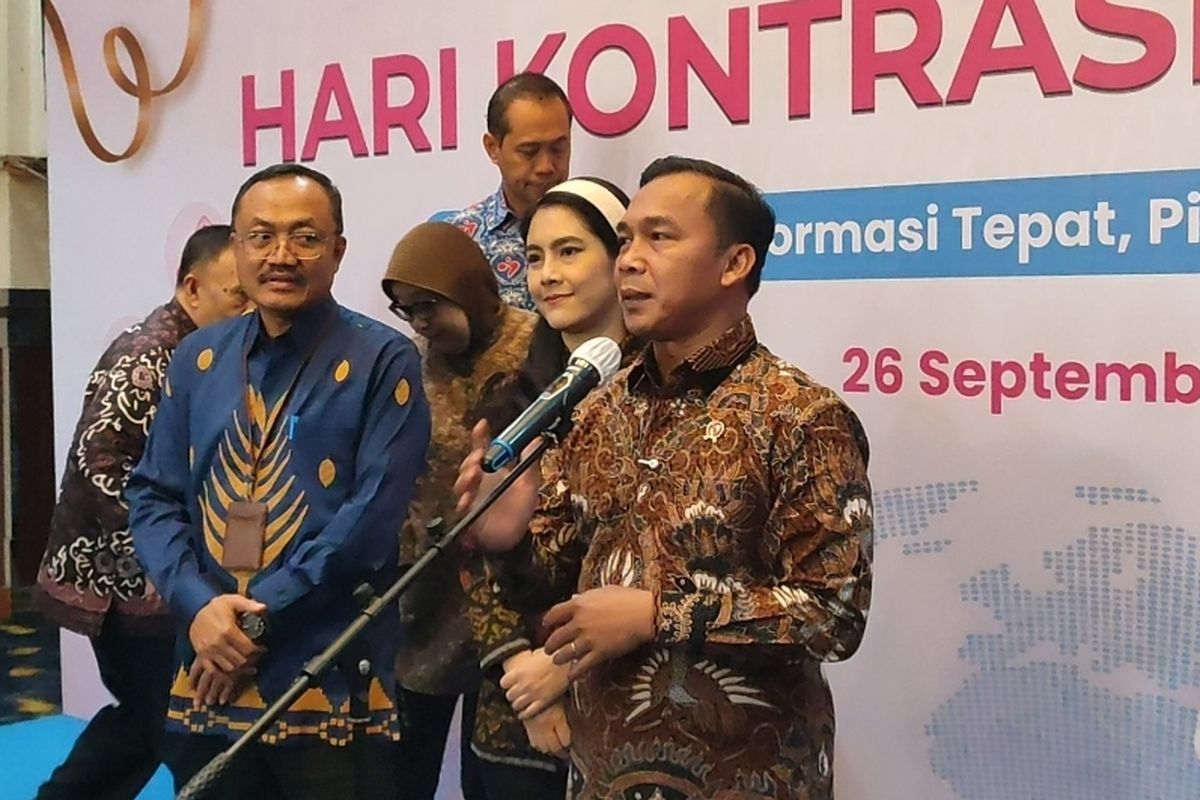
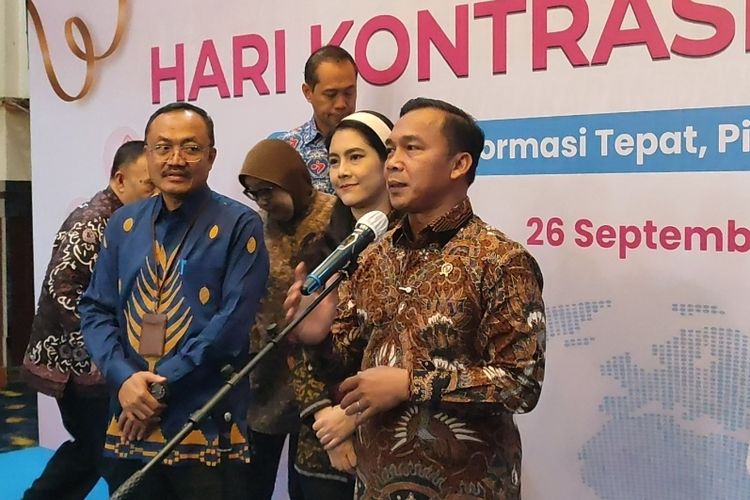
JAKARTA, KOMPAS.com - The Ministry of Population and Family Development (Kemendukbangga)/BKKBN launched a reproductive health guide in Braille for people with disabilities.
Minister of Population and Family Development/Head of BKKBN Wihaji stated that the guide is part of the government's effort to expand access to reproductive health information and education for individuals with disabilities, including family planning and contraceptive methods.
"The spirit is the government is present, the state is present. We provide the broadest access, we offer guidance, and we give education, especially for individuals with disabilities who have the same rights as citizens," Wihaji said at the BKKBN office in Jakarta on Wednesday (7/10/2026).
He mentioned that the use of Braille in the guide aims to provide an alternative means of access to information, particularly for visually impaired individuals.
Wihaji explained that reproductive health education does not always have to be delivered directly by officials.
The Family Companion Team (TPK) can coordinate with the government and bring in experts if assistance is needed in educating individuals with disabilities.
"TPK can invite experts, coordinate with us, Insya Allah if they need help, we will definitely provide the experts," Wihaji stated.
He noted that providing Braille-based reproductive health guides is also expected to help individuals with disabilities access information about contraception.
This is important so that individuals with disabilities can understand the available options and obtain access to reproductive health services.
"Today, we are launching KIE based on Braille guidance. This is part of KIE to ensure that anyone is a citizen," Wihaji added.
According to him, this education is also a step toward preventing unintended pregnancies.
With the availability of accessible guides, individuals with disabilities who have not received direct education can still learn about reproductive health information.
"From today onwards, we have educational content based on Braille guides so that it becomes a learning opportunity for those who perhaps did not have direct access but received the guidance," Wihaji concluded.

























