

On Vice Presidential Election in the MPR, PKB: If Possible, Consensus
-
News
-
23 minutes ago
This article was translated by AI. Read the original article on Kompas.com. See Original
JAKARTA, KOMPAS.com - The 2026 Education Integrity Assessment Survey (SPI) conducted by the Corruption Eradication Commission (KPK) revealed that 8 percent of educators reported that the School Operational Assistance (BOS) funds in schools were misused.
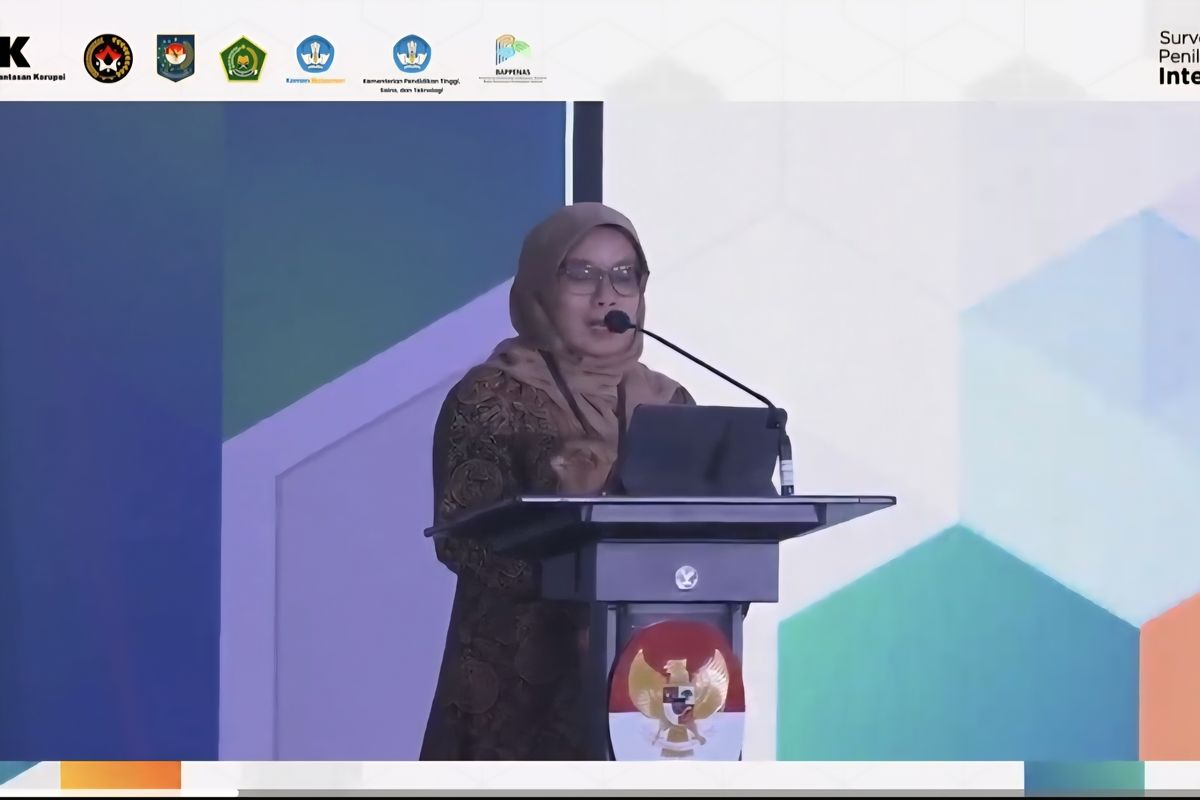
This was announced by the Acting Deputy for Education and Community Participation at KPK, Dian Novianthi, during the launch of the 2026 Education Integrity Index.
“From the governance dimension, reports indicate that the use of BOS funds does not align with their intended purpose. This was reported by 8 percent of our respondents,” Dian stated at KPK's Juang Building in Jakarta on Tuesday (6/10/2026).
Dian added that of the 8 percent, 16 percent experienced extortion or deductions, 40 percent reported nepotism, 45 percent encountered inflated costs from other fund usages, and 41 percent cited various other issues.
Previously, the 2026 Education SPI registered a score of 73.30, categorizing it as adaptive.
This score marks an improvement from the 2024 score of 69.5, indicating a susceptibility to corruption.
“We are grateful that the score is quite high; it is positioned as adaptive at around 73 points compared to two years ago at 69.5,” said KPK Chairman Setyo Budiyanto during the launch at Juang Building, Jakarta, on Tuesday (6/10/2026).
Setyo noted that while the Education SPI improved since 2024, some regions still exhibit scores that fall into the corrective category, thus requiring further enhancements.
“I hope all parties do not react negatively when there are certain areas that are still considered lacking. It is an opportunity for us to improve,” he remarked.
The 2026 Education SPI involved 42,810 respondents, including students, pupils, and college students.
For elementary education, it included students from grades 4 and 5 who are deemed capable of reading and comprehending questions.
Furthermore, junior high and equivalent levels included grades 7 and 8, while senior high focused on grades 10 and 11, as well as college students from semesters 3 to 8.
Additionally, parents were involved specifically for basic and secondary education levels.
Educators from selected educational institutions were also included.
Moreover, other respondents consisted of school principals and higher education leaders.
The data collection methods used three approaches:
In total, 42,810 educational units participated as respondents, consisting of 41,720 secondary schools and 1,090 higher education institutions.

























