

Malang Bullying Case: Legislator States Minors' Status Doesn't Exempt Legal Responsibility
-
News
-
16 minutes ago
This article was translated by AI. Read the original article on Kompas.com. See Original
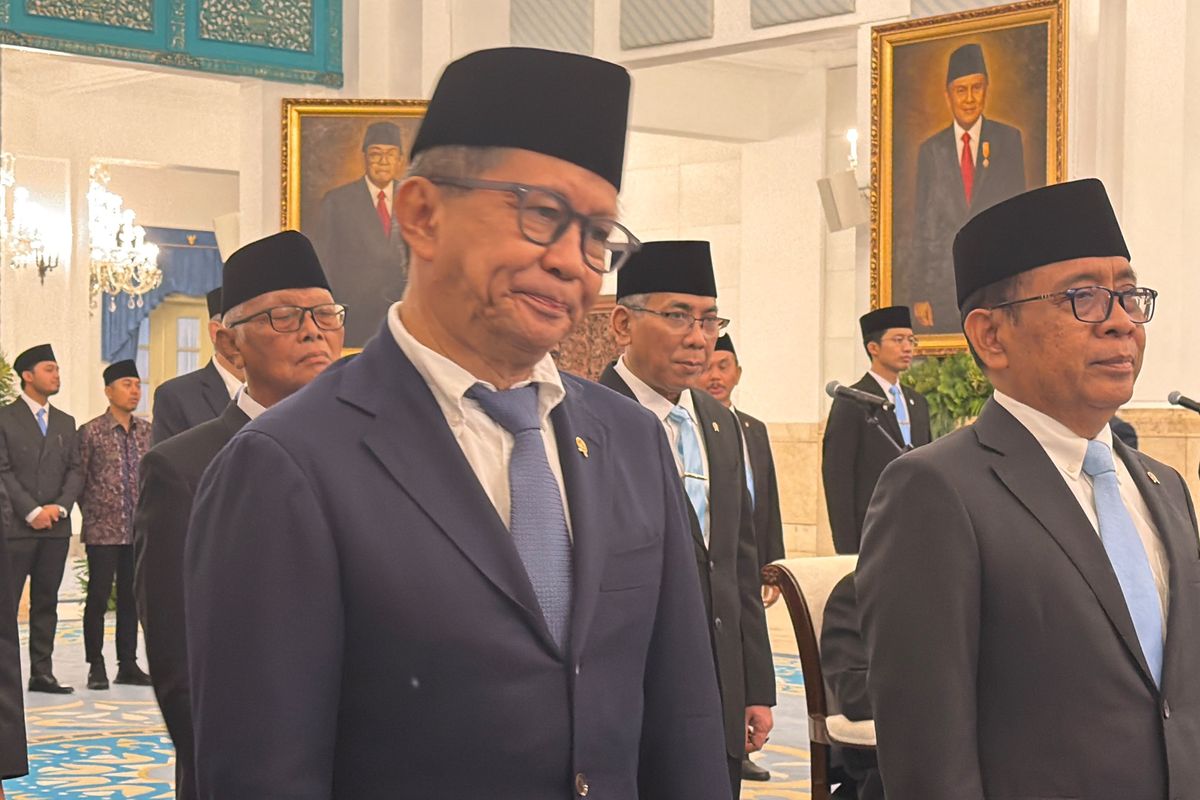
THERE is a striking irony that cannot be overlooked. On Friday (2/10/2026), Rocky Gerung was inaugurated by President Prabowo Subianto as a member of the Presidential Advisory Council.
The man who spent a decade building his platform around the term "dumb" and became an icon of academic resistance has now entered the palace circle, which he has long criticized.
In front of the media, he defended himself, stating, "I am just moving from outside to inside. My attitude remains, radical break."
This statement sounds bold but ultimately betrays the logic of philosophy he has taught himself.
We need to view this move not as a personal event but as a political phenomenon.
Firstly, this is a classic case of cooptation. Philip Selznick's theory explained this seventy years ago: when power cannot silence criticism, it will embrace its critics.
Selznick defined cooptation as the process of integrating new elements (such as opposition, critics, or pressure groups) into the leadership or policy-making structure of an organization/power as a means to prevent threats to its stability or continuity.
No censorship is needed, no repression. Just offer a position, provide an appointment letter, and give a seat in an air-conditioned room, because the stage has been the strongest attraction throughout human power history.
What was once wild criticism on YouTube and university stages has now transformed into a "closed ethical consideration" that must not be disseminated.
His criticism has not vanished; rather, its potency has been dismantled.
Rocky was once dangerous because he spoke from the outside. His words could be used by students, the opposition, and an angry public.
Once he enters the Wantimpres, those same words, if they still exist, would just become secret memos for the President.
The public does not hear. The opposition cannot use his words.
This is the most subtle aim of cooptation—not to turn individuals into sycophants but to render their criticism irrelevant.
We may also view this phenomenon as a validation of the Iron Law of Oligarchy proposed by Robert Michels.
Michels studied revolutionary parties in Europe and discovered the iron law that every organization, no matter how idealistic at first, will eventually give rise to its own oligarchy.
Anyone entering the structure will soon have an interest in maintaining that structure.
Signs of this seem to have appeared when Rocky suddenly adopted a speaking style that is not his genre regarding MBG.
The Rocky who once lived from his freedom to think independently outside now depends on the 'inside' structure.
He must maintain solidarity with 25 other Wantimpres members, uphold ethical standards of office, and ensure access to avoid being dismissed.
The logic of survival within the palace is clearly different from that on the sidewalk, in front of the television, or on public stages.
Voices on the sidewalk must be sharp and, if necessary, controversial to be heard. In the palace, they must be tame to remain invited and be state officials.
Let us not forget the character of the Wantimpres itself. This is not an institution designed to criticize the president in public.
Its laws are clear. The Wantimpres is subordinate to the President, accountable to the President, and the contents of its advice must not be disseminated.
This means once Rocky enters, he is bound by an oath of office not to speak indiscriminately as he has previously done.
Even body gestures must now resemble those of officials. The philosopher, whose task was to dissect, now must remember and consider in a sealed manner.
From loudmouth to whisperer.
All along, Rocky has marketed a narrative that he is a guardian of common sense who rejects power. He has built symbolic capital from this rejection.
The disappointed public has entrusted their hopes to him. Now, he has swapped that capital for the capital of office.
In Bourdieu's terms, this is a highly rational transaction. He gains a seat; power, a salary, and legitimacy. The palace could claim, "Look, even the harshest critic has embraced us. We are open.”
But for the public, this transaction feels like betrayal. Not because Rocky should not work for the state.
But because he entered without a moment for reflection, without ideological explanation, apart from the jargon of "radical break" which now sounds hollow to the ears of those who enjoy his sharp comments.
What radical break can take place within an institution committed to maintaining the continuity of the President's vision?
We have seen this pattern repeated many times. Intellectuals who were once lauded for their courage outside, once entering, change their rhetoric.
From "dumb" to "needs deeper understanding," from "scoundrel" to "needs ethical consideration." Not because they are foolish, but because the vocabulary inside the palace simply does not recognize those terms.
Thus, the important question is not whether Rocky is still critical or not.
The crucial question is whether power has succeeded in taming yet another critical voice without needing to silence it?
If in six months Rocky still appears in podcasts with the same sharp tone, we can say he has successfully brought outside logic inside.
But if what emerges is a diplomatic Rocky, full of considerations, talking about "oversight committees" and "normative responsibilities," then the public already has an answer.
Ultimately, the foolish ones are not the people he often calls dumb for disagreeing with him.
The foolish ones are us if we still believe that power can be criticized from within the chamber of power itself, without paying the price of silence.
Rocky's steps into the Wantimpres, in my view, do not constitute a radical break.
This is a full circle. A critic of power has ultimately found the most comfortable place, within power itself. He has become part of what he once criticized.

























