

Prabowo Instructs Renovation of All Community Health Centers and Every District to Have a Good Hospital
-
News
-
29 minutes ago
This article was translated by AI. Read the original article on Kompas.com. See Original
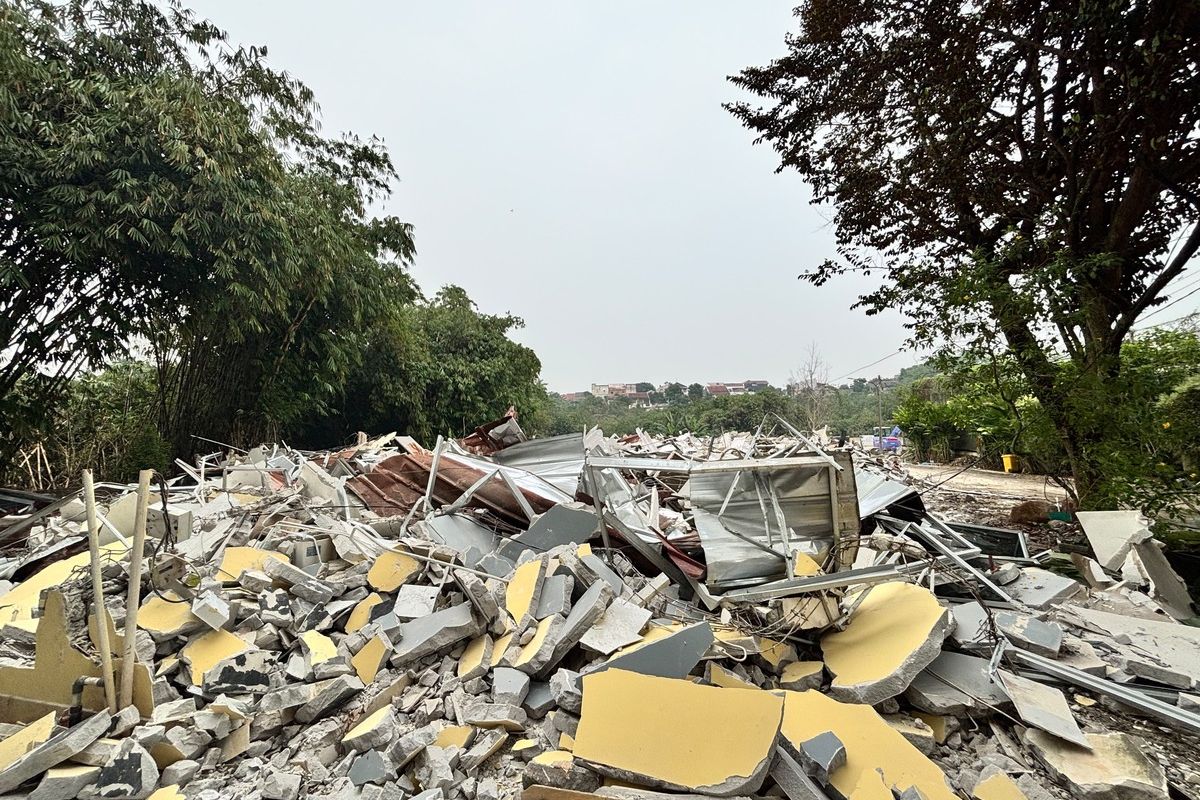
JAKARTA, KOMPAS.com - Ten buildings referred to as "apartments" at the Cibinong Class IIA Correctional Institution in Bogor Regency, West Java, have been demolished.
Head of Cibinong Prison, Wisnu Hadi Putranto, has also been dismissed from his position as a civil servant.
Seventeen civil servants from the Ministry of Immigration and Corrections (Imipas) faced disciplinary sanctions as a result of the discovery of these luxury facilities.
However, the actions taken against the officers and the demolition of the buildings have not solved the underlying issues.
The Cibinong prison case leaves the government with homework to ensure similar practices do not recur in other correctional facilities.
The demolition of the ten buildings was carried out by the Director General of Corrections at the Ministry of Imipas, Mashudi, on Wednesday (30/9/2026).
Mashudi stated that the demolition of all buildings was targeted for completion on the same day.
"A total of 10 (units). We're finishing today," Mashudi said amidst the demolition process.
Days after the demolition, Inspector General of the Ministry of Imipas, Rudi Setiawan, revealed that Cibinong prison head Wisnu Hadi Putranto had been dismissed from his civil service position.
"Yes, dismissed. He has been removed as a civil servant," Rudi said at the Ministry of Imipas in Jakarta on Monday (5/10/2026).
In addition to Wisnu, 16 other civil servants also received disciplinary action.
Rudi noted that the sanctions were imposed because the 17 civil servants violated Articles 5 and 8 of Government Regulation (PP) No. 94 of 2021.
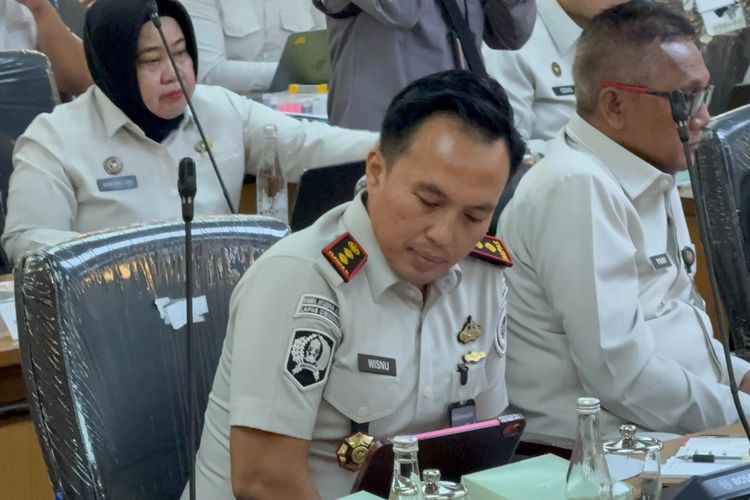 Cibinong Prison Head Wisnu Hani Putranto attending a meeting of Commission XIII of the DPR at the DPR Building, Senayan, Jakarta, Monday (28/9/2026).
Despite the actions taken, criminal law expert from Trisakti University, Abdul Fickar Hadjar, argued that the issue cannot be resolved merely through changes in personnel or administrative sanctions.
According to Fickar, the case needs to be brought to the criminal realm to create a deterrent effect.
"This case must be taken to the criminal level to have a deterrent effect," Fickar told Kompas.com on Tuesday (6/10/2026).
Fickar believes that replacing problematic personnel could be a part of the solution.
However, he argued that this step will not resolve the issue unless the oversight systems within correctional facilities are reformed.
"Replacing people or staff is one solution, but if the system is not improved, similar incidents will happen again," he said.
Therefore, Fickar contended, the government needs to use the Cibinong case as a momentum to improve the system, especially oversight.
Such improvements are essential so that monitoring is not solely dependent on actions taken after violations are discovered.
"That's why the system must also be improved, especially the oversight system," Fickar stated.
Fickar even suggested establishing a special oversight agency to monitor correctional practices.
He believes the Ombudsman has broad authority to oversee public services, so its oversight should not be specifically limited to correctional institutions.
"Therefore, this event can be a momentum for forming a special oversight body for prisons similar to the Police Commission, the Prosecutors' Commission (Komjak), the Judicial Commission (KY) for the judiciary; there must be a commission that specifically oversees corrections," he added.
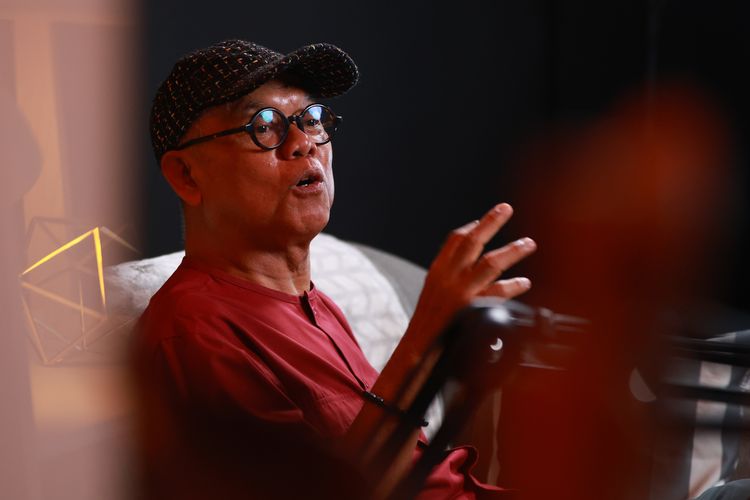 Criminal law expert from Trisakti University, Abdul Fickar Hadjar posing after being interviewed by Kompas.com at the Kompas Gramedia Building, Palmerah Selatan, Central Jakarta, Friday (17/7/2026).
With a more focused oversight mechanism, Fickar argues that control over correctional facilities can be more directed and sustainable.
Deputy Chair of Commission III of the DPR, Ahmad Sahroni, also emphasized that the Cibinong prison case should serve as a comprehensive evaluation for the government.
According to Sahroni, evaluation is necessary given that issues in correctional institutions extend beyond luxury facilities; they include other violations.
"Currently, everyone is cleaning up all forms of abuse in prisons, from the discovery of luxury facilities in Cibinong to the latest drug cases in Depok Prison," Sahroni told Kompas.com on Tuesday (6/10/2026).
He stated that an evaluation is crucial to prevent similar incidents from recurring.
"Certainly, there needs to be a comprehensive evaluation to prevent similar occurrences. Law enforcement must be firm and transparent from start to finish," he asserted.
Sahroni also believes that standard operating procedures (SOPs) and oversight systems in prisons need to be strengthened.
He argued that oversight should not start only after a case emerges or during surprise inspections.
"SOPs and oversight systems certainly need strengthening. Oversight should not only take place after viral cases arise or during sudden inspections," Sahroni said.
Sahroni underlined that prevention should be a crucial aspect of prison management.
This includes ensuring professionalism and integrity among staff working within the facilities.
"Prevention must be strengthened from the outset, including ensuring that every officer has high professionalism and integrity, as this is crucial," he said.
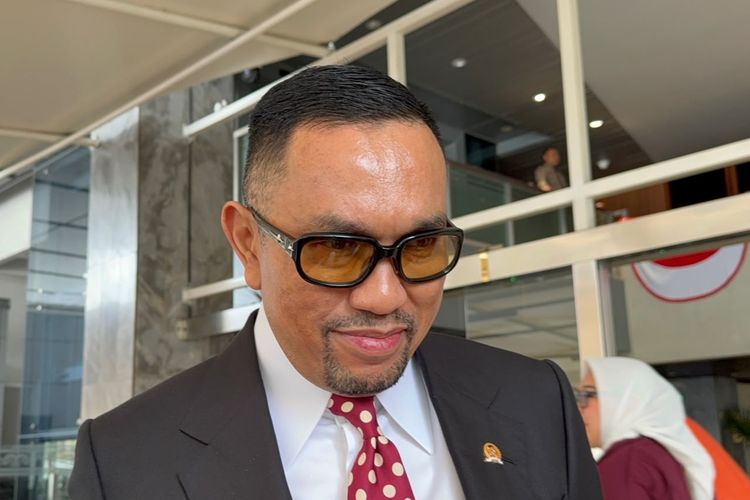 Deputy Chair of Commission III of the DPR, Ahmad Sahroni, during an interview at the DPR Building, Senayan, Jakarta, Tuesday (18/8/2026).
According to Sahroni, oversight should also be conducted periodically and multilayered.
This way, monitoring would not depend solely on the emergence of reports, the virality of cases, or the presence of officers during inspections.
"Oversight must be carried out periodically and multilayered, including involving related agencies and law enforcement should indications of violations be found," Sahroni said.
"In principle, do not wait for problems to arise before taking action," he added.
For Fickar, the dismissal of the Cibinong prison head should not mark the end of the case handling if there is evidence of criminal involvement.
He stressed that criminal proceedings need to be pursued in addition to the administrative sanctions.
"It must continue to the criminal process aside from the dismissal," Fickar stated.
According to him, the handling of the Cibinong prison case should not stop at the demolition of buildings or changes in personnel.

























