

Chair of Commission III of the House of Representatives Calls East Java Police Chief to Monitor Case of Bullying Against High School Student in Malang
-
News
-
10 minutes ago
This article was translated by AI. Read the original article on Kompas.com. See Original
JAKARTA, KOMPAS.com - The Indonesian House of Representatives (DPR RI) approved and enacted the Draft Law (RUU) on Employment Protection into law.
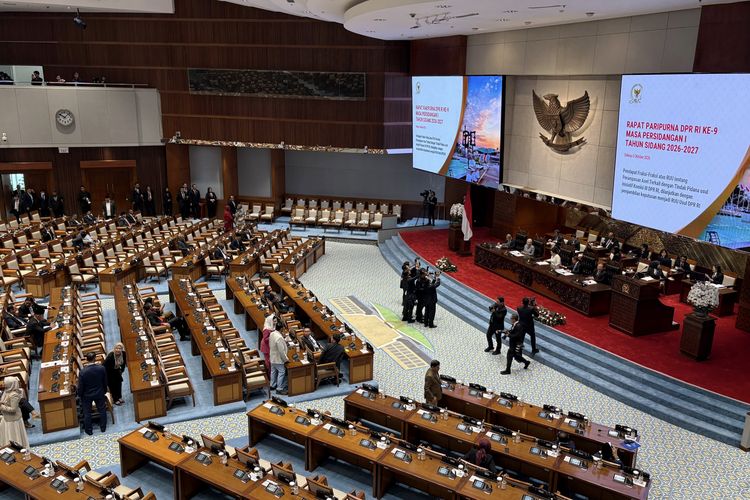
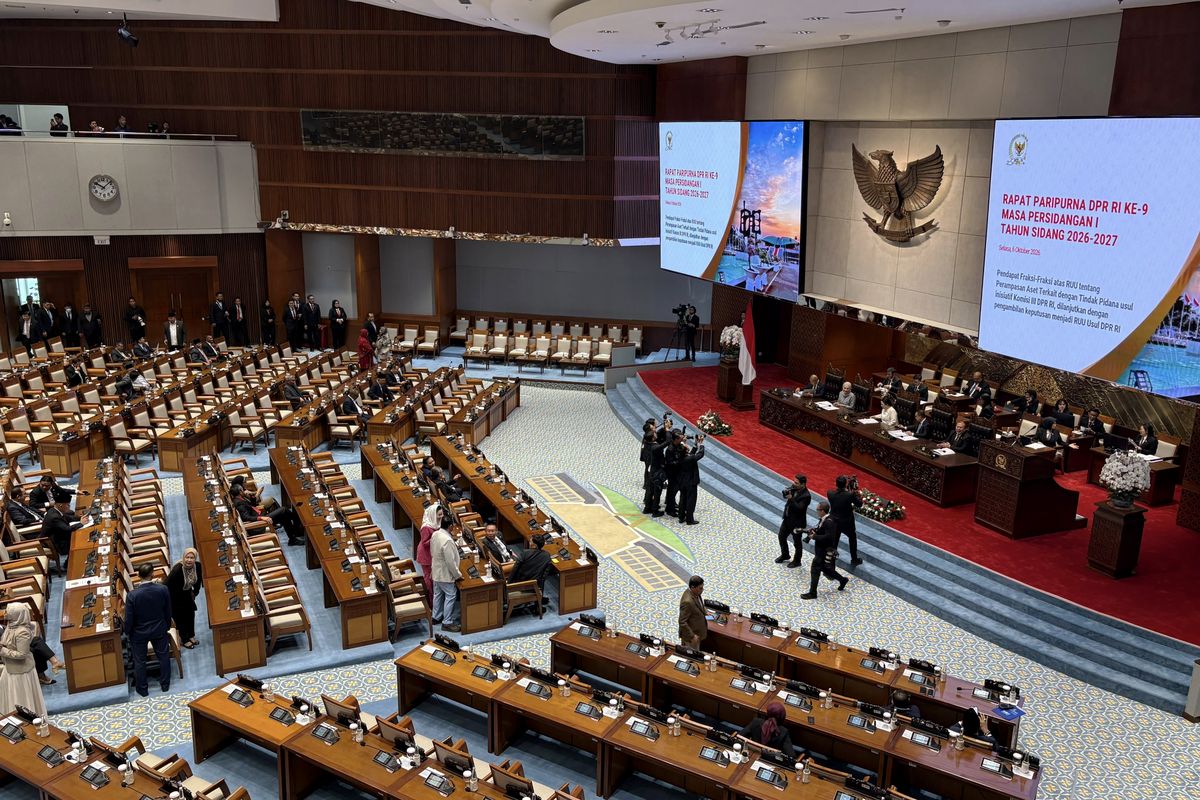
This enactment took place during a plenary session led by DPR RI Chairwoman Puan Maharani at the RI Parliament Complex in Jakarta on Tuesday, October 6, 2026.
"We will ask each faction whether the Draft Law on Employment Protection can be approved and enacted into law?" Puan said while presiding over the session.
All factions expressed their agreement, thus officially enacting the RUU into law.
“Alhamdulillah,” Puan remarked.
During the plenary session, several representatives from labor coalitions, including those from the Confederation of All Indonesia Trade Unions (KSPSI), attended the meeting in person.
KSPSI President Andi Gani Nena Wea was even seen standing on the balcony of the meeting room applauding as the Employment Protection Law was approved.
The decision was made following the presentation of the findings from the discussion on the Employment Protection RUU, which was read by Deputy Chair of Commission IX DPR RI, Putih Sari.
It is noteworthy that the Employment Protection RUU was finalized and discussed by the Special Committee of Commission IX DPR RI on Monday, October 5, 2026.
According to Putih, the establishment of this new employment law is expected to provide more certainty for workers, employers, and the government.
The RUU was also drafted to create a national employment system that offers stronger protection for workers.
Furthermore, Putih added that the RUU aims to provide legal certainty for both workers and employers, encourage the creation and expansion of job opportunities, and increase workforce competence and productivity.
The RUU also regulates efforts to realize a fair and adequate wage system and strengthen harmonious and equitable industrial relations.
Putih Sari explained that the newly enacted Employment Law consists of dozens of chapters and hundreds of articles.
“After undergoing dynamic discussions in the Special Committee, which continued with deliberations by the drafting and synchronization teams, we can report that the Draft Law on Employment Protection consists of 23 chapters and 313 articles,” said Putih.
Chapter I covers General Provisions.
Chapter II addresses the Foundations, Principles, and Objectives.
Chapter III focuses on Equal Opportunities and Treatment.
Chapter IV pertains to Labor Planning and Employment Information.
Chapter V discusses Productivity Enhancement.
Chapter VI covers Job Training and Apprenticeships.
Chapter VII relates to Workforce Placement.
Chapter VIII focuses on Expanding Job Opportunities.
Chapter IX addresses Informal Sector Workers.
Chapter X regulates the Use of Foreign Workers.
Chapter XI concerns Employment Relations.
Chapter XII deals with Specific Employment Relations.
Chapter XIII addresses Protection, Wages, and Welfare.
Chapter XIV pertains to Industrial Relations.
Chapter XV discusses Termination of Employment.
Chapter XVI regulates Severance Reserve Funds.
Chapter XVII covers Guidance.
Chapter XVIII deals with Supervision.
Chapter XIX pertains to Investigations.
Chapter XX regulates Criminal Provisions.
Chapter XXI covers Miscellaneous Provisions.
Chapter XXII addresses Transitional Provisions.
Chapter XXIII deals with Concluding Provisions.
It is important to note that the drafting and discussion of the Employment Protection RUU is a follow-up to the Constitutional Court's (MK) Decision Number 168/PUU-XXI/2023.
In its ruling, the MK requested lawmakers to promptly establish a new employment law.
The MK also mandated that employment regulations be separated or removed from Law Number 6 of 2023 on Job Creation.
The MK has given lawmakers two years to separate the employment cluster into a standalone law since the ruling was delivered on October 31, 2024.
Thus, the employment cluster within the Job Creation Law must be excluded and become a separate law before October 31, 2026.

























