

Chair of Commission III of the House of Representatives Calls East Java Police Chief to Monitor Case of Bullying Against High School Student in Malang
-
News
-
10 minutes ago
This article was translated by AI. Read the original article on Kompas.com. See Original
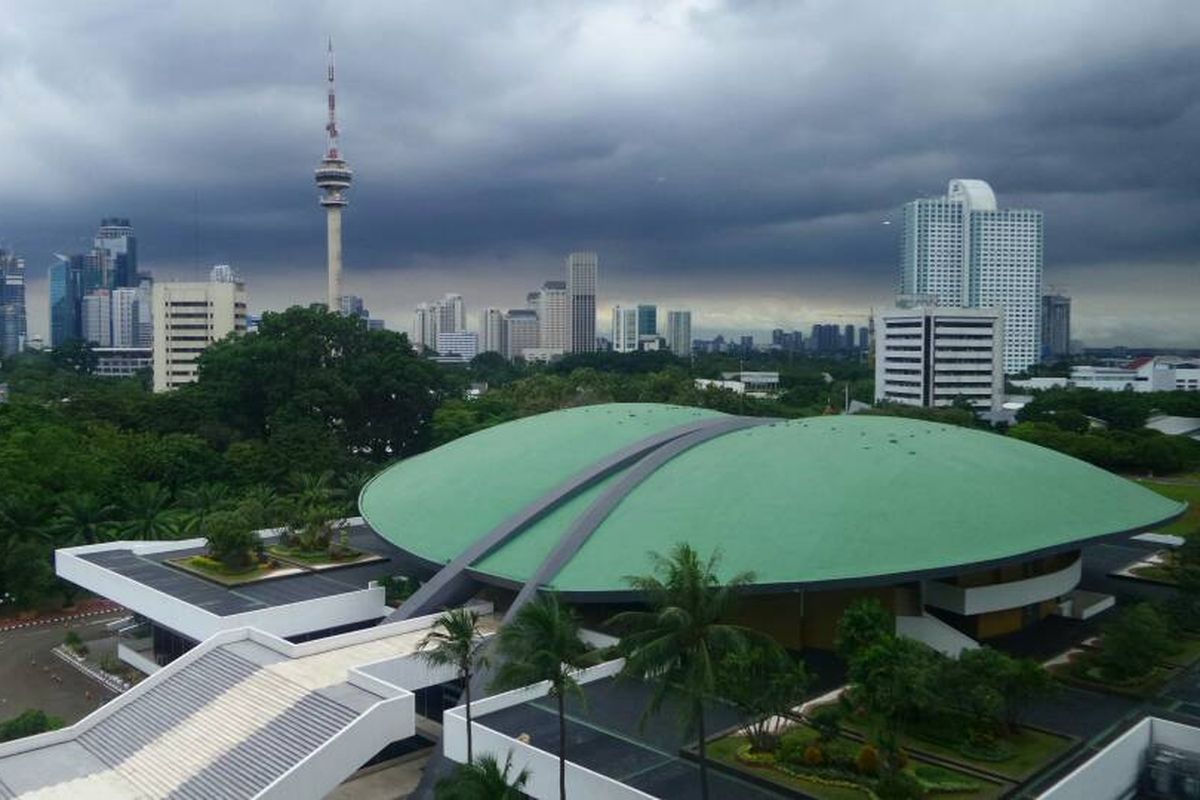
JAKARTA, KOMPAS.com - Discussions on the parliamentary threshold in the Election Bill in the House of Representatives (DPR) are predicted to be contentious due to the diverse interests of various political parties.
"The tug-of-war of interests among the parties in the parliament will be very intense. This goes for non-parliamentary parties as well," said political observer Jamiluddin Ritonga from Esa Unggul University in a statement to reporters on Tuesday (5/10/2026).
He anticipates that some parties will want to maintain the parliamentary threshold at 4 percent or, at most, 5 percent.
"At least parties like PAN, PKS, and the Democrats do not seem to want a threshold that is too high," he added.
This is because if the parliamentary threshold exceeds 5 percent, these three parties are concerned they will struggle to enter the Senate in the 2029 legislative elections.
Meanwhile, PDI-P, Gerindra, Golkar, PKB, and Nasdem appear to have no issue with a parliamentary threshold set at 6 percent or higher.
"Thus, the negotiation over the parliamentary threshold could spark tensions among coalition parties. The situation will become even more heated if Gerindra and Golkar do not accommodate the interests of PAN, PKS, and the Democrats," he warned.
Additionally, there are expected negotiations regarding the nomination requirements for presidential (capres) and vice-presidential (cawapres) candidates.
For non-parliamentary parties, the nomination requirements must align with the Constitutional Court's (MK) decision.
"If not, non-parliamentary parties are certainly going to reject them," he said.
Moreover, he suspects that parties in the House also have differing interests regarding the requirements for capres and cawapres.
Parties with potential candidates want their members to advance in the 2029 presidential elections under stringent requirements, especially those that do not align with the MK's decision.
Negotiations are also predicted regarding the establishment of an electoral system.
PDI-P has long desired a closed electoral system, while some other parties still prefer an open system.
According to him, there is a possibility that all parties might agree on a semi-open electoral system.
"Therefore, in the discussions on the Election Bill, there will be a clash of interests among the parliamentary parties and with non-parliamentary parties. This tension arises solely to secure each party's position in the 2029 legislative and presidential elections," he concluded.

























