

Minister: Heart Disease Leads to Most Deaths Among Indonesians, 300,000 Each Year
-
News
-
3 minutes ago
This article was translated by AI. Read the original article on Kompas.com. See Original
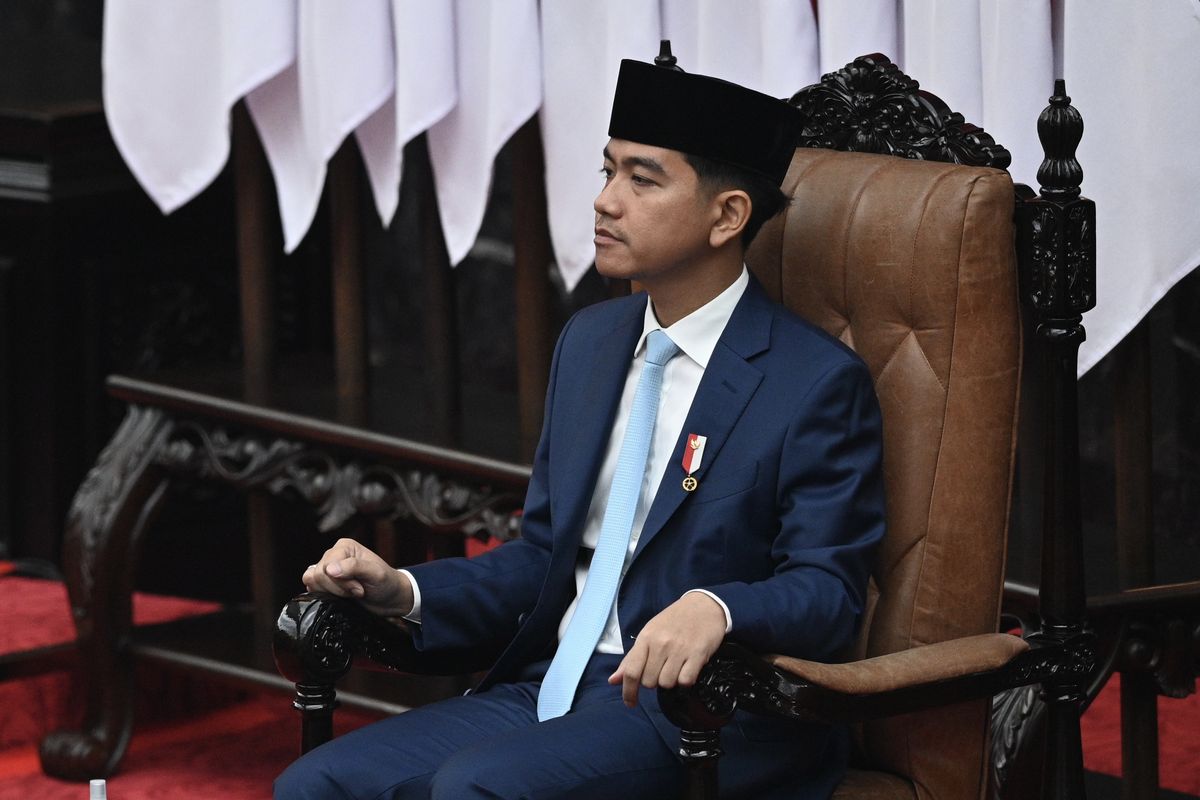
IN A FEW hours, the Constitutional Court will announce its decision on Case Number 01/PHPU.PRES-XXIV/2026.
This case regarding the educational qualifications of Gibran Rakabuming Raka has reached the point where debates outside the courtroom must give way to a judicial decision.
However, in complex constitutional matters, the verdict is not the only important aspect. The reasoning leading to the verdict often has a longer lifespan than the verdict itself.
The Gibran case presents the Court with a complex situation. The election is over.
The pairs of candidates have been declared winners. The President and Vice President have been inaugurated.
The 2024 election administration has been functioning for nearly two years. Now, one of the requirements that should have been met when someone was still a candidate is being questioned.
This is where the difficulty lies.
The Court not only faces the question of whether a requirement has been fulfilled.
It must first determine whether the issue can be examined under its jurisdiction, how to place the facts that emerged in the trial, and to what extent the law provides consequences if issues arise from a candidacy stage that has long passed.
Today, not only will the arguments from both sides receive answers. The consistency of the Court's constitutional reasoning will also be tested.
Constitutional matters should not begin with the desired outcome, and then seek legal pathways to achieve it.
It must proceed according to the law.
Methodologically, questions of jurisdiction and the admissibility of petitions precede the substantive evaluation of the case.
If it reaches the substance and finds legal issues, only then does the Court confront the next question: what legal consequences can be imposed?
That order is not merely a formality. It is a discipline of judicial power.
The desire to achieve substantive justice does not inherently erase jurisdictional boundaries.
Conversely, procedural law should not be used as a refuge when the constitution indeed provides room for the Court to resolve the matters raised.
Between these two, the constitutional judges operate.
Thus, the quality of the ruling heavily depends on the Court's ability to explain every stage of its reasoning.
If it states a lack of jurisdiction, it must clarify why the matter falls outside its competencies.
If a petition is declared inadmissible, the legal issues obstructing substantive examination must be explained.
If it enters the substance of the case, the foundation that leads it through preliminary issues must also be clear.
A robust decision does not skip the steps of reasoning.
This case confronts two distinct periods with different legal consequences.
The first time is the candidacy period in 2023. At that time, the qualifications for candidates had to be met, documents reviewed, candidate pairs determined, and the election process proceeded.
The second time is the current situation. The election has produced a government.
Gibran is no longer a candidate for Vice President but a constitutional officer who has been inaugurated.
The difference in time is crucial.
The candidate's qualifications are within the candidacy regime. The status of the Vice President after inauguration falls under a different constitutional framework.
Thus, the issues at hand are more complicated than simply examining educational documents.
If an issue arises from a candidacy stage but is judicially examined after the candidate has become an official, how should the law place its consequences?
This question cannot be answered merely by an intuitive sense of justice. The constitution has structure.
That structure distinguishes a rule of law from a power operating solely on objectives.
On one side, there is a demand that candidate qualifications be implemented seriously.
Requirements established by law certainly must not be treated as mere administrative ornaments.
If a qualification is mandated, the state must have mechanisms to ensure it is fulfilled.
On the other side, there is a need to maintain certainty regarding the democratic process that has concluded and the legal state that arises from it.
Here, two constitutional interests meet: the legal capacity to correct possible errors and the need to uphold certainty.
Legal certainty does not mean that every state decision is immune from scrutiny simply because time has elapsed.
However, legal correction also does not mean that every final state can be reopened without limits.
If the correction window is too narrow, severe mistakes may escape scrutiny simply due to delayed discovery.
If it is too wide, election results may exist in an endless state of uncertainty.
The Court must find the line between the two. That line will outlast the name of the person involved in the case.
The recent hearings have presented a wealth of information.
The Ministry of Education clarified that the equivalency of foreign education is not the process of issuing an Indonesian diploma or stating that someone has graduated from an Indonesian educational institution.

























