Cak Imin Encourages Pesantren-Based Vocational Schools to Elevate Standards to International Levels
-
News
-
2 hours ago
This article was translated by AI. Read the original article on Kompas.com. See Original
JAKARTA, KOMPAS.com - The looming threat of clean water shortages is beginning to haunt Jakarta amid drought warnings across several areas.
In response, a proposal has emerged to explore new water sources. One notably unconventional idea is to convert seawater into fresh water.
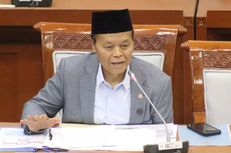
This idea was put forward by the Chair of the Jakarta Regional House of Representatives (DPRD), Suhud Alynudin. He urged the Jakarta Provincial Government to start preparing desalination technology to anticipate potential shortages of clean water.
"There is already a desalination plant in the Thousand Islands that converts seawater into clean, fresh water. I think this should also start being tried to anticipate possible clean water shortages in Jakarta," Suhud said at the DPRD DKI Jakarta building on Thursday (9/17/2026).
This proposal follows the meteorological drought warning issued for several areas in Jakarta.
According to the Indonesian Agency for Meteorology, Climatology, and Geophysics (BMKG), this warning applies to the second ten-day period (Dasarian II), from September 11 to 20, 2026.
Five areas have been categorized under the warning: West Jakarta, Central Jakarta, East Jakarta, North Jakarta, and the Thousand Islands.
For Suhud, this situation needs to be anticipated early, especially since droughts can last a long time and directly impact the population.
"It definitely needs to be anticipated. Recently, the Regional Disaster Management Agency (BPBD) issued a warning level. I believe this needs to be taken seriously because droughts are unavoidable and prolonged," Suhud added.
The idea was met with a response from Jakarta Governor Pramono Anung.
Pramono affirmed that, technologically, seawater can be processed into freshwater through desalination.
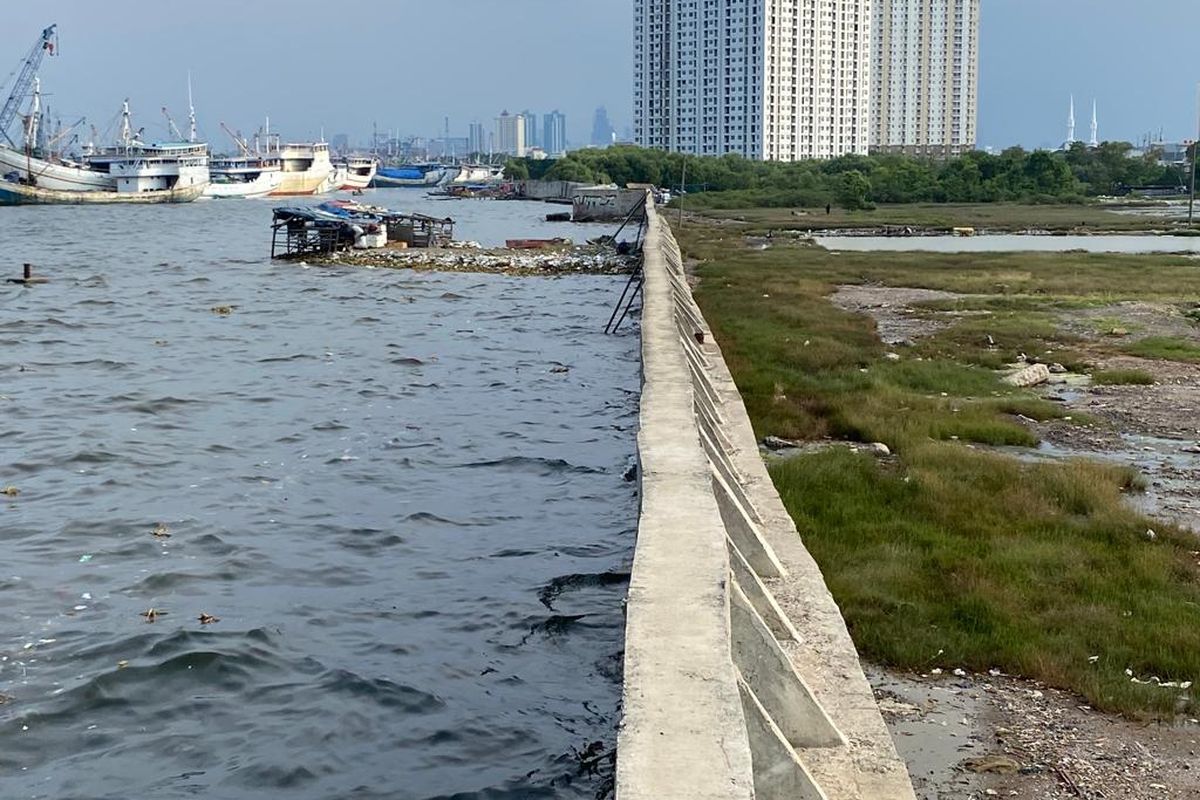
However, he pointed out there is one critical step that must come first — the construction of a massive sea wall, known as the Giant Sea Wall.
"To convert seawater into usable fresh water, one essential element is to start the Giant Sea Wall project immediately," Pramono said when met at the DKI Jakarta Indonesian Red Cross (PMI) building on Thursday (9/17/2026), as reported by Antara.
According to Pramono, the Giant Sea Wall plays a key role in securing supplies of brackish water, which can then be processed into fresh water.
"If this can be done, then the supply of brackish or fresh water to be treated for public use would be accessible. The Jakarta Provincial Government, through PAM Jaya, is ready to carry this out," Pramono explained.
Thus, Jakarta's desalination plan involves not only the technology to convert seawater but also the necessary source water and infrastructure to support the process.
Mahawan Karuniasa, a lecturer at the School of Environmental Sciences, University of Indonesia, stated that using seawater as a clean water source for Jakarta is technologically viable.
The Seawater Reverse Osmosis (SWRO) technology, he noted, is widely used globally.
However, Mahawan emphasized that the challenge isn’t merely about whether seawater can be converted to fresh water.
Other considerations include efficiency, affordability, emissions, and ecological safety.
Therefore, Mahawan recommended desalination be positioned as one of several strategic water sources, not the sole water source for Jakarta.
The experiences of other cities and countries provide useful examples.
For instance, Singapore integrates local water sources, imported water, recycled water, and desalination. Perth combines desalination with groundwater and other water sources.
From these cases, Jakarta needs to have diverse water sources.
Diversifying water sources is necessary to make the water supply system more resilient to droughts, climate change, and supply disruptions.
Another important aspect when discussing Jakarta's water resilience is that Jakarta does not stand alone in water management.
Mahawan explained that Jakarta is the downstream area in a larger hydrological system.
This system involves the Bogor, Puncak, and Cianjur regions, as well as the watersheds of the Ciliwung, Cisadane, and Citarum–Jatiluhur river basins.
In other words, Jakarta’s water issues are not determined solely by what happens within the capital.
Upland areas, land cover, river quality, and water storage capacity upstream also influence Jakarta’s water resilience.
Ultimately, desalination becomes one component of efforts to find new water sources.
On one hand, the Jakarta Provincial Government is open to processing seawater into fresh water.
On the other hand, experts remind that water resilience requires multiple sources.
This plan emerges alongside the drought threat currently facing Jakarta.
Whether seawater will truly become one of Jakarta’s water sources depends on the readiness of technology, infrastructure, and overall water management systems.