

Cak Imin Encourages Pesantren-Based Vocational Schools to Elevate Standards to International Levels
-
News
-
3 hours ago
This article was translated by AI. Read the original article on Kompas.com. See Original
JAKARTA, KOMPAS.com - Several apartment buildings in Jakarta have experienced fires in recent months.
In 2026 alone, there have been three such incidents.
The first occurred at Mediterania 1 Apartment in West Jakarta on April 30, 2026. Then, Pavilion Apartment in Central Jakarta caught fire on September 4, 2026.
Most recently, Teluk Intan Apartment in North Jakarta experienced a fire on September 20, 2026, adding to the growing list of vertical residential fires.
At Mediterania 1 Apartment, the fire reportedly started in the electrical panel room in the basement area of Tower C, causing thick smoke to spread upward.
Authorities evacuated 136 people, including 22 to 25 residents who suffered from breathing difficulties.
Meanwhile, the Pavilion Apartment fire broke out on the 5th floor during the daytime and was suspected to be caused by an electrical short circuit.
Thirty-four residents were evacuated, including Indonesian citizens, foreigners, a baby, and nine pets.
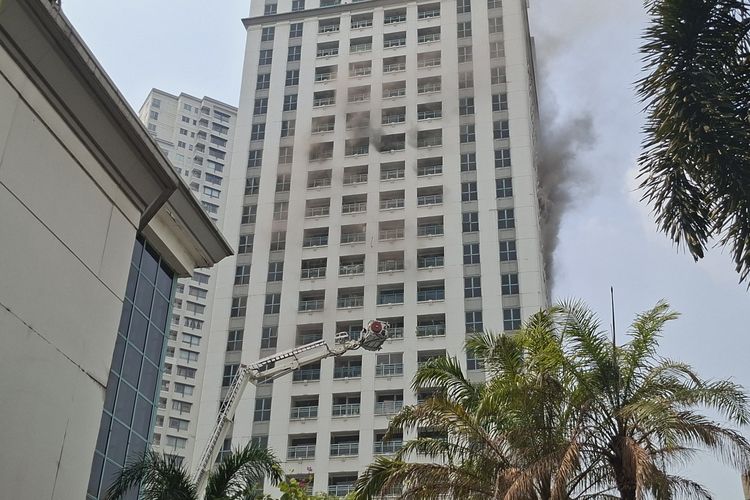
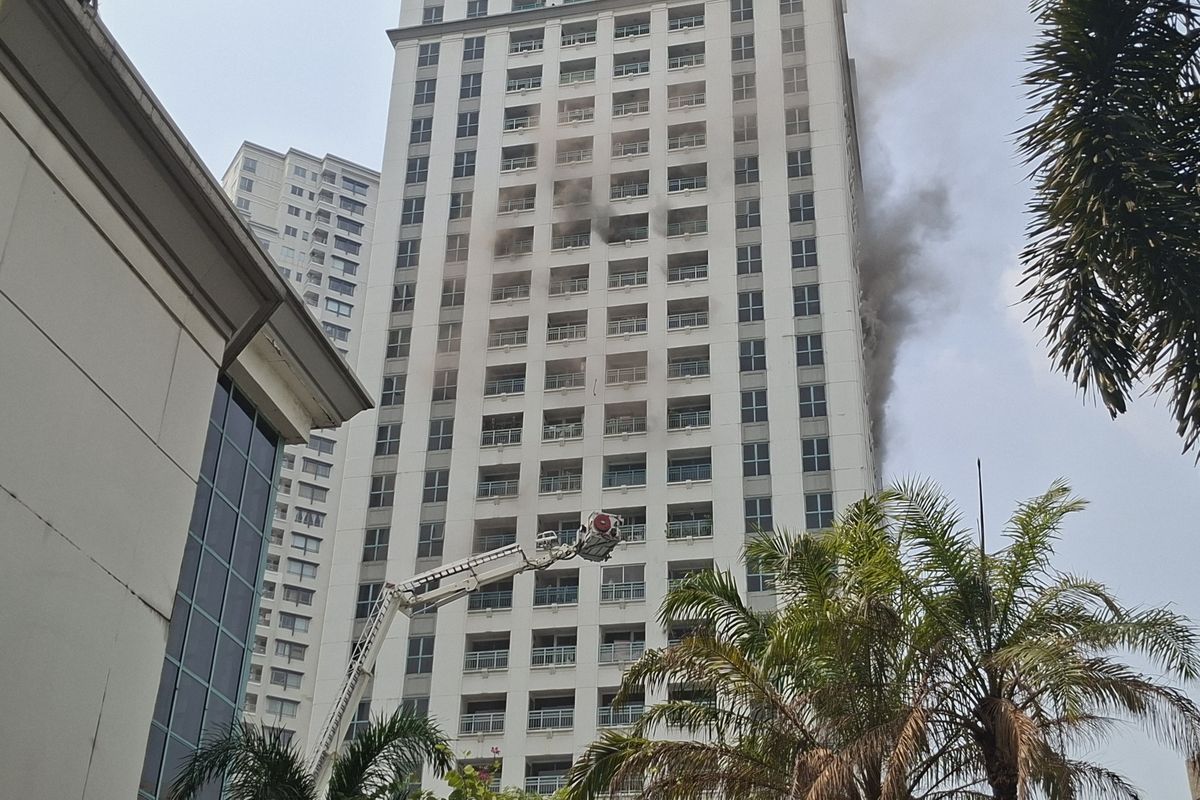
The fire also struck Teluk Intan Apartment on September 20, 2026.
The blaze is suspected to have originated from a short-circuited electrical panel on the 8th floor, spreading to the 5th, 6th, 7th, 9th, and 10th floors.
Sixteen fire trucks were dispatched, and 53 residents were safely evacuated with no casualties reported.
Marwanto, a First Expert Fire Analyst specializing in Fire Prevention at the Jakarta Fire and Rescue Service (Gulkarmat), emphasized that the mere presence of fire protection equipment in apartments does not automatically guarantee residents' safety.
According to Marwanto, some buildings may have fire protection devices that appear visually complete.
However, this condition is insufficient if the equipment is not regularly maintained and tested.
"Visually, the equipment looks complete, but when tested, the water pressure may be insufficient, detectors may not be connected to the main panel, or hydrant pumps may fail to activate automatically during pressure drops," Marwanto told Kompas.com on Monday (9/21/2026).
He mentioned that systems can also malfunction due to human error or modifications made within apartment units.
For example, alarm panels can be intentionally turned off or muted because of frequent false alarms.
Additionally, residents might cover sprinkler heads or smoke detectors during interior renovations.
Sprinkler valves closed for maintenance also risk not being reopened after work completion.
 Fire struck Mediterania Tanjung Duren Apartment in Grogol Petamburan, West Jakarta, on Thursday morning (4/30/2026).
Marwanto explained that apartment safety depends on several layered systems working together.
The first system comprises protected evacuation facilities such as emergency stairs and heat-resistant fans that keep exit routes safe from smoke and fire.
The second system includes smoke or heat detectors and fire alarm panels that provide early warnings to residents.
"Detection and alarm serve as the early warning system to ensure residents have adequate time to evacuate," said Marwanto.
The third system is the automatic sprinkler, which activates initial fire suppression when temperatures rise around a fire source.
All three systems must function simultaneously to give residents sufficient time to evacuate safely.
Besides protection devices, evacuation routes’ conditions are critical to residents’ safety.
Marwanto stressed that evacuation paths must be clear of residents' belongings and equipped with doors that close automatically to prevent smoke from entering emergency stairwells.
"Emergency stair doors that are propped open allow smoke to enter and fill the stairwell, rendering the evacuation route unusable," Marwanto warned.
This is dangerous because apartment residents primarily rely on vertical evacuation routes during fires.
Safe pathways are also essential to prevent residents from inhaling thick smoke, a leading hazard in high-rise fires.
Marwanto observed that residents’ understanding of evacuation procedures remains generally low.
Many residents are reluctant to participate in safety socialization sessions and often dismiss fire alarms as false.
"Fire drills and evacuation exercises should ideally be held at least once a year for all residents and management," Marwanto advised.
For internal emergency response teams, partial drills and simulations should occur every three to six months.
These exercises help security personnel and engineering teams become familiar with alarm responses and operation of fire protection equipment.
Marwanto stated that property managers bear the primary responsibility for ensuring that all protection systems and emergency response teams function properly.
Regular inspections are necessary for fire pumps, detectors, hydrant and sprinkler water flow, and emergency stair fans.
Managers must also conduct periodic testing following mechanisms established by the DKI Jakarta Fire and Rescue Service.
"Empowering the Emergency Response Team requires having personnel on standby 24/7, trained in operating the MCFA panel and initial firefighting actions," Marwanto said.
He added that routine fire safety audits are necessary to ensure buildings continue to meet safety standards.
Such audits are also part of inspections related to issuing or renewing fire safety recommendations and Fire Safety Certificates (SKK).
By ensuring all these aspects are equipped and functioning correctly, the risk of fire incidents in vertical housing can be significantly minimized.