Gibran Plans to "Fight": Is There Still a Way to Validate His Certificate?
-
News
-
21 minutes ago
This article was translated by AI. Read the original article on Kompas.com. See Original
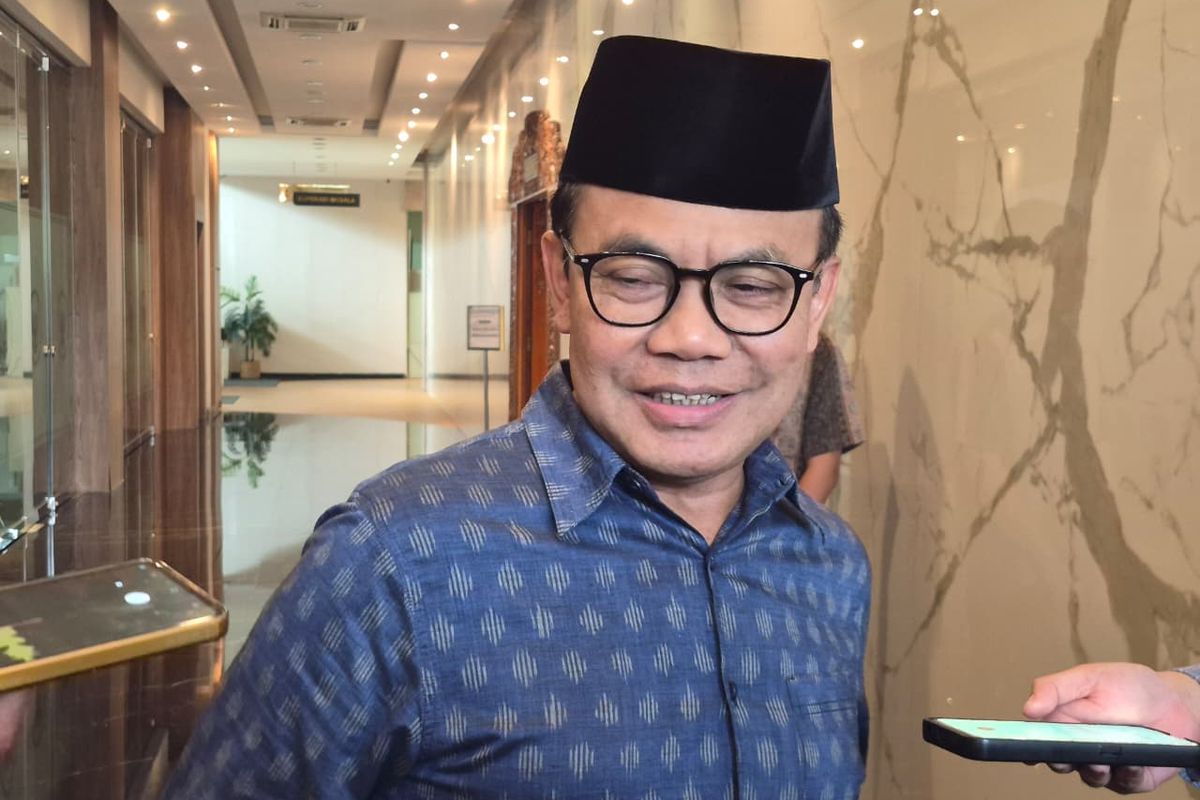
JAKARTA, KOMPAS.com - Indonesian automotive industry players highlighted several challenges in developing the national industry, ranging from licensing issues to access to financing for small and medium enterprises (SMEs).
These concerns were raised during a business meeting involving the government, national automotive industry players, and Japanese partners, facilitated by the Coordinating Ministry for Economic Affairs in Nagoya, Japan, on Saturday (19/9/2026).
In addition to licensing and financing challenges, business actors also raised the issue of Domestic Component Level (TKDN) certification, particularly during the transition period toward electric vehicles.
The meeting was attended by the Coordinating Ministry for Economic Affairs' Secretary, Susiwijono Moegiarso; Deputy for Trade and Digital Economy Coordination Ali Murtopo Simbolon; and leaders from PT Toyota Motor Manufacturing Indonesia (TMMIN), Denso Indonesia, Aisin Indonesia, and Advics Indonesia.
Susiwijono stated that input from industry players is an essential part of the government's efforts to strengthen the competitiveness of Indonesia's automotive industry.
"The government welcomes all of this feedback and reaffirms its commitment to continuously improve policies through concrete steps, including ongoing investment barrier mitigation," he said in a written statement on Sunday (20/9/2026).
He explained that industry competitiveness is built on a combination of technological mastery, human resource development, and a robust supply chain ecosystem.
These elements form the foundation for Indonesia's efforts to bolster its manufacturing and automotive industries.
Alongside national industrial development, Susiwijono noted that the government is expanding market access through international trade agreements.
Indonesia has currently signed 25 international trade agreements, both in the form of free trade agreements (FTAs) and comprehensive economic partnership agreements (CEPAs).
One notable focus is the Indonesia-European Union Comprehensive Economic Partnership Agreement (IEU-CEPA). The ratification process is scheduled to begin in November 2026, with implementation targeted for January 2027.
The government hopes that expanded market access will support Indonesia's position as part of the global value chain in the automotive industry.
At present, Indonesia is said to serve as a production base for exports to more than 100 destination countries.
This step is part of the government's broader strategy to maintain growth momentum amid an improving global economic outlook for 2027, projected at around 3.2-3.3 percent.
"On the domestic front, the government continues to strengthen the economic foundation which is still dominated by consumption and investment sectors. Various social assistance programs, subsidies, and fiscal incentives are implemented to maintain public purchasing power and strengthen demand," he added.
In addition to expanding markets and strengthening the economy, the government is also encouraging the development of new technologies increasingly related to the automotive industry, including artificial intelligence (AI) and semiconductors.
Indonesia has established cooperation with ARM, become a member of WAICO, and is currently conducting exploration and communication with PAX Silica.
Strengthening the semiconductor sector is considered relevant to the automotive industry because vehicles increasingly rely on semiconductor components and intelligent technologies.