

Cak Imin Encourages Pesantren-Based Vocational Schools to Elevate Standards to International Levels
-
News
-
4 hours ago
This article was translated by AI. Read the original article on Kompas.com. See Original
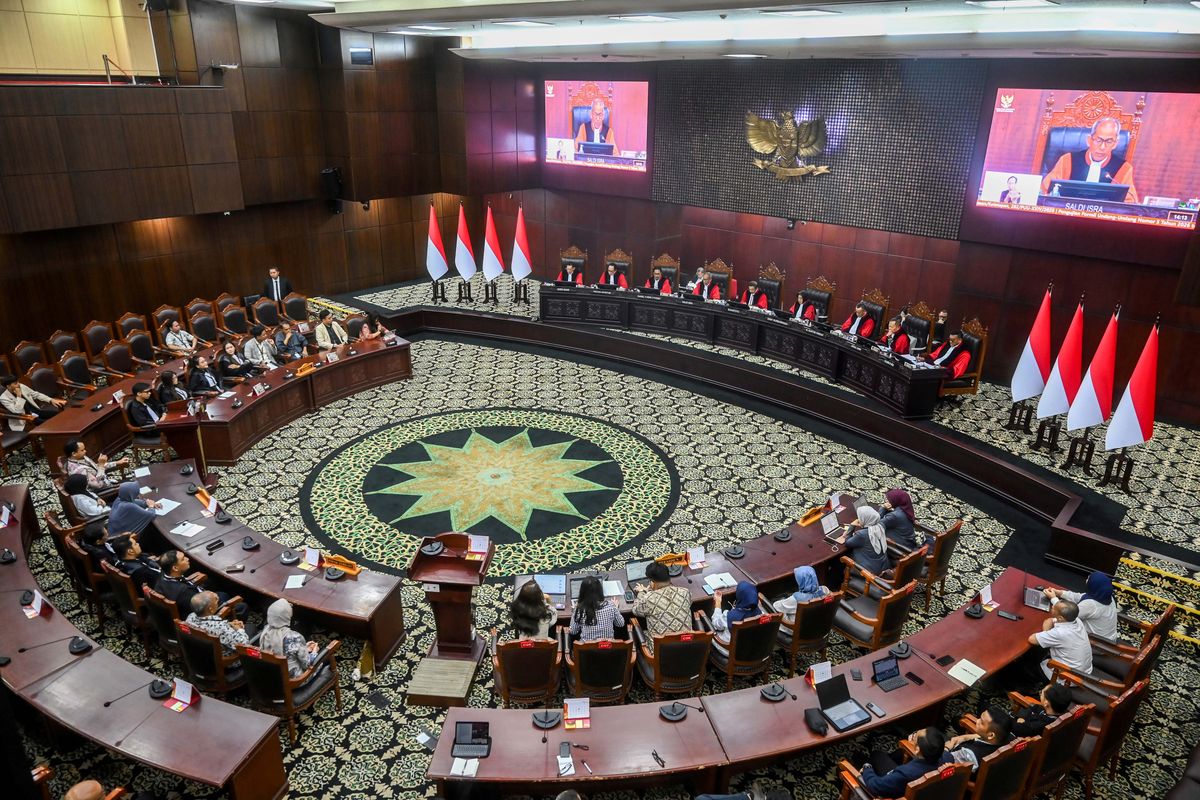
CONSTITUTIONAL COURT recently granted part of the request to review Law No. 17 of 2025 concerning the 2026 State Budget (APBN) in Constitutional Court Decision No. 100/PUU-XXIV/2026, delivered on September 16, 2026.
This Constitutional Court ruling is noteworthy because it serves as a correction to the government, preventing arbitrary revisions of the APBN without involving the House of Representatives (DPR RI) and public participation.
The national budget is not merely a table of numbers, but a political decision that binds the direction of public fund usage while also limiting government power.
Therefore, Constitutional Court Decision Number 100/PUU-XXIV/2026 should be understood not only as a technical correction of the 2026 APBN Law but as a reaffirmation of the constitutional principle that fiscal power must not operate unchecked.
A key point in this ruling is the correction related to Article 8 paragraph (5) of Law No.17 of 2025 regarding the 2026 APBN.
The Court conditionally interprets this provision, stating that if changes impact the amount of central government spending by function, such changes require DPR approval.
Thus, Presidential Regulations (Perpres) that have been used and seemingly become tradition cannot be shortcuts to alter the substance of budgetary decisions previously agreed upon by the President and the DPR.
From a constitutional law perspective, Article 23 paragraph (1) of the 1945 Constitution classifies the APBN as a law.
This means that the budget is not solely the executive’s domain but a constitutional agreement between distinct branches of power.
When the government fundamentally changes spending directions, it alters not just figures but legal decisions about the nation's priorities.
The division of authority between the legislative and executive branches is a vital part of the system of checks and balances.
Parliament's strength in the budget process relates to oversight, transparency, and fiscal accountability.
Therefore, DPR involvement is not an administrative obstacle but a mechanism to ensure public funds remain within constitutional mandates.
The ruling is even firmer concerning Article 29 paragraph (1) of the 2026 APBN Law. In situations threatening the national economy or financial system stability, the government indeed needs flexibility.
However, the Constitutional Court requires DPR approval for policy measures involving revenue, expenditure, and/or budget financing.