

Cak Imin Encourages Pesantren-Based Vocational Schools to Elevate Standards to International Levels
-
News
-
5 hours ago
This article was translated by AI. Read the original article on Kompas.com. See Original
JAKARTA, KOMPAS.com - The State Budget Performance (APBN) through the end of August 2026 recorded a deficit of Rp 240.1 trillion, equivalent to 0.93 percent of Gross Domestic Product (GDP).
Finance Minister (Menkeu) Suahasil Nazara stated that the implementation of the APBN until August 2026 is still on track with the direction set by the government.
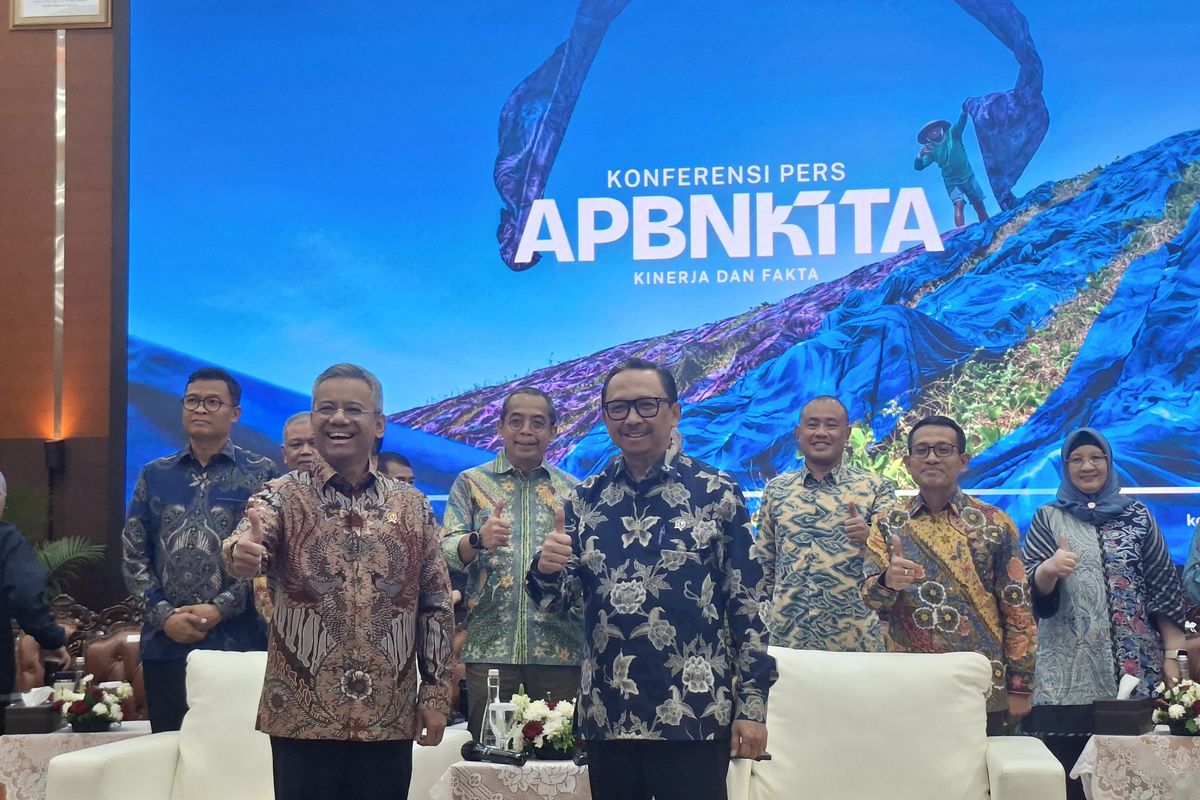
Suahasil conveyed this during a press conference for the September 2026 edition of APBN KiTa, on Friday (18/9/2026).
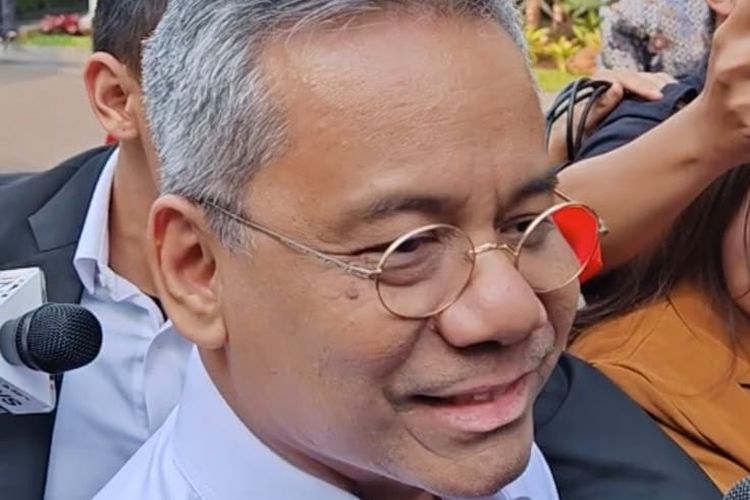 Finance Minister Suahasil Nazara at the Palace, Jakarta, Wednesday (16/9/2026) afternoon.
"Until the end of August, APBN performance remains strong with a positive primary balance and a deficit within controlled limits," said Suahasil.
Quoting Antara, the APBN deficit originated from state revenues amounting to Rp 2,055.6 trillion, while state expenditures had reached Rp 2,295.7 trillion.
Thus, state revenue until August has reached 65.2 percent of the 2026 APBN target of Rp 3,153.6 trillion, while expenditures reached 59.7 percent of the ceiling of Rp 3,842.7 trillion.
Amid this deficit, the APBN primary balance still recorded a surplus of Rp 154 trillion. This condition is one of the key indicators the government is monitoring regarding APBN implementation progress during the first eight months of 2026.
On the revenue side, the government recorded Rp 2,055.6 trillion in realization through August 31, 2026. This figure represents a 25.4 percent increase compared to Rp 1,639 trillion in the same period last year.
 Tax illustration.
Tax revenue was one of the main contributors with a realization of Rp 1,619.3 trillion or 60.1 percent of the APBN target. Tax revenue grew by 21.7 percent year-on-year.
Within this, income tax collection reached Rp 1,409 trillion or 59.8 percent of the target of Rp 2,357.7 trillion. This realization grew 24.1 percent compared to the same period last year.
Value-Added Tax (VAT) and Luxury Goods Sales Tax (PPnBM) revenues recorded Rp 591.5 trillion or 59.4 percent of the target, with growth of 38.9 percent.
According to Suahasil, the increase in VAT and PPnBM was supported by strong domestic consumption and purchasing power. Meanwhile, non-oil and gas income tax (PPh nonmigas) realization reached Rp 722.2 trillion or 62.6 percent of the target, growing 16.6 percent.
Oil and gas income tax (PPh migas) also grew significantly, reaching Rp 39 trillion or 70.6 percent of the target, with 63.8 percent growth.
"If global oil and gas prices increase, company revenues will also increase," Suahasil explained.
Besides taxes, customs and excise revenues reached Rp 210.2 trillion through August 2026. This figure grew 7.8 percent compared to the same period last year.
Excise revenue amounted to Rp 148.7 trillion, up 3.2 percent. Import duties reached Rp 36.4 trillion, increasing 13 percent, while export duties reached Rp 25.1 trillion, up 34.4 percent.
The increase in export duties was partly driven by higher prices and volume of crude palm oil (CPO) exports. Meanwhile, import duties were influenced by increased import volumes and currency movements.
Non-Tax State Revenue (PNBP) also recorded higher growth. Through August 2026, PNBP reached Rp 435.1 trillion or 94.8 percent of the target and grew 41.7 percent year-on-year.
 Budget illustration, state budget.
On the expenditure side, realization through August reached Rp 2,295.7 trillion or 59.7 percent of the 2026 APBN ceiling. This realization grew 17.1 percent compared to the same period last year.
Central government expenditures reached Rp 1,791.5 trillion or 56.9 percent of the ceiling, growing 29 percent year-on-year.
This expenditure consists of ministry/institution spending (K/L) of Rp 912.4 trillion and non-K/L spending of Rp 879.1 trillion.
K/L expenditures have reached 60.4 percent of the ceiling of Rp 1,510.5 trillion and grew 33 percent compared to August 2025. Non-K/L spending reached 53.6 percent of the ceiling of Rp 1,639.2 trillion, growing 25.1 percent.
Suahasil urged that K/L spending for the remainder of the fiscal year remain efficient and mindful of budget impact.
"K/L spending toward the year's end must remain efficient," said Suahasil.
By expenditure type, employee spending through the end of August reached Rp 259 trillion or 72.3 percent of the ceiling, growing 21.7 percent.
Employee spending was used, among others, for the hiring of approximately 355,000 new civil servants (ASN) and for allowances for non-civil servant educators.
Goods expenditure reached Rp 389 trillion or 55.1 percent of the ceiling, up 67.5 percent. One contributing component was the implementation of the Free Nutritious Meals (MBG) program.
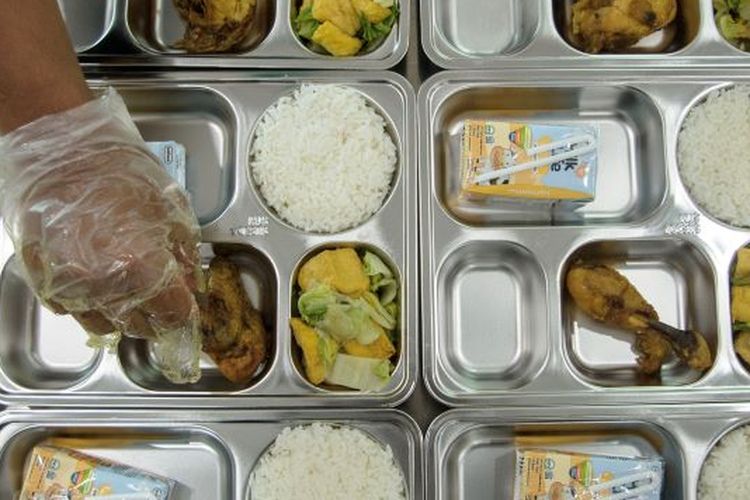 Free Nutritious Meals illustration. Workers prepare free nutritious meal packages at the Nation's Healthy Kitchen in Husein Sastranegara Airbase, Bandung, West Java, Monday (6/1/2025). ANTARA PHOTO/Novrian Arbi
Through August, the MBG budget realization amounted to Rp 134.2 trillion. The program has reached 57 million beneficiaries through 27,485 Nutritional Service Units (SPPG).
Besides MBG, goods expenditure includes Rp 10.1 trillion for private School Operational Assistance Funds (BOS), Rp 21.4 trillion for biodiesel incentives, Rp 11.3 trillion for Technical Implementation Unit (UPT) health services, and Rp 3.3 trillion for food stabilization.
Capital expenditure stood at Rp 159.8 trillion or 56.3 percent of the ceiling, growing 14.3 percent. This spending supports connectivity and food resilience through the construction of networks and irrigation.
Meanwhile, social assistance realization reached Rp 104.5 trillion or 64.3 percent of the ceiling. This figure grew 3.4 percent compared to the same period last year.
This realization includes the Family Hope Program (PKH) disbursing Rp 21 trillion to 10 million beneficiary families, Food Card (Kartu Sembako) assistance of Rp 27.6 trillion for 17.6 million families, and National Health Insurance Contribution Assistance (PBI JKN) of Rp 30.9 trillion for 96.7 million participants.
Meanwhile, transfers to regions (TKD) reached Rp 504.3 trillion through the end of August 2026, equivalent to 72.8 percent of the assigned ceiling.
Unlike state revenue and most central government spending components that grew, TKD realization saw an 11.8 percent year-on-year correction.
Suahasil noted that the initial TKD allocation in the 2026 APBN was Rp 693 trillion. During the fiscal year, the government made adjustments in line with regional government needs.
The APBN deficit was then covered through financing. Until August 31, 2026, net debt financing realization reached Rp 506 trillion or 60.8 percent of the Rp 832.2 trillion target.
 Debt illustration.
This financing mainly came from State Securities (SBN) issuance amounting to Rp 527.4 trillion or 66 percent of the target of Rp 799.5 trillion.
Meanwhile, loan financing recorded a negative Rp 21.4 trillion, equivalent to a negative 65.5 percent compared to the loan financing ceiling in the 2026 APBN of Rp 32.7 trillion.
Suahasil said the debt financing realization until August is still in line with the 2026 APBN design. The government is still paying attention to cash conditions, financial market dynamics, funding costs, risks, as well as governance in meeting financing needs.
"August is on-track, in accordance with the APBN plan," Suahasil clarified.
With revenue realization at Rp 2,055.6 trillion and expenditure at Rp 2,295.7 trillion, the APBN deficit until end of August 2026 stood at Rp 240.1 trillion or 0.93 percent of GDP.
At the same time, the primary balance recorded a surplus of Rp 154 trillion.